

Steel buildings are designed to last 40 to 60 years or more, but only if you maintain them. The good news: maintenance is simpler and cheaper than wood-frame buildings. The bad news: most owners skip it until something expensive goes wrong.
This guide covers everything you need to keep your steel building in peak condition — annual inspection checklists, how to stop rust before it starts, roof maintenance, door and window care, insulation checks, and what deferred maintenance actually costs you over time.
Why Steel Building Maintenance Matters
A well-maintained steel building holds its structural integrity and resale value for decades. Neglect the basics and you face problems that compound quickly: surface rust becomes structural corrosion, small roof leaks become interior water damage, and a loose fastener becomes a panel failure during a wind event.
The math is simple. A $200 tube of caulk applied once a year prevents a $4,000 roof repair. A $15 can of touch-up paint prevents a $3,000 panel replacement. Annual maintenance on a 40×60 steel building runs $300 to $800. Deferred maintenance on the same building can cost $8,000 to $30,000 in repairs.
Steel Building Maintenance Cost Overview
| Maintenance Task | Frequency | DIY Cost | Pro Cost |
|---|---|---|---|
| Exterior panel inspection | Annual | $0 | $200–$400 |
| Roof sealant / caulking | Annual | $50–$150 | $400–$800 |
| Touch-up paint (scratches) | As needed | $20–$60 | $200–$500 |
| Gutter cleaning | 2x per year | $0 | $150–$300 |
| Door lubrication and adjustment | Annual | $10–$30 | $100–$200 |
| Fastener inspection and tightening | Annual | $0 | $200–$400 |
| Insulation check (vapor barriers) | Every 3–5 years | $0 | $300–$600 |
| Full professional inspection | Every 5 years | N/A | $500–$1,500 |
Total annual DIY maintenance budget: $200–$500. Total annual cost if you hire out everything: $800–$2,000.
Annual Steel Building Inspection Checklist
Walk the exterior and interior of your building at least once a year — ideally in spring after winter stress and again in fall before freeze. Here is what to look for:
Exterior — Panels and Trim
- Check all wall panels for dents, scratches, or chips in the paint/coating
- Look for any panel seams that have separated or show signs of movement
- Inspect corner trim, base trim, and eave trim for rust spots or gaps
- Check the base of all panels where they meet the foundation — this is the most common rust initiation point
- Look for any screw or fastener heads that are backing out or missing
Roof
- Inspect all ridge cap seams — apply fresh sealant if cracked or pulling away
- Check all pipe penetrations, HVAC penetrations, and skylights for failed caulk
- Look at every roof screw — rubber washers compress and crack over time; replace any that look flat or brittle
- Clear any debris (leaves, branches, standing water zones) that trap moisture against panels
- Inspect gutters and downspouts for blockages and ensure downspouts drain away from the foundation
Doors and Windows
- Check all walk door weatherstripping — replace if cracked, compressed, or allowing light through
- Inspect roll-up or overhead door springs, cables, and tracks for wear
- Lubricate all door hinges, rollers, and tracks with a dry lubricant (avoid WD-40 on tracks — it attracts dirt)
- Check window seals and frames for any gaps or condensation between panes
- Verify all door frames are plumb and latches engage fully
Foundation and Anchor Bolts
- Inspect the slab perimeter for cracks — horizontal cracks in the stem wall suggest settlement
- Check anchor bolt exposure where columns meet the slab — look for rust bleeding or standing water pooling at base plates
- Ensure grade slopes away from the building on all sides (minimum 6 inches of drop over 10 feet)
Interior Structure
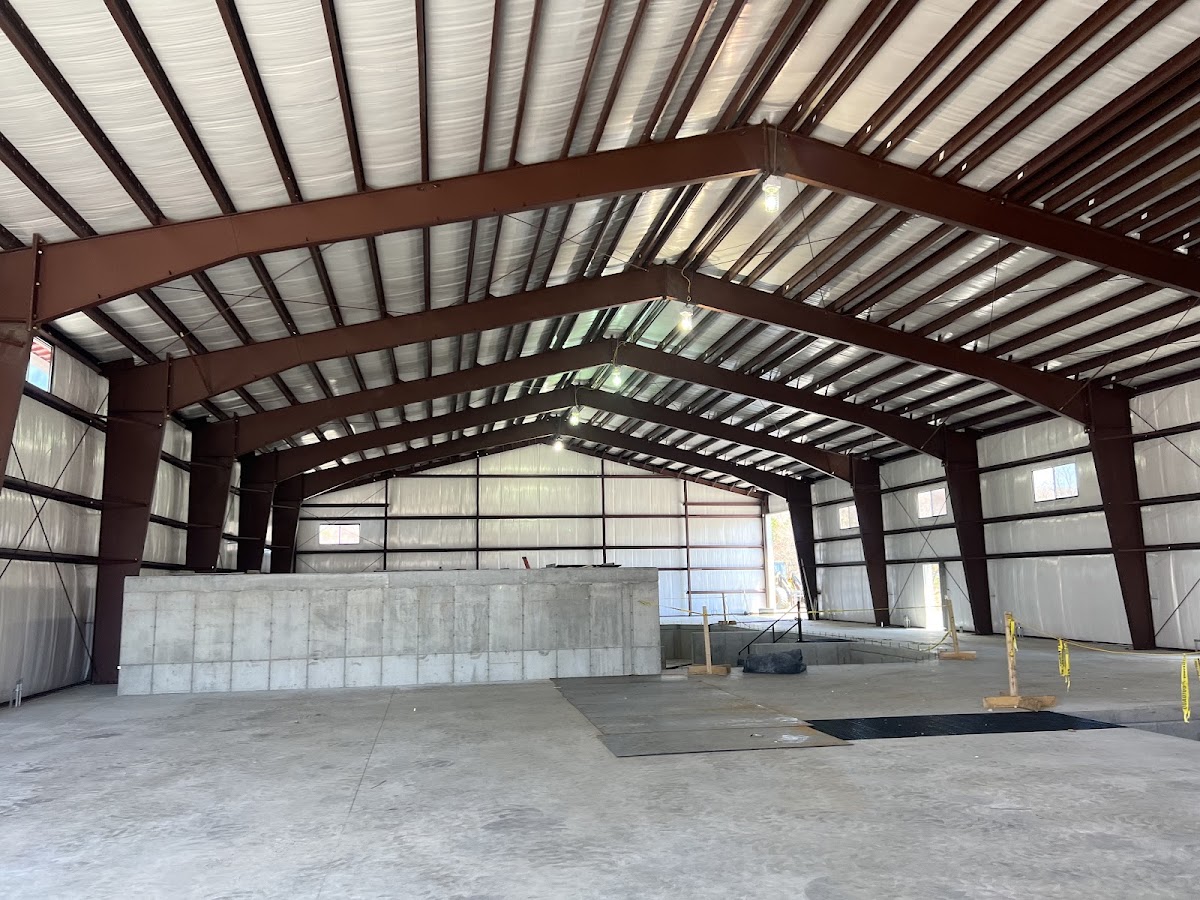
- Inspect all primary frames (columns and rafters) for any signs of corrosion — check especially at the base of columns
- Look at all secondary framing (purlins, girts) for any deformation or rust
- Check brace rods and X-bracing for proper tension — they should not be slack
- Inspect any interior liner panels for damage or moisture intrusion behind them
Rust Prevention: The Most Important Maintenance Task
Steel buildings are coated at the factory with Galvalume (zinc-aluminum alloy) or a painted finish system. That coating is your first line of defense against rust. Once it breaks down, corrosion can move faster than you expect — especially in coastal environments, humid climates, or agricultural settings where ammonia from livestock accelerates steel corrosion.
Touch-Up Paint Protocol
Address any scratch, chip, or abrasion in the panel coating within 30 days. The steps:
- Clean the area with a degreaser or isopropyl alcohol
- Lightly sand any rust that has started (80-grit sandpaper)
- Apply a zinc-rich primer to bare metal areas
- Match the panel color with manufacturer touch-up paint (most builders sell it by the quart)
- Apply two thin coats, allowing full dry time between coats
Major manufacturers — General Steel, Nucor, Mueller, and others — sell color-matched touch-up kits. If you did not buy direct from a manufacturer, take a panel sample to a commercial paint supplier for color matching. Check the steel building kit companies directory for manufacturer contact information.
High-Risk Rust Zones
| Location | Why It Rusts | Prevention |
|---|---|---|
| Panel base / slab junction | Water wicks under trim, moisture trapped between concrete and steel | Keep trim caulked; ensure drainage; inspect annually |
| Fastener heads | Rubber washers fail; water enters around screw shank | Replace worn washers; use stainless steel screws in high-moisture areas |
| Cut panel edges | Factory coating does not cover field cuts | Apply zinc-rich primer to any cut edges immediately after cutting |
| Interior condensation zones | Temperature differential causes condensation on panels | Proper vapor barrier and insulation installation |
| Coastal/agricultural environments | Salt air and ammonia are extremely aggressive on coatings | Use AZ-55 or higher Galvalume; inspect and touch-up more frequently (every 6 months) |
Roof Maintenance in Detail
The roof takes the most abuse of any part of your steel building — UV exposure, thermal cycling, wind load, rain, snow, and hail. It is also the most expensive part to repair if you let it go. Roof maintenance breaks down into three areas: fasteners, sealants, and drainage.
Roof Fastener Replacement
Standard roof screws use EPDM rubber washers that compress and harden over time. On a typical metal roof, expect to start seeing washer failure at 10 to 15 years. Signs of failure: rust streaks running down from screw heads, visible flat or cracked washers, any screws that back out under thermal movement.
Replacement cost for a full roof re-fastening on a 40×60 building runs approximately $1,800 to $3,500 by a roofing contractor. Do it before you have leaks, not after. For roofs over a living space (like a barndominium or steel building home), this maintenance is non-negotiable.
Sealant and Caulking
Every penetration in your roof — vents, pipes, HVAC curbs, skylights, ridge caps — is a potential leak point. Standard butyl tape and silicone sealant used at installation degrades over 5 to 10 years. Annual inspection should include pressing on all sealant to check for brittleness or separation.
Reapply sealant at any point where you can see daylight, feel a gap, or notice the caulk has pulled away from the panel. Use a sealant rated for metal roofing (typically a self-leveling polyurethane or a compatible butyl product). Silicone works but does not bond to painted surfaces as well as polyurethane.
Snow Load and Ice Management
Steel buildings are engineered to specific snow load requirements by state. If you receive heavy snow, do not assume the building can handle unlimited accumulation. Check your building’s design snow load (it should be in your engineering drawings or order documents) and monitor accumulation after major storms.
Steel roofs naturally shed snow better than flat roofs, but ice dams can still form at the eaves. Ensure attic insulation and vapor barriers are installed correctly — this is what causes ice dams, not the roof panels themselves. See the complete insulation guide for correct installation specs.
Insulation and Vapor Barrier Maintenance
Insulation in a steel building does two jobs: it controls temperature, and it prevents condensation. If your vapor barrier fails or your insulation compresses and loses R-value, condensation starts forming on the inside of your panels. That moisture rusts the interior face of your panels and your framing members — from the inside out, where you cannot see it.
Every three to five years, do a condensation check in winter or during a humid period. Look for:
- Water droplets or rust streaks on the interior panel face
- Wet or compressed insulation visible at the eaves
- Musty odor indicating trapped moisture in the insulation
- Any gaps in the vapor barrier facing where panels overlap
If you find condensation damage, the repair involves removing affected panels, treating any rust on the framing, replacing the insulation and vapor barrier, and reinstalling the panels. This is a significant job — typical cost for a 40×60 section repair runs $4,000 to $12,000. Proper initial installation (see the insulation cost guide) prevents this entirely.
Door and Window Maintenance
Walk doors and overhead doors are the highest-wear components on a steel building. They cycle thousands of times per year and take impact from vehicles, equipment, and weather.
Overhead / Roll-Up Door Maintenance
- Springs: Torsion springs have a rated cycle life (typically 10,000 cycles). If your door is used 10 times per day, that is roughly 2.7 years before spring replacement. Budget $200–$500 per door for spring replacement — do not attempt this yourself, as torsion springs store significant energy.
- Cables: Inspect for fraying annually. Replace at the first sign of wear — a broken cable with the door fully open can cause the door to crash down.
- Rollers: Lubricate with silicone spray or a dedicated door lubricant twice per year. Replace any roller with a cracked or frozen wheel.
- Track alignment: Check that vertical tracks are plumb and horizontal tracks slope slightly toward the motor. Misaligned tracks cause premature wear on rollers and cables.
- Bottom seal: Replace the rubber bottom seal when it shows cracking or gaps — this is the primary weather seal for the door opening.
Walk Door Maintenance
- Lubricate hinges and lockset annually with a penetrating oil or silicone spray
- Replace weatherstripping when it shows compression or allows visible light through
- Check door frame alignment — settle or foundation movement can cause doors to bind or not latch fully
- Inspect door threshold seal and replace when worn
Drainage and Grading Around Your Building
Water sitting against the foundation is one of the most damaging things that can happen to a steel building over time. Water wicks under the base trim and sits between the panel and the concrete — that junction rusts faster than any other part of the building.
Check grading around your building after every winter. Frost heave, erosion, and settling can create low spots against the foundation. The standard is 6 inches of drop over the first 10 feet away from the building. If water pools against the base trim after rain, regrade or install French drains before the next season.
Clean gutters in spring and fall if your building has them. Blocked gutters overflow at the fascia, saturating the eave trim and wicking water behind panels. See the foundation types guide for drainage considerations by slab type.
Long-Term Maintenance Schedule
| Timeframe | Task | Estimated Cost (40×60 building) |
|---|---|---|
| Every 6 months | Gutter cleaning, visual exterior walk | $0–$150 |
| Annual | Full inspection checklist, touch-up paint, door lubrication, roof sealant check, fastener inspection | $200–$600 |
| Years 5–7 | Professional inspection, roof fastener check, insulation condition check | $600–$1,500 |
| Years 10–15 | Roof screw/washer replacement evaluation, door spring replacement, full repaint assessment | $2,000–$6,000 |
| Years 20–25 | Full panel repaint or recoat if needed, insulation replacement if degraded, structural inspection | $8,000–$25,000 |
| Years 40+ | Major structural inspection, foundation assessment | $1,500–$4,000 |
When to Call a Professional
Most steel building maintenance is genuinely DIY-friendly. But some situations call for a licensed contractor or structural engineer:
- Any visible deformation in primary framing — a bent column or rafter needs a structural engineer evaluation before you do anything else
- Significant panel replacement — matching existing panel profiles and seam details requires experience to keep the building watertight
- Roof leak that you cannot isolate — water travels before it drips; a contractor with a moisture meter can find the entry point
- Overhead door spring replacement — stored energy in torsion springs is genuinely dangerous; hire a door technician
- Foundation cracks wider than 1/8 inch or showing horizontal movement — call a structural engineer, not a general contractor
- Any storm damage assessment for insurance purposes — get a licensed contractor’s written damage assessment before contacting your insurer
Steel Building Maintenance by Use Type
Different building uses create different maintenance demands. Here is what varies by application:
Agricultural Buildings
Livestock housing produces ammonia that is highly corrosive to steel coatings. If your building houses animals, inspect panels every 6 months (not just annually), use higher-grade Galvalume panels (AZ-55 or better), and ensure ventilation keeps humidity below 70 percent. A metal workshop or farm building with proper ventilation will last significantly longer than one that traps humid air.
Garages and Workshops
Vehicle exhaust, road salt tracked in on tires, and welding fumes all accelerate interior corrosion. Install floor drains so wash water does not pool against the base plates. Seal the slab to prevent moisture wicking up through the concrete. For metal garage kits, the overhead door maintenance schedule is the most important ongoing cost.
Residential Steel Homes and Barndominiums
When your steel building is a residence, the stakes for maintenance are higher — you are living in it. HVAC penetrations, plumbing vents, and electrical conduits through the roof and walls multiply the number of potential leak points. Inspect every penetration annually, and verify vapor barriers are intact in any wall cavities. For barndominium kits, budget slightly more for annual maintenance ($500–$1,000 for a 2,000 sq ft home) compared to a commercial storage building.
Common Maintenance Mistakes
| Mistake | What Happens | The Fix |
|---|---|---|
| Pressure washing at high PSI against panel seams | Forces water behind panels and into wall cavities | Use low pressure; spray parallel to seams, not perpendicular |
| Painting over rust without treating it first | Rust continues under the paint; bubbles and flakes within a season | Sand to bare metal, apply zinc primer, then topcoat |
| Using WD-40 on door tracks | Attracts dirt; creates gummy buildup that accelerates roller wear | Use dry silicone spray or a dedicated garage door lubricant |
| Ignoring small roof leaks | Water travels along purlins; damage spreads far from entry point | Find and seal every penetration annually; do not wait for drips |
| Grading soil against the building base | Soil retains moisture at the panel base — the fastest rust accelerator on the building | Keep soil 6 inches below the base trim; maintain slope away from building |
| Letting vines or shrubs grow against panels | Constant moisture contact; vines can infiltrate panel seams | Keep vegetation 18 inches from all panels |
Frequently Asked Questions
How often should I repaint a steel building?
Factory Kynar or SMP paint systems are rated for 20 to 40 years of color retention. You do not need to repaint a steel building on a fixed schedule — repaint when you see significant chalking, fading, or adhesion failure across large areas of the panels. Spot touch-ups are needed much sooner (address any chip or scratch within 30 days).
Will a steel building rust if I maintain it?
Surface rust at damaged coating areas is common and treatable. Structural rust — the kind that compromises load-bearing members — is rare in a properly maintained building and almost never occurs within the first 20 to 30 years of a well-coated structure. The key is addressing coating damage quickly. See the steel building reviews and ratings page for manufacturer coating comparisons.
How do I find a leak in a metal roof?
Start at penetrations (screws, vents, pipes) rather than where the water drips inside — water travels along purlins before dripping. Inspect every roof screw for failed washers first. Check all ridge cap seams with a flashlight. If you cannot find it visually, a roofing contractor with a moisture meter or infrared camera can identify the entry point without tearing off panels.
Can I add insulation to an existing steel building?
Yes. The most common retrofit insulation options are spray foam applied to the interior of the panels, or rigid board insulation installed between the framing with an interior liner. Both require removing any existing liner panels. Cost for a spray foam retrofit on a 40×60 building typically runs $8,000 to $15,000 fully installed. See the complete steel building insulation cost guide for all options.
What does a steel building warranty cover?
Most manufacturers offer separate warranties for the structural frame (25 to lifetime), the panel coating (25 to 40 years for color retention, 40 years for Galvalume perforation), and the trim system (15 to 25 years). Warranty coverage typically requires proof of annual maintenance and prohibits specific chemical exposures. RHINO Steel, for example, offers a Lifetime Structural Warranty — but review the maintenance requirements in your specific warranty document.
How much does a full steel building repaint cost?
A full exterior repaint on a 40×60 steel building runs $6,000 to $18,000 depending on preparation required, number of colors, and your region. Preparation (cleaning, sanding, primer) is typically half the cost. Use a paint system specifically designed for metal buildings — standard latex or oil-based paints do not bond properly to Galvalume without correct primer. Most building owners at the 20-year mark opt for a full system repaint and fastener replacement at the same time to minimize scaffolding costs.