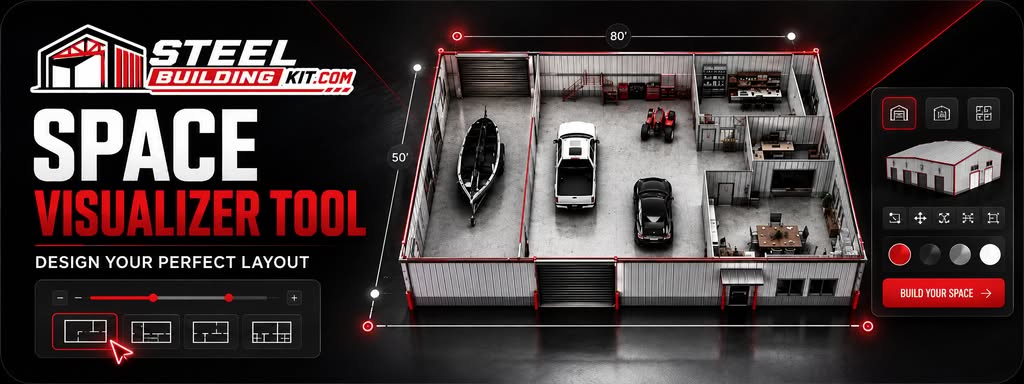

01 · Enter Dimensions
Input your exact width and length to calculate total clear-span square footage.
Use this interactive estimator to calculate a real-time baseline for steel building kits, metal garages, agricultural barns, and commercial warehouses using current 2026 factory-direct pricing.
Planning on buying a steel building kit, metal garage, agricultural barn, or commercial warehouse? The biggest mistake buyers make is relying on outdated pricing from lead-broker steel building kits websites. Steel commodity prices, localized engineering requirements, and manufacturing capabilities dictate your final price.
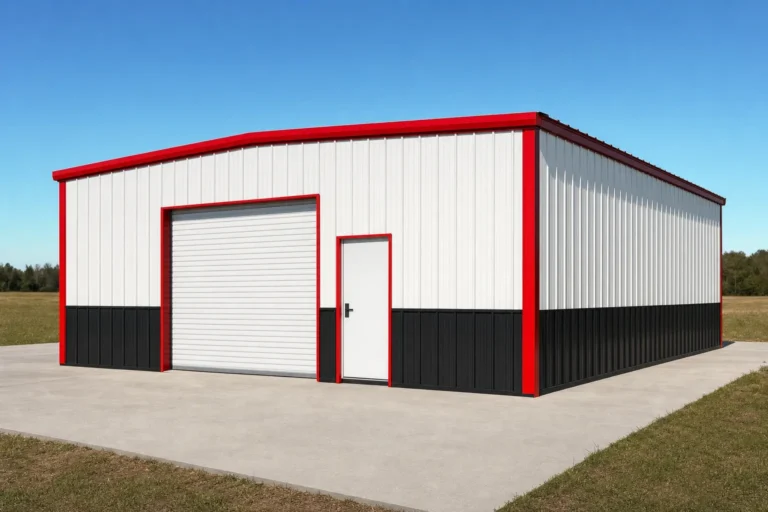
Understanding steel building cost per square foot or metal building prices per square foot is crucial to planning your project properly. Use the calculator below to estimate tubular steel, red iron rigid-frame, concrete foundation, insulation, and access-door costs.
Input your exact width and length to calculate total clear-span square footage.
Choose standard 14-gauge tubular steel for metal garages or structural red iron for commercial warehouses.
Toggle concrete slab thickness, insulation packages, and doors to see a finished estimated project cost.
While our metal building cost estimator provides a highly accurate baseline, your final factory-direct quote will be influenced by localized engineering requirements and material upgrades. To understand exactly what you are paying for, here is a breakdown of the core cost drivers.
Search engines and buyers often look for a flat price per square foot, but building codes are strictly localized. A 40x60 metal garage in Miami, Florida must be engineered with heavier gauge framing, tighter purlin spacing, and specialized anchoring to withstand 175+ MPH hurricane wind sheer ratings. Conversely, a rigid-frame building in Colorado requires high live-load roof engineering to support massive snow accumulation.
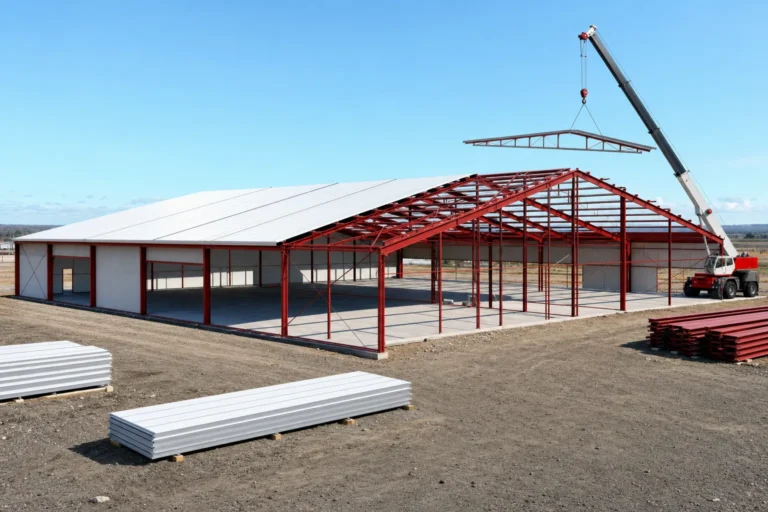
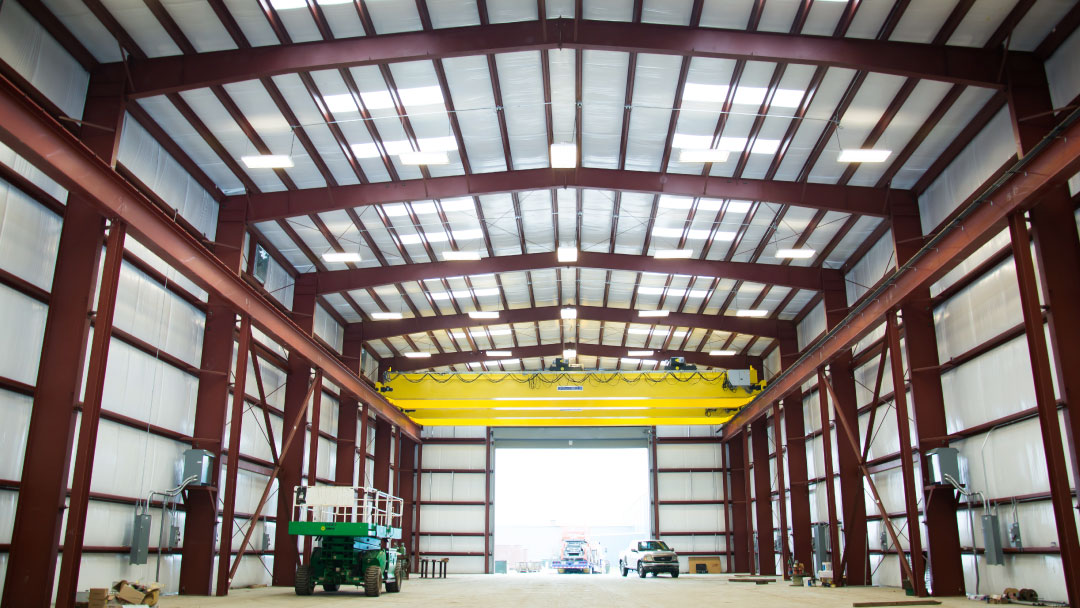
Tubular steel is highly cost-effective for basic carports and small shops. Upgrading from 14-gauge to 12-gauge steel increases tensile strength by 30%, adding slightly to the cost but extending warranty and durability. Red iron I-beam systems are required for warehouses, aircraft hangars, and massive clear-span capabilities.
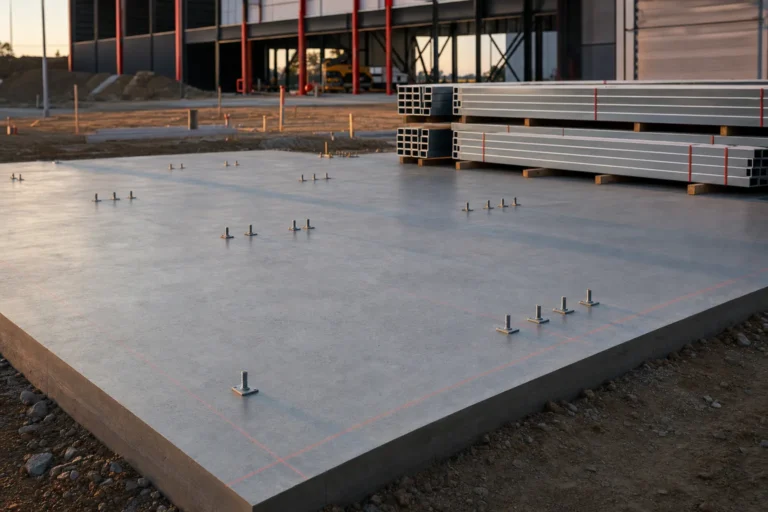
A pre-engineered metal building requires a specialized poured monolithic slab or perimeter footing foundation. Concrete costs vary by region, site grading requirements, and whether you need a standard 4-inch slab for personal vehicles or a heavy-duty 6-inch reinforced slab for RVs and heavy machinery.
For quick reference, here is the verified 2026 national average price per square foot based on structural framing type. These figures represent the base kit only: materials, panels, and framing.
Our calculator is engineered using Q1 2026 national commodity averages and factory-direct data. It provides a highly accurate baseline estimate (+/- 10%) for standard structures. However, exact site-specific engineering, freight distances from the manufacturing plant, and custom door framing will alter the final quote.
In 2026, pre-engineered metal building kits remain 15% to 30% more cost-effective than traditional wood stud framing. Beyond the initial material savings, steel construction drastically reduces expensive field labor because the components are pre-cut, pre-drilled, and designed to bolt together quickly on-site.
No. The baseline price per square foot covers the engineered kit: steel framing, metal roofing, siding, and trim. If you are not assembling the kit yourself, professional erection labor typically adds $5.00 to $10.00 per square foot depending on the size of the structure and the necessity of heavy equipment like boom lifts or cranes.
Use the calculator as your baseline, then compare exact supplier quotes against the same dimensions, framing, slab, insulation, and access-door assumptions.