

Cost Fundamentals · 13 Guides · Updated July 2026
Metal Building Cost Fundamentals
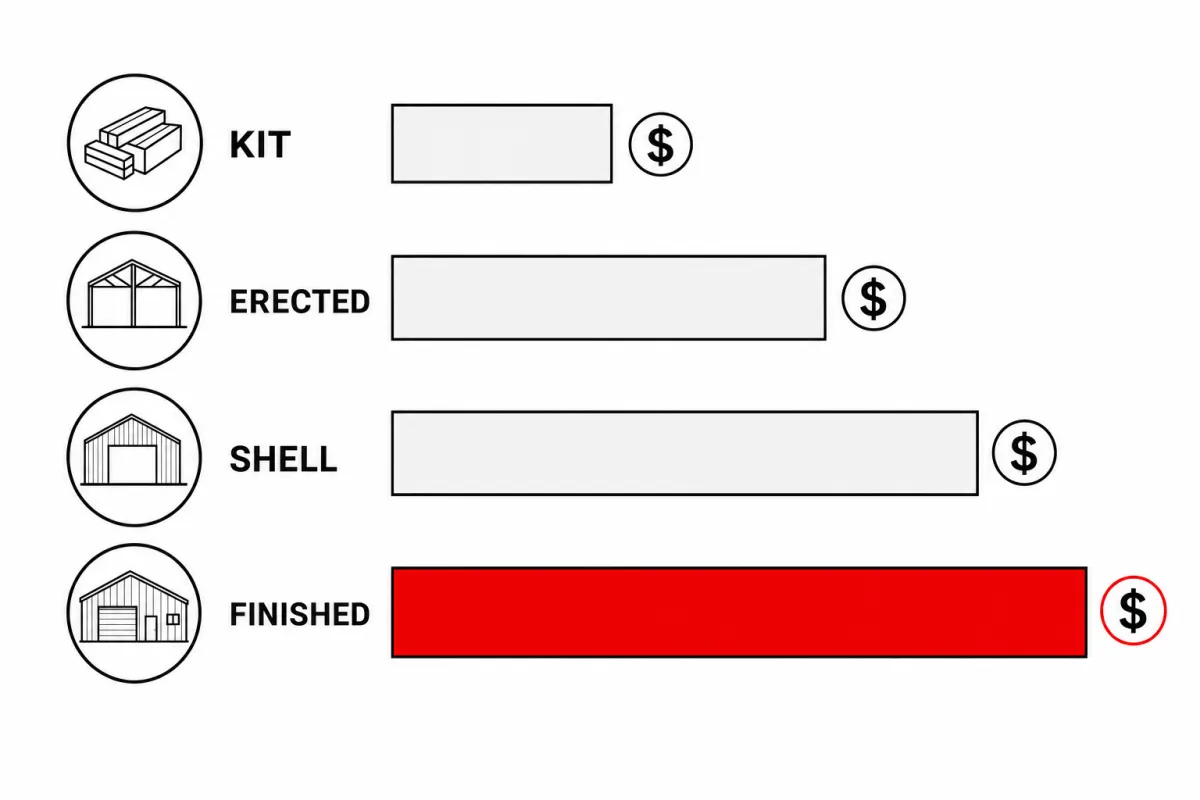
3 scopes
$10 - $28
2.2 - 2.6x
±10-40%
The three price scopes, decoded
| Scope | What’s included | National range modeled | Use it when |
|---|---|---|---|
| Kit only | Frames, panels, trim, fasteners, stamped drawings | $10 – $28 /sqft | Comparing steel packages and suppliers |
| Kit + erection | Kit plus professional assembly labor | $15 – $38 /sqft | You have a slab or a concrete contractor |
| Turnkey shell | Kit, delivery, slab, erection: dried-in and lockable | $24 – $45 /sqft | Planning a real project budget |
| Finished building | Shell plus insulation, electrical, HVAC, interior | $45 – $130+ /sqft | Comparing against conventional construction |
Why per-square-foot numbers mislead
How much to trust each kind of estimate
| Estimate type | Typical accuracy | Good for |
|---|---|---|
| Advertised special / banner price | ±30-40% | Spotting the low end of a market, nothing else |
| Online calculator | ±10-20% | Choosing a size and scope lane |
| Written supplier quote | ±5-10% | Comparing suppliers at one spec |
| Signed contract with locked steel | ±0-5% | The budget line you can actually build on |
The market mechanics behind every range
Where advertised prices actually come from
Steel is a commodity and your quote knows it
Normalize scope before comparing anything
Freight is a price, not a footnote
The budget kills more projects than the price
The 13 guides in this cluster
How much does a metal building cost per square foot?
Kit price vs turnkey cost
Build a complete project budget
Cost calculator methodology
How location changes costs
Prices by frame type
Cost by use
What makes prices go up or down
How to read a price estimate
Kit vs installed vs finished price
How accurate are online estimates?
Cost overruns buyers miss
When is a metal building worth it?
Already live on the site
How to spend less without regret
- Collect three quotes at ONE written spec; the spread itself is negotiation leverage
- Quote in late fall or winter when fabrication schedules have gaps
- Order 10-14 weeks ahead of need so speed never prices against you
- Keep the kit standard; spend custom money on doors and finish, not frames
- Source concrete locally instead of through the building seller
- Read the surcharge clause and cap steel exposure in writing
- Hold 10% contingency until steel is delivered, then release it to upgrades
The one habit that protects every budget
One more habit worth stealing from professional owners: keep a project log from the first quote onward. Every price, every scope note, every promise with a date lands in one document. It takes minutes, it makes the three-quote comparison mechanical, and if anything is ever disputed, the log is the difference between a conversation and an argument. Steel projects reward paperwork discipline more than negotiation talent, and the buyers who write things down consistently pay less than the buyers who remember things.
Questions buyers actually ask
What is the cheapest way to buy a metal building?
Buy a standard size at kit scope and contract the slab and erection locally. The kit itself is the most competitive part of the market; concrete and labor are where local pricing varies. Kit-only runs $10-$28/sqft (modeled, July 2026); a good local flatwork crew plus an insured erector usually beats a bundled markup, at the cost of you coordinating three contracts instead of one.
Why do metal building quotes vary so much between companies?
Three reasons, in order: scope differences (one quote includes freight and anchor bolts, the other doesn’t), spec differences (gauge, load ratings, door counts), and steel-market timing (quotes lock for 7-30 days and plants price differently by backlog). Two honest companies can be 20% apart on paper and identical once you normalize the scope.
How much should I add for contingency?
Carry 10% until steel is delivered and the slab has passed inspection, then release it. Most overruns come from site work, change orders after drawings are approved, and freight surprises, all of which land early. Projects that clear delivery and foundation on budget rarely blow up afterward.
Do metal building prices go down in winter?
Often, yes. Plants discount to fill winter fabrication schedules and erection crews are cheaper before the spring rush, so late-fall and winter quotes routinely beat identical spring orders. The bigger lever is lead time: ordering 10-14 weeks ahead lets you shop three quotes instead of paying whoever can deliver fastest.
Why did my price jump after engineering?
Because the first number assumed generic loads and your county disagreed. Snow, wind, seismic, and exposure ratings get applied at engineering, and 8-15% kit increases are normal in load country. Protect yourself by getting quotes engineered to your parcel’s loads upfront, in writing, before comparing suppliers.
How long is a metal building quote valid?
Typically 7 to 30 days, and many carry steel-surcharge clauses that let the price float until fabrication even inside the window. Ask two questions of every quote: how long is the lock, and what happens to the price between signing and fabrication. Get both answers in writing.
Are online per-square-foot prices believable?
As lane markers, yes; as budgets, no. Good calculators land within 10-20% for a stated scope, but they can’t see your freight lane, your county’s loads, or this month’s steel. Use them to pick a size and scope, then collect three written quotes at one spec for the real number.
Ready to price it for real?
Written by the Steel Building Editorial Team | Last updated July 10, 2026 | Pricing data collected June-July 2026