


SteelBuildingKit Cost Index · Updated July 10, 2026 · Pricing collected June-July 2026
A metal building is worth the cost when you need enclosed, permitted, long-lived space at garage size or bigger: a steel 2-car garage runs $18,000-$38,000 turnkey against $28,000-$45,000 for wood stick-built, and it skips the $3,000-$6,000 per decade repaint cycle (modeled July 2026). Pole barns undercut steel by 10-20 percent upfront on small simple builds, but steel typically pulls ahead around year 10. And sometimes the honest answer is neither: a $1,800-$8,500 carport covers vehicles for a tenth of the money.
This page is the honest version of that math: where steel wins outright, where it wins slowly, and the cases where you should not buy one at all. It sits in our cost fundamentals hub, and the table below is the decision in miniature.
| Project | Steel building modeled | Alternative modeled | Early verdict |
|---|---|---|---|
| 2-car garage | $18,000 – $38,000 turnkey | Wood stick-built $28,000 – $45,000 | Steel wins on day one |
| Small ag / storage barn | 30×40 turnkey $36,000 – $54,000 | Pole barn 10-20% less upfront | Pole barn early; steel by year 10 |
| Vehicle weather cover | Enclosed garage $18,000+ | Carport $1,800 – $8,500 installed | Carport, if cover is all you need |
| Large clear-span workshop | $27 – $45/sqft turnkey | Conventional framing climbs with span | Steel, and it isn’t close |
| Living space | Finished barndo $95 – $130+/sqft | Interiors cost the same in any shell | Steel wins the shell only |
Turnkey scope: kit, delivery, 4-inch slab, professional erection, standard openings. Alternatives at comparable finished scope. National modeled ranges, July 2026.
Comparison figures are modeled national estimates from published supplier price lists and advertised kit pricing collected June-July 2026, cross-checked against component benchmarks for concrete, erection labor, and freight, with wood and pole-barn comparisons modeled at matching scope. Lifetime figures use published panel warranty terms and modeled maintenance costs. All numbers are labeled modeled and reviewed quarterly under the SteelBuildingKit Cost Index methodology.
The ten-year math, worked honestly
Upfront price is where steel’s case is weakest, so start there and let time do the arguing. Take a 30×40 enclosed storage building: steel models at $40,500 turnkey, a comparable pole barn about $34,500, roughly 15 percent less (modeled July 2026). Then the decade runs. Wood siding and trim want repainting or repair at $3,000-$6,000 per decade; steel panels carry 25-40 year warranties and ask for a fastener-and-sealant check at $0-$300 a year. Insurance quotes on steel routinely come in 10-25 percent below wood framing for the same use. Post that math forward and the $6,000 head start is gone by around year 10, and every year after runs in steel’s favor. That is the honest shape of the answer: steel is rarely the cheap option on day one and usually the cheap option by year fifteen. The full framing-by-framing version lives in our steel versus pole barn comparison, and the cost calculator prices the steel side of your own version in minutes.
| Line | Steel building modeled | Pole barn modeled |
|---|---|---|
| Upfront, turnkey scope | $40,500 | $34,500 (10-20% below steel) |
| Decade of exterior maintenance | $0 – $3,000 (fastener/sealant checks) | $3,000 – $6,000 (repaint, repairs) |
| Insurance trend | Often 10-25% lower premiums | Baseline |
| Structure at year 10 | Panels inside 25-40 yr warranty | Ground-contact posts are the known risk |
| Position at year 10 | At or ahead of parity | Early lead spent |
When steel is clearly worth it
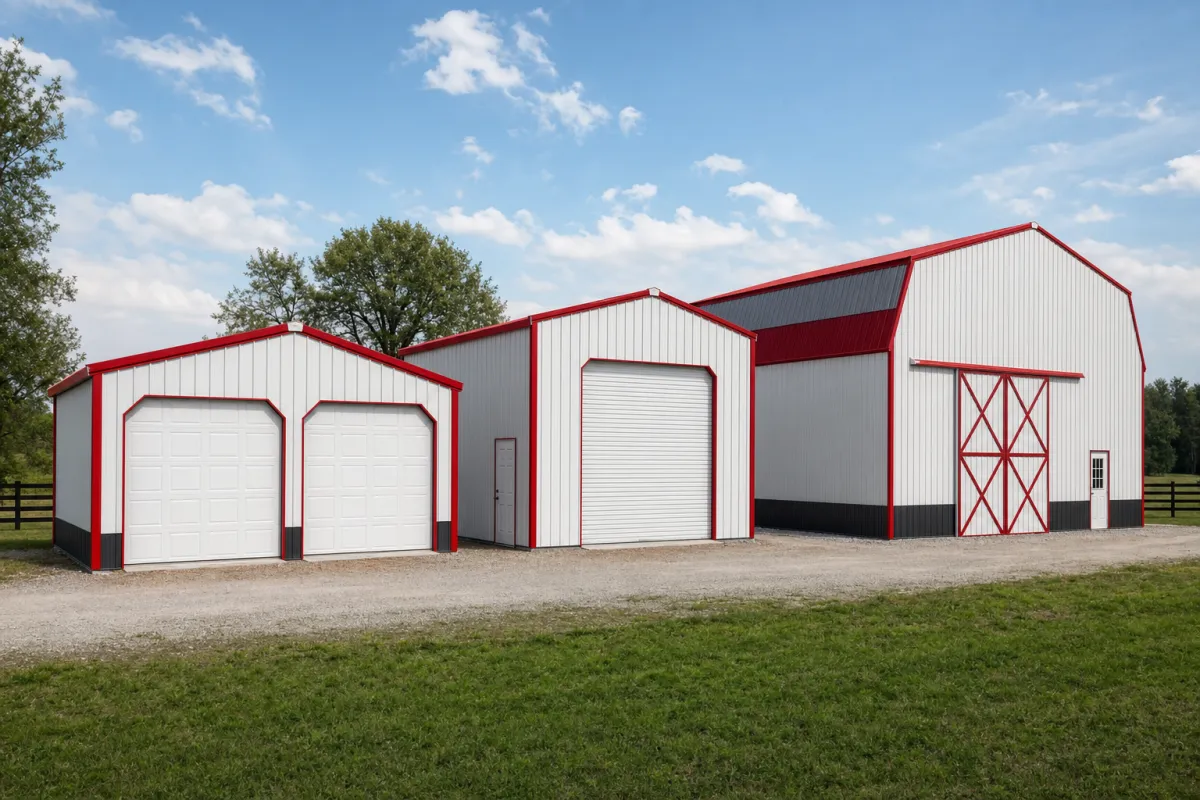
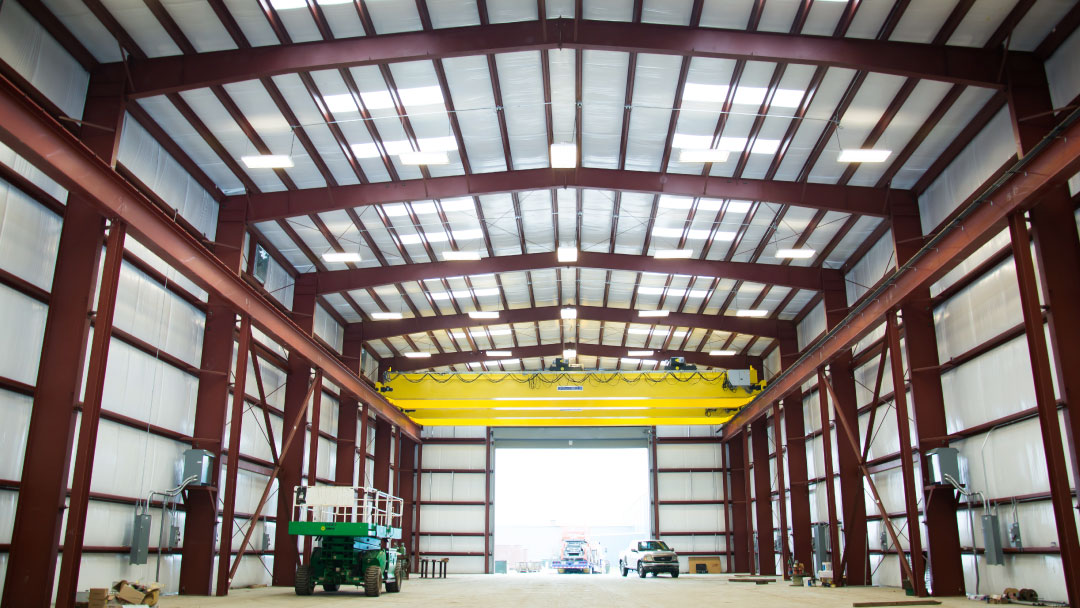
Five cases close the argument fast. Clear spans: past about 40 feet of open width, engineered steel is the only economical way to keep columns out of the floor, which is why shops and arenas default to it. Scale: big simple rectangles price at $10-$16 per square foot kit-scope, rates no other permanent construction touches. Harsh weather: hail, heavy snow, and high wind are engineering problems steel prices in openly (+8-15 percent on the kit) rather than absorbing as damage. Insurance and fire ratings favor steel for shops and storage. And the calendar: professional erection takes 3-10 days against months of framing. If two or more of those describe your project, the ten-year math above is just confirmation.
When NOT to buy a metal building
The honest list, because a good guide saves people money in both directions. If all you need is weather cover, a $1,800-$8,500 installed carport does the job for a tenth of an enclosed building’s cost; our carport cost guide prices every size. If the footprint is tiny, fixed costs eat you alive: engineering, freight, and mobilization push small steel buildings to $16-$28 per square foot kit-scope, so a shed-scale need is often better served by a shed. If the land is rented or the need is temporary, a permitted permanent structure is money you cannot take with you. If an HOA or design review demands conventional cladding, budget the facade before deciding; brick and siding over steel erode the price advantage. And if the project is mostly finished living space on a small footprint, remember steel only wins the shell; interiors run $60-$110 per square foot in any construction, so the smaller the shell share, the smaller steel’s edge.
What tilts the math toward steel
| Lever | Typical impact modeled | Worth it when |
|---|---|---|
| DIY erection | Saves $4 – $10/sqft | Bolt-up kits, patient owners, 2-3 helpers, small-mid sizes |
| +10 ft of length at order time | Cheapest square footage you can buy | Any storage use; needs always grow |
| Standard sizes over custom | Custom runs +10-20% and +2-6 weeks | Whenever a stock footprint fits the mission |
| Blanket insulation | +$2.50 – $4.00/sqft | Conditioned use; cheapest comfort upgrade |
| Larger footprint now | Kit rates fall from $16-$28 to $10-$16/sqft with size | The second building you’d otherwise buy later |
| Winter ordering | Fabrication discounts, 10-14 wk lead | Flexible timelines that can buy in the slow season |
Resale and the appraisal question
Steel buildings hold value the unglamorous way: they appraise cleanly. A permitted, engineered building on concrete in a stock size is something every assessor and rural buyer recognizes, and while outbuildings typically appraise below their build cost, a good shop routinely sells the property around it. Two rules protect that value: keep the permit paperwork, because an unpermitted structure subtracts from a sale instead of adding, and build stock sizes, because a 30×40 reads as an asset while a custom footprint reads as a question. Our steel building buyers guide covers documenting the build for exactly this moment.
Location can flip this verdict
Geography leans on both sides of the scale. Heavy snow and wind counties raise steel’s kit price 8-15 percent, but they punish wood harder in maintenance, insurance, and lifespan, so harsh climates strengthen steel’s case even as they raise its price. Mild dry climates are the reverse: wood and pole construction age gracefully there, keeping their 10-20 percent upfront edge competitive longer. Frost country adds $800-$2,000+ in footings to any permanent building, freight of $500-$3,000+ makes plant-adjacent sites better steel buys than remote ones, and permits ($150-$4,000) hit every permanent option equally. Run your county’s numbers before assuming the verdict transfers to your ZIP code.
The worth-it checklist
Answer these on paper before any deposit; the pattern of answers is the verdict.
- Does the building need to be enclosed and secure, or is cover enough? Cover alone points to a carport
- Will you still need this space in 10 years? The steel premium pays back on the second decade
- Is the span over 40 feet or the footprint over 1,200 sqft? Steel’s rates improve with both
- Is the land yours, and is the structure permitted? Resale value depends on both answers
- Have you priced the honest alternative at the same scope: slab, erection, doors included?
- Does your climate punish wood? Hail, snow, humidity, and termites all argue for steel
- Is most of the budget shell or interior? Steel only discounts the shell
- Can you buy the size you will need, not the size you need today? Length is cheapest at order time
If this page answered your question, the natural next reads are cost overruns buyers miss and how much does a metal building cost per square foot?.
Is a metal building worth it FAQs
Is a metal building worth the money?
For enclosed, permitted space at garage scale or larger, usually yes: a steel 2-car garage runs $18,000-$38,000 turnkey against $28,000-$45,000 stick-built wood (modeled July 2026), and maintenance and insurance keep widening the gap. For simple weather cover or shed-scale needs, a carport or shed is the better buy.
Is a metal building cheaper than a wood building?
At garage and shop scale, yes on day one: $18,000-$38,000 steel versus $28,000-$45,000 wood for a comparable 2-car garage, then wood adds $3,000-$6,000 per decade in repainting that steel panels, warrantied 25-40 years, never ask for. Wood’s case is aesthetics and HOA rules, not cost.
Is a pole barn cheaper than a metal building?
Upfront, yes: 10-20 percent less on small, simple builds (modeled July 2026). Over time, no: steel’s lower maintenance and 10-25 percent lower insurance premiums typically reach parity around year 10, and ground-contact posts are the pole barn’s known long-term risk. Short horizon favors poles; long ownership favors steel.
Does a metal building add value to property?
Generally yes, when permitted and on concrete: expect appraisal contribution below build cost, which is normal for outbuildings, but strong buyer appeal in rural and semi-rural markets where a good shop sells the property. Keep the permits and build stock sizes; unpermitted or oddball structures subtract instead.
When is a carport enough instead of a garage?
When weather cover is the whole mission. An installed carport runs $1,800-$8,500 against $18,000+ for an enclosed steel garage (modeled July 2026). If security, storage, or a workspace is on the list, enclosure earns its money; if not, the carport keeps $15,000+ in your pocket, and many can be enclosed later for $4,000-$9,000.
How long does a metal building actually last?
The frame is effectively generational, and panels carry 25-40 year warranties; upkeep is a fastener and sealant check at $0-$300 per year. Most steel buildings outlive the use they were bought for, which is exactly why the ten-year break-even math keeps favoring them.
Ready to price this building for real? Compare verified metal building companies for this project type, with real reviews and track records.
Sources and methodology: published supplier price lists and advertised kit pricing (June-July 2026); component cost benchmarks for ready-mix concrete, erection labor, and freight; IBC and ASCE 7 for load context. All figures are modeled national estimates, labeled as modeled, and reviewed quarterly; see the full Cost Index methodology. This guide links to our independent company directory; listings never change published numbers.
Written by the Steel Building Editorial Team | Last updated July 10, 2026