


SteelBuildingKit Cost Index · Updated July 10, 2026 · Pricing collected June-July 2026
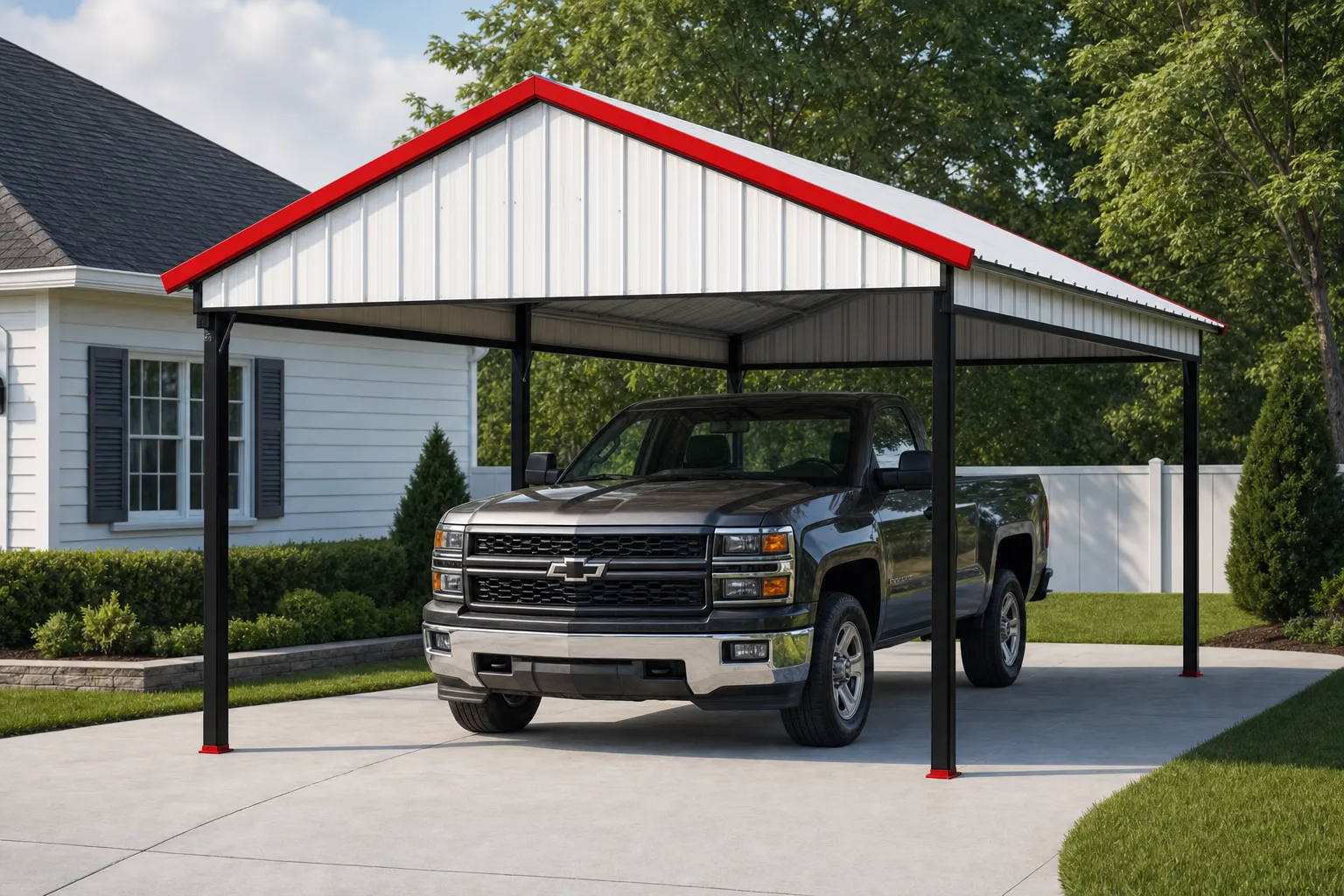
A metal carport costs $1,800 to $8,500 installed across the sizes most buyers order: a 12×20 single runs $1,800-$3,200, a 20×20 two-car runs $2,600-$4,800, a 24×30 triple-wide runs $4,500-$8,500, and a 12×35 tall RV cover runs $4,500-$8,000 (modeled national ranges, July 2026, delivery and installation included). Roof style, certified engineering, and leg height decide where you land inside each range, and this guide prices all of it.
Carports are the one corner of the steel building market where the advertised price is usually the installed price: most sellers include delivery and setup within their service area, so the number in the ad is close to the number on the invoice. That makes them refreshingly easy to budget and easy to misjudge, because the cheap base price assumes the thinnest roof style, uncertified engineering, and short legs. This guide sits in our carport cost hub and walks the real math: size, roof, certification, anchoring, and what it takes to enclose one later.
| Size | What it covers | Installed range modeled | Typical buyer |
|---|---|---|---|
| 12×20 single | One car or truck | $1,800 – $3,200 | Daily driver, extra vehicle |
| 18×21 two-car | Two compacts, tight | $2,400 – $4,500 | Budget two-vehicle cover |
| 20×20 two-car | Two vehicles, honest fit | $2,600 – $4,800 | The default double carport |
| 24×30 triple / deep | Three cars or truck + trailer | $4,500 – $8,500 | Equipment, boats, work trucks |
| 12×35 RV cover, tall legs | Motorhome or fifth wheel | $4,500 – $8,000 | RV owners; 12-14 ft legs |
Baseline spec: 14-gauge galvanized tube frame, 29-gauge panels, regular (horizontal) roof, 6-foot legs except the RV cover, standard anchoring on a level site, delivery and installation within the seller’s service area. National mid-ranges, July 2026.
Ranges are modeled national estimates built from published carport dealer price sheets and advertised installed specials collected June-July 2026, cross-checked against component benchmarks for tube steel, panel stock, and small-crew installation rates. Carport pricing is regional and promotional, so every figure here is labeled modeled and quoted as a range rather than a fake-precise number. Full methodology lives in the SteelBuildingKit Cost Index.
What an installed carport price actually includes
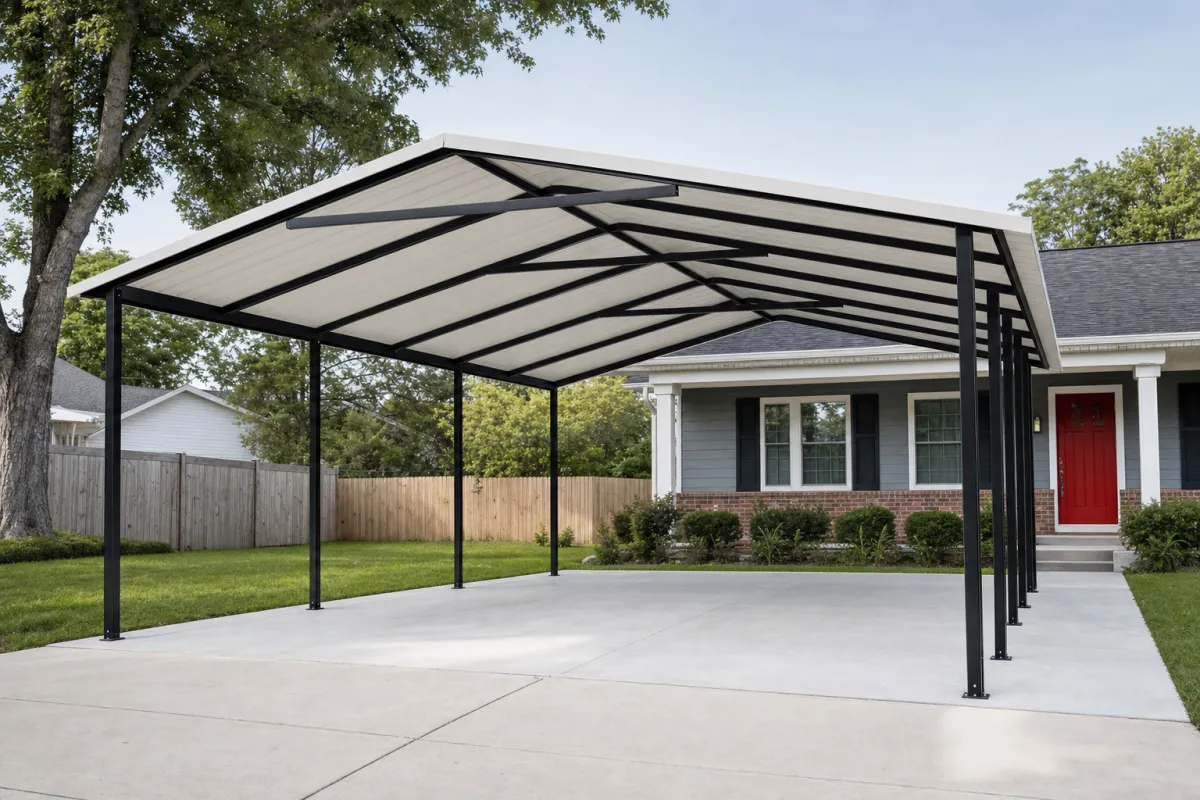
The standard installed price covers the galvanized tube frame, roof panels, trim, delivery, and a crew that sets the unit on your prepared surface in a few hours. It assumes the site is level within a few inches; crews will shim minor slope but will not grade your pad. It includes basic anchoring appropriate to your surface, though not always the engineered anchors a certified unit requires. It does not include a concrete pad, permits, or the panels that close in sides and ends. Those are the lines that turn a $3,000 ad into a $5,500 project, so the worksheet below prices each one.
| Line item | Typical range modeled | Notes |
|---|---|---|
| Base carport, installed | $1,800 – $8,500 | By size, regular roof, from Table 01 |
| Roof style upgrade | +8% – 25% of base | A-frame or vertical; priced in Table 03 |
| Certified engineering | +10% – 20% of base | Stamped drawings for local wind/snow |
| Extra leg height, per 2 ft | +6% – 9% of base | RV and tall-truck clearance |
| Concrete pad (optional) | $6 – $12 /sqft | $2,400 – $4,800 for a 20×20 pad |
| Permit and plan review | $150 – $1,500 | Many counties exempt open carports |
| Typical project total | $2,000 – $12,000 | Carport alone vs carport + new pad |
Worked example at national mid-range rates: a 20×20 two-car at $3,200 base, vertical roof upgrade at $640, certified engineering at $480, set on an existing gravel pad with a $250 permit comes to $4,570 installed. Pour a fresh 20×20 concrete pad at $8.50 per square foot and the same project lands near $7,970. The steel building cost calculator runs this worksheet against your own size and options in about two minutes.
Roof styles: where cheap carports go wrong
Every carport catalog sells three roofs, and the choice matters more than any other option because it decides how the unit sheds water and how long the panels last. Regular roofs run panels horizontally, so rain travels the length of the panel and finds every seam; they are fine in dry, mild climates and nowhere else. A-frame (boxed eave) roofs add a real gable shape but keep horizontal panels. Vertical roofs orient every panel downhill, shed rain, snow, and debris the way a house roof does, and are the only style worth buying where weather is a factor.
| Roof style | Price impact modeled | Worth it when |
|---|---|---|
| Regular (horizontal) | Baseline price | Dry climates, budget covers, short-term use |
| A-frame / boxed eave | +8% – 12% over regular | Better looks and wind shape, light weather |
| Vertical roof | +15% – 25% over regular | Snow, heavy rain, units longer than 30 ft, resale |
Percentages apply to the base installed price. On a $3,200 two-car unit, vertical costs $480-$800 more than regular; on units over 30 feet long most sellers require it. Modeled July 2026.
Certified or uncertified: the $300-$900 question
An uncertified carport is built to a generic spec with no engineering stamped for your county. A certified unit ships with drawings rated for a named wind speed and snow load, uses more bracing and more anchors, and typically costs 10-20% more (modeled, July 2026), which is $300-$900 on most two-car units. Buy certified any time a permit office is involved, any time the unit will carry snow, and any time it stands in open wind. Skip it only for a small cover in a mild climate on a site where no permit applies. The premium is mostly real steel: extra braces, stronger anchoring, and paperwork that matters at sale time.
Anchoring: what holds it down
Carports fail by leaving, not collapsing, so anchoring is the spec to check hardest. On bare ground, the standard is 30-plus-inch rebar pins for uncertified units and helical mobile-home augers for certified ones; augers add roughly $20-$50 per anchor installed (modeled). On concrete, crews set expansion wedge anchors through the base rail, the strongest and cleanest option, which is one reason a pad is worth pouring. On asphalt, barbed asphalt anchors do the job but sit a step below concrete in holding power. Whatever the surface, count the anchors on the drawing and confirm the crew installs all of them; skipped anchors are the most common installation shortcut in this category.
How your location moves these numbers
Every figure above is a national range, and your county bends each one. Wind and snow ratings move the frame: a certified unit engineered for 50 psf snow or 150 mph wind runs 8-15% above the mild-climate baseline, and some snow counties will not permit regular roofs at all. Delivery is free inside a dealer’s service radius and real money outside it; remote sites can see $300-$800 in mileage charges where a full flatbed freight bill would run more. Local install labor swings a few hundred dollars either way, and permits run from nothing (many counties exempt open-sided structures under 400 square feet) to $150-$1,500 where plan review applies. Stacked together, location moves an installed carport 15-25% in either direction, which is most of the spread between our range ends.
Enclosing it later: the $4,000-$9,000 math
Most carport regret is really garage regret, so price the enclosure before you buy. Closing in a two-car carport (both sides, both gable ends, a roll-up door and a walk door) adds $4,000-$9,000 to the project (modeled, July 2026), and it needs legs tall enough for a door header plus a concrete surface for the door to seal against. Add that to a $3,500 carport and a $3,400 pad and you are at $11,000-$16,000, still tube-frame construction with light-gauge panels. A true 2-car metal garage runs $18,000-$38,000 turnkey, but it buys rigid-frame engineering, a reinforced slab designed for the building, and a structure banks and appraisers treat as permanent. The honest rule: if you know today that you want walls, price both paths now; the carport-then-enclose route only wins when the enclosure was genuinely optional. RV owners doing this math at 14-foot legs should read the RV garage cost guide before committing either way.
Pricing a carport versus choosing one
One scope note so you land on the right guide. This page is the cost guide: what installed carports cost by size, roof, certification, and site, and how those dollars stack into a project budget. If you are past the budget stage and into picking the actual kit (which sizes fit which vehicles, panel and frame options, ordering, and how to compare carport sellers), that lives in our metal carport kits buyer’s guide. Use this page to set the number; use that one to spend it well.
The carport quote checklist
Carport quotes are short, which makes the gaps easy to miss. Run every quote through this list before paying a deposit.
- Installed price confirmed in writing, with your address inside the free delivery area
- Roof style named (regular, A-frame, vertical), not just “metal roof”
- Certified or uncertified stated, with the rated wind speed and snow load if certified
- Frame gauge (12 or 14) and panel gauge (26 or 29) listed, not “heavy duty”
- Anchor type matched to your surface: rebar, augers, wedge, or asphalt anchors
- Leg height confirmed against your tallest vehicle plus 6 inches of clearance
- Site-level requirement understood; grading is yours, not the installer’s
- Permit responsibility assigned; “usually exempt” is not a permit answer
If this page answered your question, the natural next reads are cost to enclose a carport and carport prices by size.
Metal carport cost FAQs
How much does a metal carport cost installed in 2026?
$1,800-$8,500 installed for standard sizes (modeled July 2026): $1,800-$3,200 for a 12×20 single, $2,600-$4,800 for a 20×20 two-car, $4,500-$8,500 for a 24×30 triple-wide. Roof style, certification, and leg height set where you land; delivery and installation are included in most quotes.
Is the vertical roof upgrade worth the extra 15-25%?
Anywhere with real rain or snow, yes. Vertical panels run downhill and shed weather like a house roof; regular horizontal panels trap water at every seam. On a $3,200 two-car unit the upgrade is $480-$800, and most sellers require vertical on units over 30 feet long anyway. In dry mild climates, regular is a fair saving.
Do metal carport prices include installation?
Usually yes, and it is the category’s best feature: most dealers include delivery and professional setup within their service area, so the advertised price is close to final. Confirm your address is inside the free radius; outside it expect $300-$800 in travel charges. Site leveling, concrete, and permits stay on your side of the ledger.
Do I need a permit for a metal carport?
It depends on your county, and open-sided structures get the friendliest treatment: many jurisdictions exempt carports under 200-400 square feet. Where permits apply, budget $150-$1,500 and expect the office to ask for certified engineering, which is the main practical reason the 10-20% certification premium exists.
Does a carport need a concrete pad?
No; gravel and bare-ground installs with proper anchors are standard and keep the project near the base price. Concrete adds $6-$12 per square foot ($2,400-$4,800 at 20×20) and buys the strongest anchoring, a clean floor, and a sealing surface if you ever enclose the unit. Pour it first if enclosure is in the plan.
Can I enclose my carport into a garage later?
Yes, if the legs are tall enough for a door header and there is concrete for the door to seal against. Full enclosure with a roll-up and walk door adds $4,000-$9,000 (modeled July 2026). If walls are already the goal, compare that stacked total against an $18,000-$38,000 true metal garage before buying the carport.
Ready to price this building for real? Compare verified metal building companies for this project type, with real reviews and track records.
Sources and methodology: published supplier price lists and advertised installed carport pricing (June-July 2026); component cost benchmarks for ready-mix concrete, erection labor, and freight; IBC and ASCE 7 for load context. All figures are modeled national estimates, labeled as modeled, and reviewed quarterly; see the full Cost Index methodology. This guide links to our independent company directory; listings never change published numbers.
Written by the Steel Building Editorial Team | Last updated July 10, 2026