

Quonset & Framing · 10 Guides · Updated July 2026
Quonset Hut & Framing System Costs
$8 - $20
$32K - $48K
2 end walls
4 systems
Quonset pricing by size
| Size | Sqft | Kit modeled | Turnkey modeled | Notes |
|---|---|---|---|---|
| 20×30 | 600 | $12,000 – $18,000 | $22,000 – $33,000 | Workshop / storage entry |
| 30×40 | 1,200 | $18,000 – $26,000 | $32,000 – $48,000 | The most-quoted arch |
| 30×60 | 1,800 | $26,000 – $38,000 | $45,000 – $68,000 | Equipment length |
| 40×60 | 2,400 | $30,000 – $46,000 | $55,000 – $85,000 | Wide ag / shop span |
The arch's real economics
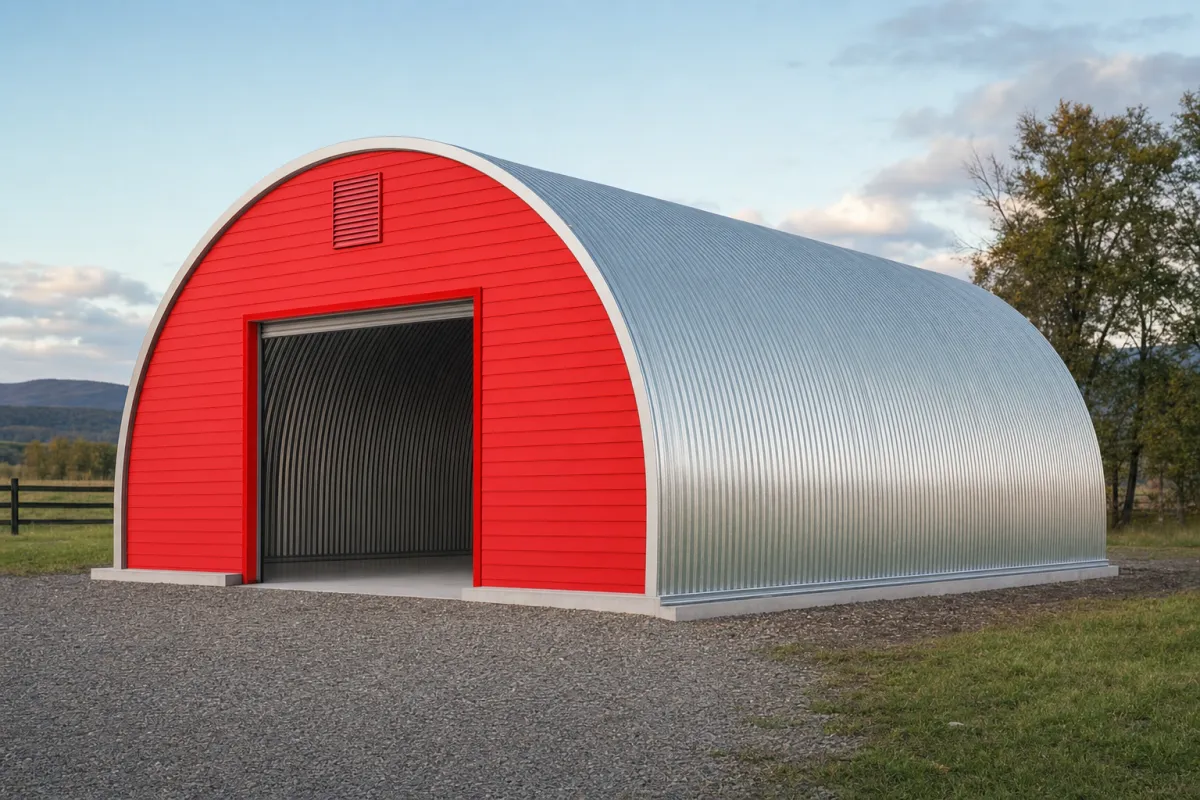
Sizing note specific to arches: height and width are the same decision. A 30-foot-wide Q model peaks around 15 feet, a 40-footer around 19, so choosing width also chooses your center clearance and your ability to add a mezzanine or lift later. Check the manufacturer’s profile chart against your tallest equipment before falling in love with a footprint; with arches, the cross-section is the floor plan.
Framing systems, head to head
| System | Kit $/sqft modeled | Strengths | Watch for |
|---|---|---|---|
| Quonset arch | $8 – $20 | Cheapest span, DIY-friendly, hurricane-rated shapes | End walls, curved-wall space, thrust foundation |
| Red iron rigid frame | $12 – $25 | Any span, straight walls, easy expansion | Crane and crew for erection |
| Cold-formed C-channel | $10 – $18 | Light, cheap small spans | Load limits in snow/wind country |
| Tubular (carport-style) | $8 – $16 | Sold installed, fastest to own | Light gauge, limited spans |
Arch buying mechanics nobody advertises
Q, S, and P models price differently for a reason
The foundation carries sideways loads
Freight favors the arch, assembly favors the patient
Used and surplus arches are a real market
Condensation is the arch's quiet tax
The 10 guides in this cluster
Quonset hut cost
Quonset cost per square foot
20x30 quonset cost
30x40 quonset cost
30x60 quonset cost
40x60 quonset cost
Quonset vs red iron cost
Quonset vs pole barn cost
Cold-formed vs red iron cost
Tubular vs red iron cost
Already live on the site
How to spend less without regret
- DIY the assembly if you'll honestly show up for 3-6 weekends; it's the arch's whole advantage
- Price both end walls in every quote comparison, always
- Choose the S model only if you need straight walls; the Q is cheaper roof
- Get the thrust foundation engineered once, correctly; redoing curbs is misery
- Watch the surplus market for canceled orders with paperwork
- Budget condensation control upfront instead of repainting tools later
- Ship from the nearest plant; arch freight savings are real but distance still bites
When the arch wins, and when it doesn't
The last honest note on arches: they reward owners who match expectations to the geometry. Measure your tallest equipment against the curve at the wall, not at the peak; sketch shelving against an S-model sidewall before assuming you need one; and price the building you’d build today, not the mezzanine fantasy. Arch owners who bought for real storage and workshop use report the best value in steel; the disappointed ones bought a shape they never measured. Ten minutes with a tape measure sorts you into the first group.
Questions buyers actually ask
Are quonset huts cheaper than regular metal buildings?
At kit scope, usually yes: arches model at $8-$20/sqft versus $12-$25 for red iron (July 2026). Add both end walls and the thrust-rated foundation and the gap narrows to 10-20%. If you DIY the assembly, the arch wins clearly; if you’re paying crews either way, get both quotes.
Why are end walls quoted separately?
Because the arch doesn’t need them to stand up, suppliers price the structural shell and let you choose steel, block, timber, or open ends. A steel end wall with a framed door runs $3,000-$12,000 depending on size. Any quote that doesn’t itemize both end walls isn’t a complete building price.
Can I really assemble a quonset hut myself?
Yes, and owners do: panels bolt together on the ground into arch ribs that two or three people raise with a rented lift or winch setup. Budget honest weekends, torque every bolt to spec, and rent fall protection. DIY assembly is where the arch saves $6,000-$15,000 over crewed erection on mid sizes.
Do quonset huts hold value?
They hold utility value (spans and storage) but appraise below straight-wall buildings in most markets, and lenders can be pickier. If resale or appraisal matters, an S-model with straight sidewalls or a red iron building is the safer money; if working utility per dollar matters, the arch is unbeatable.
Do quonset huts need permits like regular buildings?
Yes: same counties, same loads, same process. The arch’s engineering paperwork comes from the manufacturer for your snow and wind numbers, and permitted counties want it stamped. Ag exemptions apply to arches exactly as they do to rigid frames when the use genuinely qualifies.
How long does DIY quonset assembly take?
A 30×40 typically takes two or three people 3-6 working weekends: one assembling arch ribs on the ground, one or two raising and bolting, one on end walls and doors. Rent a lift for raising day and torque every bolt to the chart; the schedule killers are weather and underestimating the end walls.
Can you insulate a quonset hut?
Yes, and the curve helps: spray foam follows the arch perfectly at $1.50-$3.00/sqft of shell, and blanket systems drape well on S models. Condensation control matters more than R-value in unheated arches; even a thin foam layer stops the interior rain that bare steel produces on cold mornings.
Ready to price it for real?
Written by the Steel Building Editorial Team | Last updated July 10, 2026 | Pricing data collected June-July 2026