

SteelBuildingKit Cost Index · Updated July 10, 2026 · Pricing collected June-July 2026
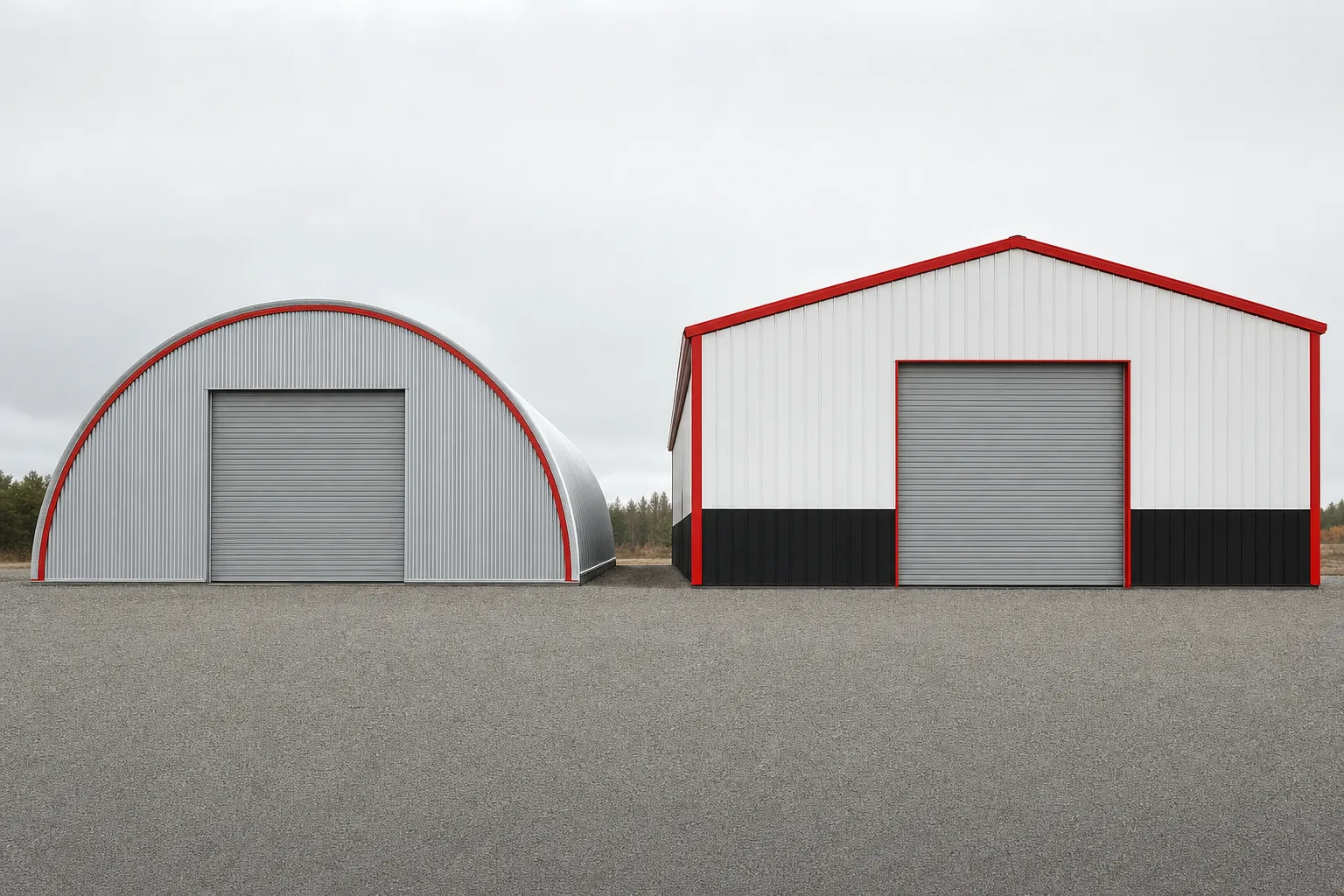
A quonset hut kit costs $8 to $20 per square foot against $12 to $25 per square foot for a red iron rigid frame kit (modeled national ranges, July 2026). On finished projects the gap narrows hard: end walls at $3,000-$12,000 each and a thrust foundation at +$2,000-$6,000 are arch-only costs, so a 30×40 lands at $32,000-$48,000 turnkey as a quonset versus $36,000-$54,000 as red iron. The arch usually still wins on price; red iron wins on walls.
This is the two-way version of a four-way question. Our metal building prices by frame type guide compares all four kit systems at a glance; this page, part of the quonset and framing cost hub, runs the arch-versus-I-beam decision in depth, because these two systems compete for the same shops, barns, and storage buildings more than any other pairing.
| What you’re pricing | Quonset arch modeled | Red iron rigid frame modeled |
|---|---|---|
| Kit price per sqft | $8 – $20 | $12 – $25 |
| 30×40 kit | $18,000 – $26,000 | $17,000 – $25,000 |
| 30×40 turnkey | $32,000 – $48,000 | $36,000 – $54,000 |
| 40×60 turnkey | $55,000 – $85,000 | $65,000 – $110,000 |
| End walls | $3,000 – $12,000 each, extra | Included in the engineered kit |
| Foundation | Slab + $2,000 – $6,000 thrust detail | Standard slab, $6 – $12/sqft |
Kit = engineered steel package with stamped drawings. Turnkey = kit, delivery, slab, and assembly, with one basic end wall in the quonset case. National mid-ranges, July 2026.
Ranges are modeled national estimates from published quonset factory pricing and red iron supplier price lists collected June-July 2026, cross-checked against component benchmarks: slab concrete at $6-$12/sqft, erection at $4-$10/sqft, end wall packages, and freight lanes. Both systems sell through promotions, so we model the ranges buyers close at, labeled modeled throughout. Full methodology lives in the SteelBuildingKit Cost Index.
The claw-back: why the arch’s lead shrinks on real projects
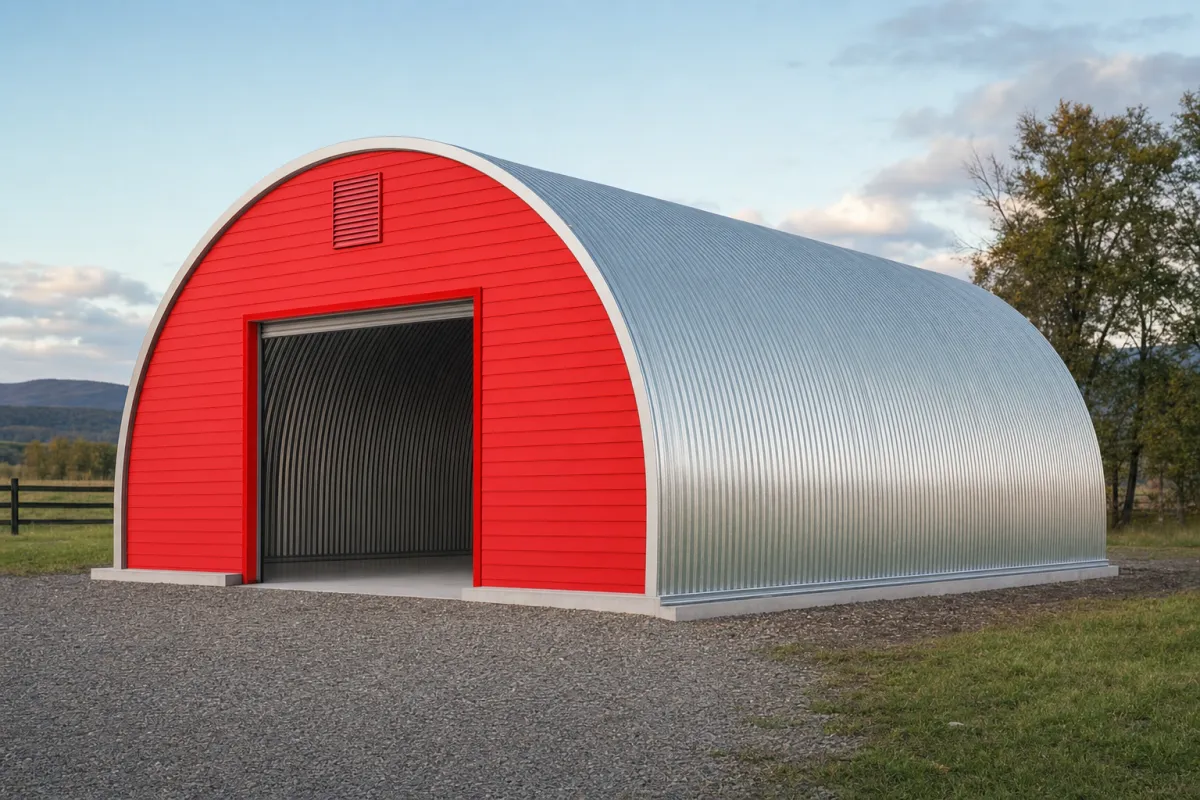
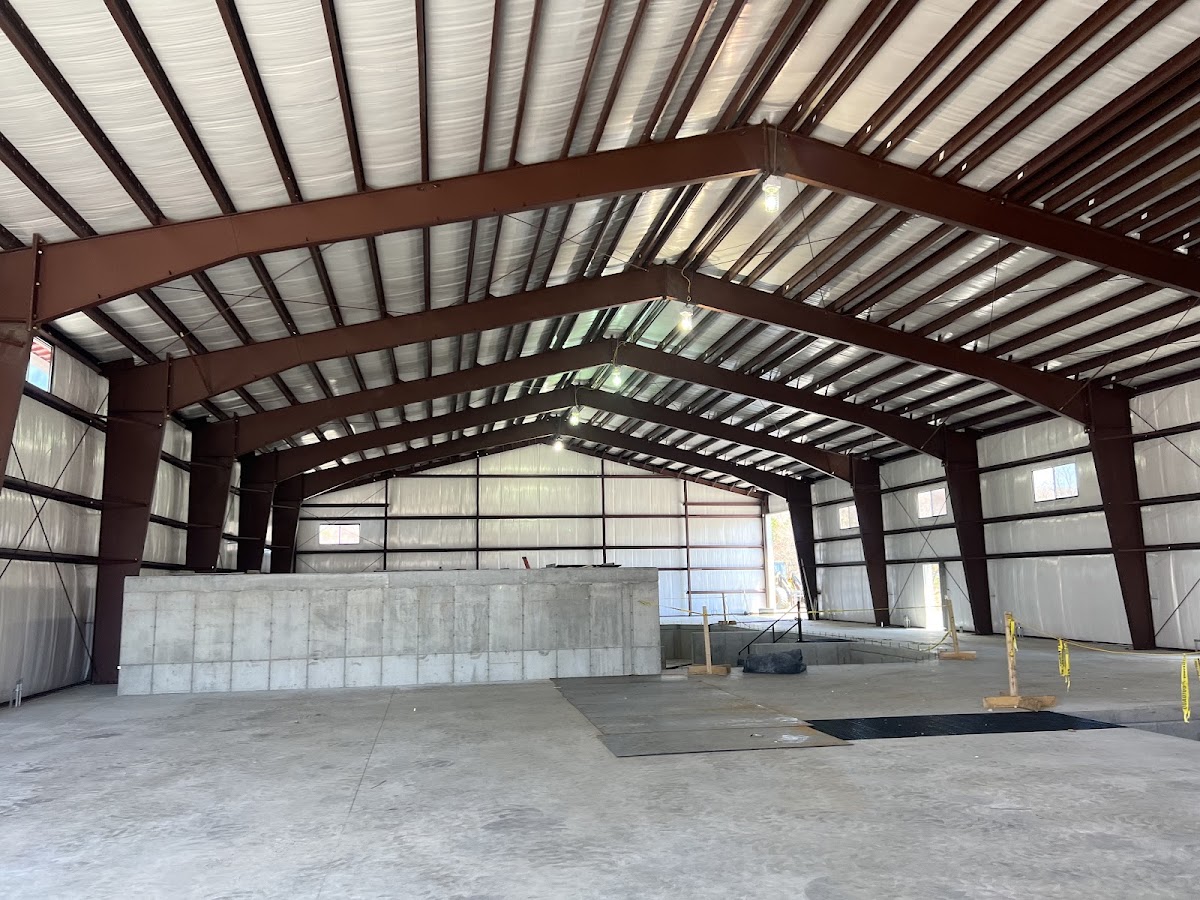
The famous quonset number is a tube. A red iron kit arrives as a building: framed end walls, girts, straight walls ready for doors anywhere along them. To make the tube a building you buy back what the ad left out, and two lines do the damage. End walls run $3,000-$12,000 each, and they hurt most on short buildings where two ends can add half the kit price again. The thrust foundation adds $2,000-$6,000 over the plain slab a rigid frame anchors to, because an arch pushes outward along both base rails for the life of the building. Assembly partially refunds the difference: arch ribs go up with a small crew at roughly $4-$10/sqft with heavy DIY participation, and owner assembly keeps $6,000-$15,000 on mid-size huts, a savings red iron rarely offers casual builders.
Worked example at national mid-range rates, 30×40 with two finished ends and hired labor everywhere: the quonset models at roughly $40,000 turnkey and the red iron at $45,000. Swap to one basic end wall and owner assembly and the arch drops toward $32,000-$34,000 while the red iron barely moves. That is the whole comparison in one paragraph: the arch’s advantage is real, and it is concentrated in configurations with cheap ends and free labor. Run both against your own spec in the steel building cost calculator before deciding.
What swings the decision, lever by lever
| If your project has… | Advantage | Why |
|---|---|---|
| Long storage footprint (30×60+) | Quonset | Repeated ribs get cheaper; end walls amortize |
| Wide clear span at 40 ft | Quonset | Arches span naturally; biggest turnkey gap |
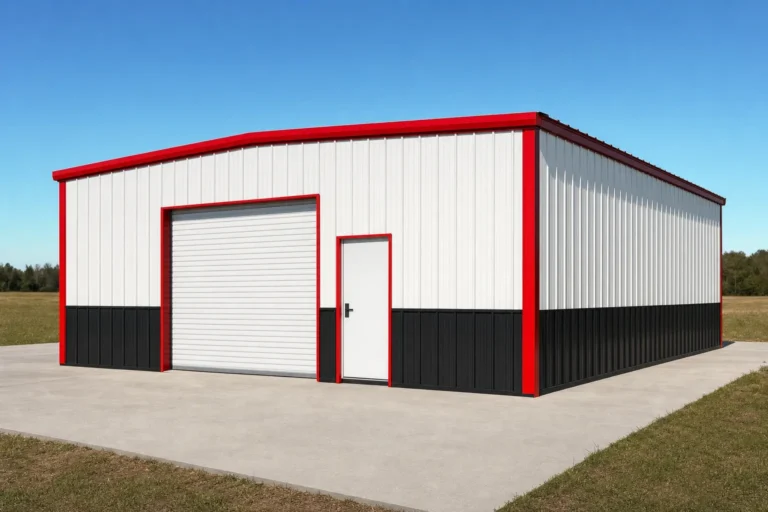
| Sidewall doors, windows, lean-tos | Red iron | You cannot cut a door into an arch’s side |
| Wall-mounted shop equipment | Red iron | Straight walls; arch flanks lose 2-3 ft each side |
| Owner assembly plans | Quonset | Saves $6,000 – $15,000 with a small crew |
| Future expansion or resale focus | Red iron | Bolt-on bays; appraises as conventional structure |
The straight-wall dividend
Price aside, the systems diverge on what the square footage is worth. A Q-model arch gives up 2-3 feet of full-height space along each sidewall, so a 30-foot-wide hut works its walls like a 24-25 foot room; S-model arches fix this for a 5-15% kit premium. Red iron walls are flat, framable, and load-tolerant: doors and windows go anywhere, lean-tos bolt on later at $12-$22/sqft, mezzanines and crane rails hang from the frame, and future bays extend the building instead of replacing it. Buyers and appraisers also read straight-wall steel as conventional construction, which matters at resale. If most of your gear lives against walls, price the red iron and the S-model arch, not the Q; the full quonset hut cost guide breaks down the model letters and what each costs.
How your location moves the comparison
Both systems carry your county in their price, but not equally. Heavy snow and wind engineering adds 8-15% to either kit; the arch sheds snow well and handles wind loads efficiently, which is why quonsets historically dominate the northern plains. Frost depth hits the quonset a little harder because the thrust detail must ride below the frost line, adding $1,000-$3,000 in northern counties versus a few hundred for deeper slab edges on red iron. Freight runs $500-$3,000+ for either system; nested arches ship dense, red iron ships heavy. Labor swings both a few thousand either way, and permits run $150-$4,000, with some rural offices less familiar with arch drawings and slower to review them. Net effect: location moves both totals 20-30%, and rarely changes which one wins.
The comparison checklist
Get one quote per system at an identical brief, then check these lines before believing either number.
- Same footprint, same door schedule, same insulation on both quotes
- Quonset quote includes end walls, itemized, with every opening listed
- Quonset foundation priced from the thrust drawings; red iron from a standard slab spec
- Both kits engineered for YOUR county’s snow and wind loads, stamped drawings included
- Assembly priced honestly on both: crew quotes in hand, or a real DIY plan for the arch
- Usable width compared, not nominal width: subtract the arch’s curved flanks or price the S-model
- Future plans stress-tested: sidewall doors or additions rule out the arch today
- Freight to your address on both quotes, not “FOB factory”
Two related guides in this series take the next step: 40×60 quonset cost breaks down its side of the decision, and quonset vs pole barn cost covers the other.
Quonset vs red iron FAQs
Is a quonset hut cheaper than a red iron building?
On the kit, usually: $8-$20/sqft against $12-$25/sqft (modeled July 2026). On finished projects the gap narrows to roughly 10-15% because end walls and the thrust foundation are arch-only costs. The arch wins biggest on long or wide simple buildings with owner assembly; red iron closes the gap wherever finished ends and hired crews are involved.
Why do quonset quotes grow so much after the ad price?
The ad prices an open-ended tube. End walls add $3,000-$12,000 each, the thrust foundation adds $2,000-$6,000 over a plain slab, and assembly and freight ride on top (modeled July 2026). A red iron quote starts higher but already includes framed ends, which is why honest comparisons run turnkey totals, never kit prices.
Which is stronger, a quonset or a red iron building?
Both are engineered to the same IBC and ASCE 7 loads for your county, so neither is generically stronger. The arch is an extremely efficient shape for snow shedding and wind; red iron handles concentrated loads better: cranes, mezzanines, heavy doors, and anything hung from the frame. Buy the loads your project needs, stamped, in either system.
Can I put a door in the side of a quonset hut?
No; the arch is the structure, and openings belong in the end walls. If your layout needs sidewall doors, windows down a wall, or a lean-to, that alone decides the comparison in red iron’s favor. S-model arches offer straight sidewall sections, but large sidewall openings remain rigid frame territory.
Which is the better DIY build?
The quonset, decisively. Arch ribs bolt together on the ground and stand with two or three people and a rented lift, keeping $6,000-$15,000 of assembly money (modeled July 2026). Red iron erection involves heavy primary frames and is usually crew work at $4-$10/sqft. If you will hire either way, that DIY edge disappears from the math.
Ready to price this building for real? Compare verified metal building companies for this project type, with real reviews and track records.
Sources and methodology: published supplier price lists and advertised kit pricing (June-July 2026); component cost benchmarks for ready-mix concrete, erection labor, and freight; IBC and ASCE 7 for load context. All figures are modeled national estimates, labeled as modeled, and reviewed quarterly; see the full Cost Index methodology. This guide links to our independent company directory; listings never change published numbers.
Written by the Steel Building Editorial Team | Last updated July 10, 2026