

SteelBuildingKit Cost Index · Updated July 10, 2026 · Pricing collected June-July 2026
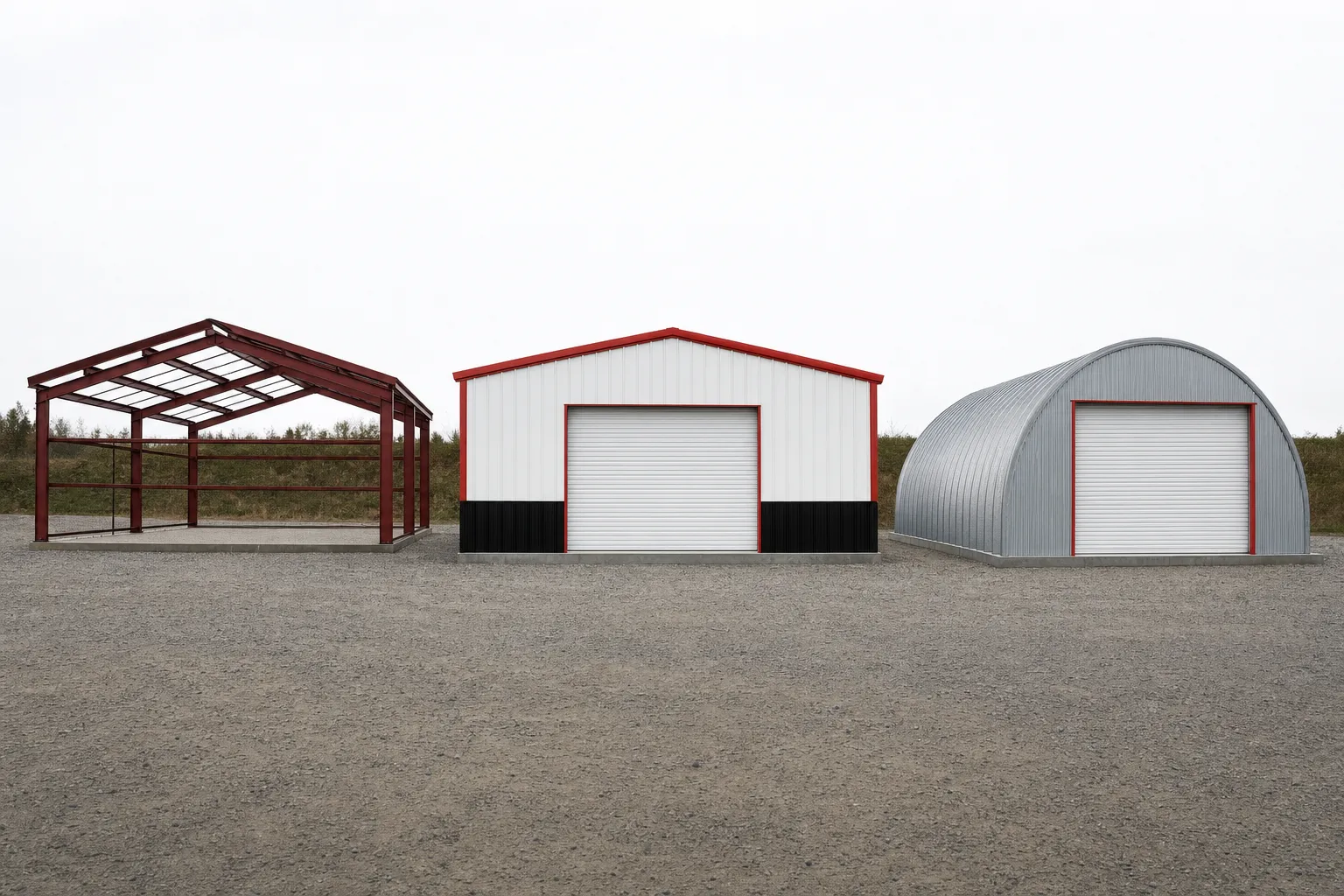
Metal building kit prices split cleanly by frame type: red iron rigid frames run $12 to $25 per square foot, cold-formed steel $10 to $18, tubular frames $8 to $16, and quonset arches $8 to $20 (modeled national kit ranges, July 2026). The cheap end of each range is not the same building as the cheap end of the next, and the frame you pick decides your spans, your loads, your DIY odds, and your foundation bill before a single option is added.
Frame type is the most underexplained variable in steel building shopping. Two companies can quote “a 30×40 metal building” $8,000 apart and both be honest, because one is pricing 2-inch tubing and the other is pricing hot-rolled I-beams. This guide prices all four frame families on equal footing, then prices the same building in each so the differences stop hiding. It extends the scope rules from our cost fundamentals hub into the structure itself.
| Frame type | Kit price modeled | Clear-span sweet spot | Typical buildings |
|---|---|---|---|
| Red iron rigid frame | $12 – $25 /sqft | 40 – 200+ ft | Shops, warehouses, barns, commercial |
| Cold-formed steel | $10 – $18 /sqft | Up to about 40-60 ft | Garages, small shops, storage |
| Tubular frame | $8 – $16 /sqft | Up to about 30-40 ft | Carports, sheds, small garages |
| Quonset arch | $8 – $20 /sqft | 20 – 60 ft arch widths | Ag storage, DIY workshops |
Kit-only scope: engineered steel package with stamped drawings, before concrete, erection, or freight. Turnkey typically lands at 2.2-2.6x these figures. National mid-ranges, July 2026.
Ranges are modeled national estimates from published price lists and advertised kit pricing across all four frame categories, collected June-July 2026, cross-checked against component benchmarks for panels, framing weight per square foot, and freight. Frame families overlap at the edges by design: a heavy cold-formed building can out-price a light red iron one. All figures are labeled modeled; full methodology in the SteelBuildingKit Cost Index.
What are you actually buying with each frame?
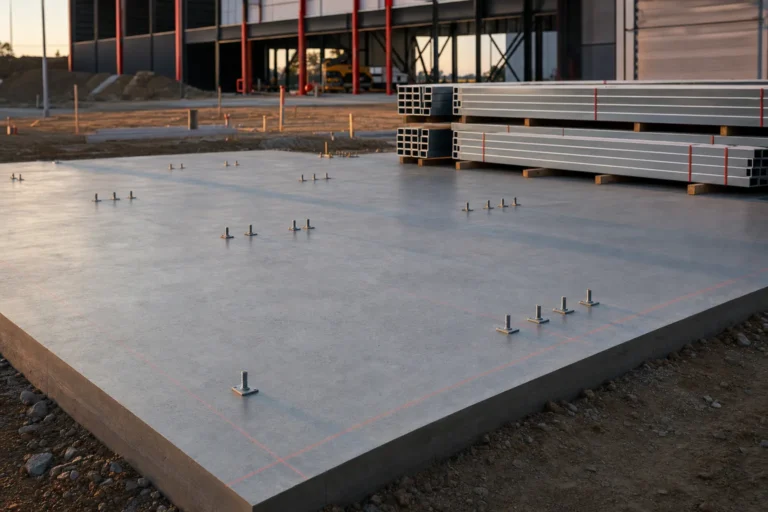
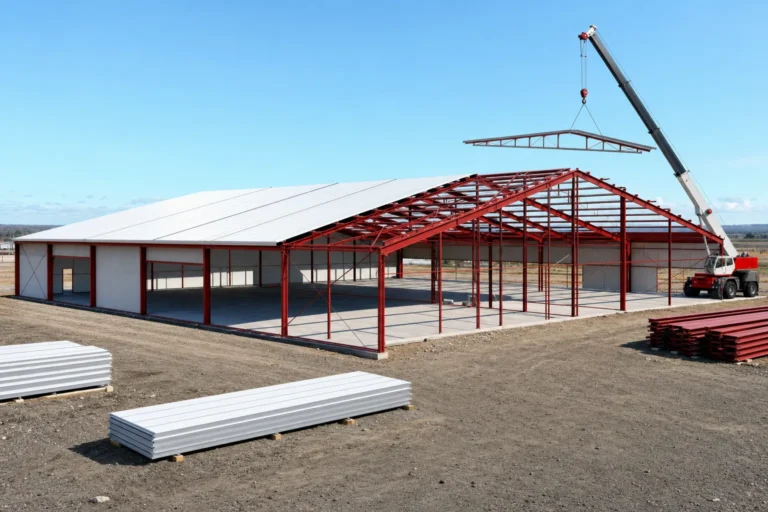
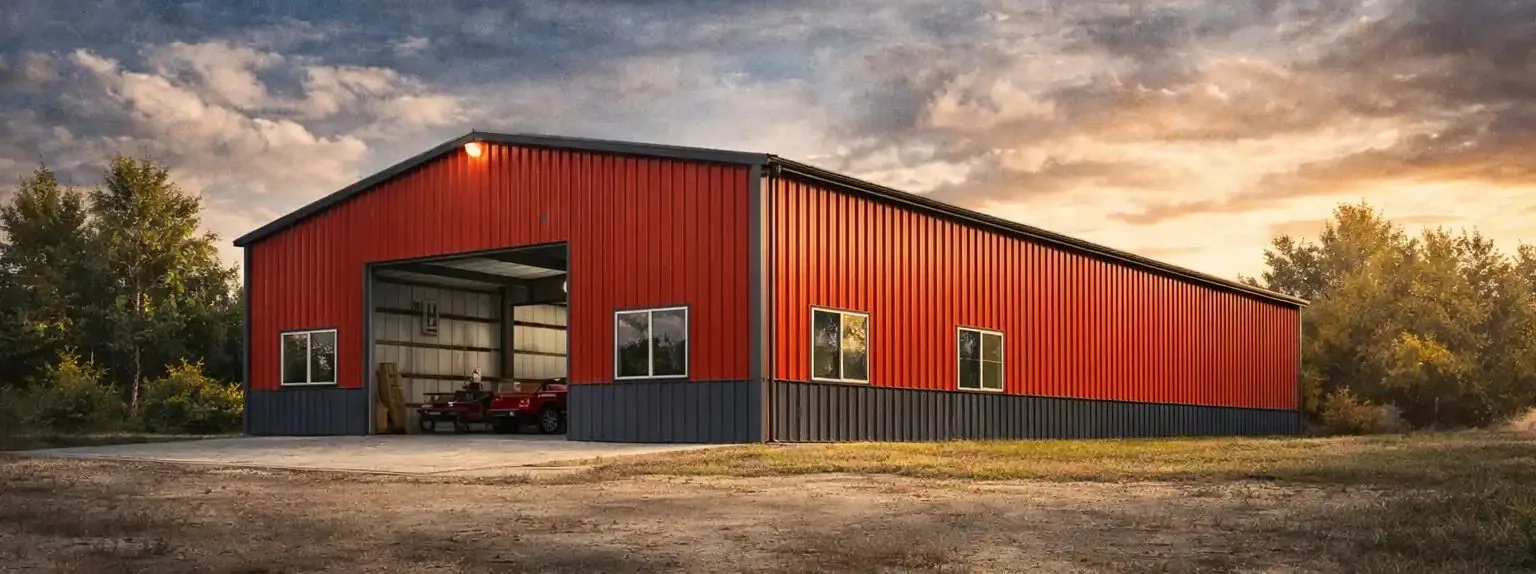
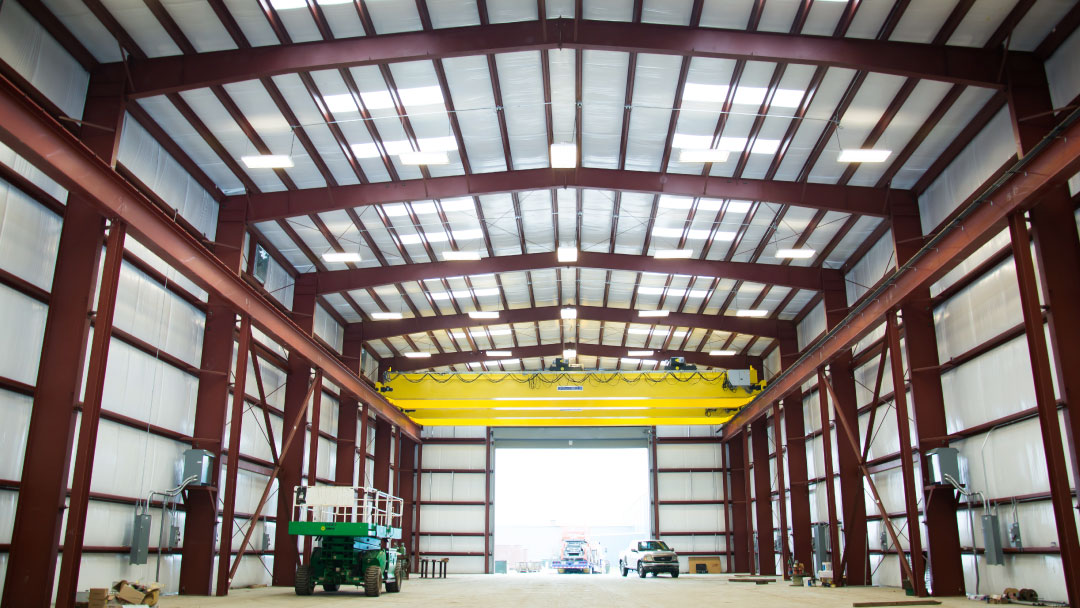
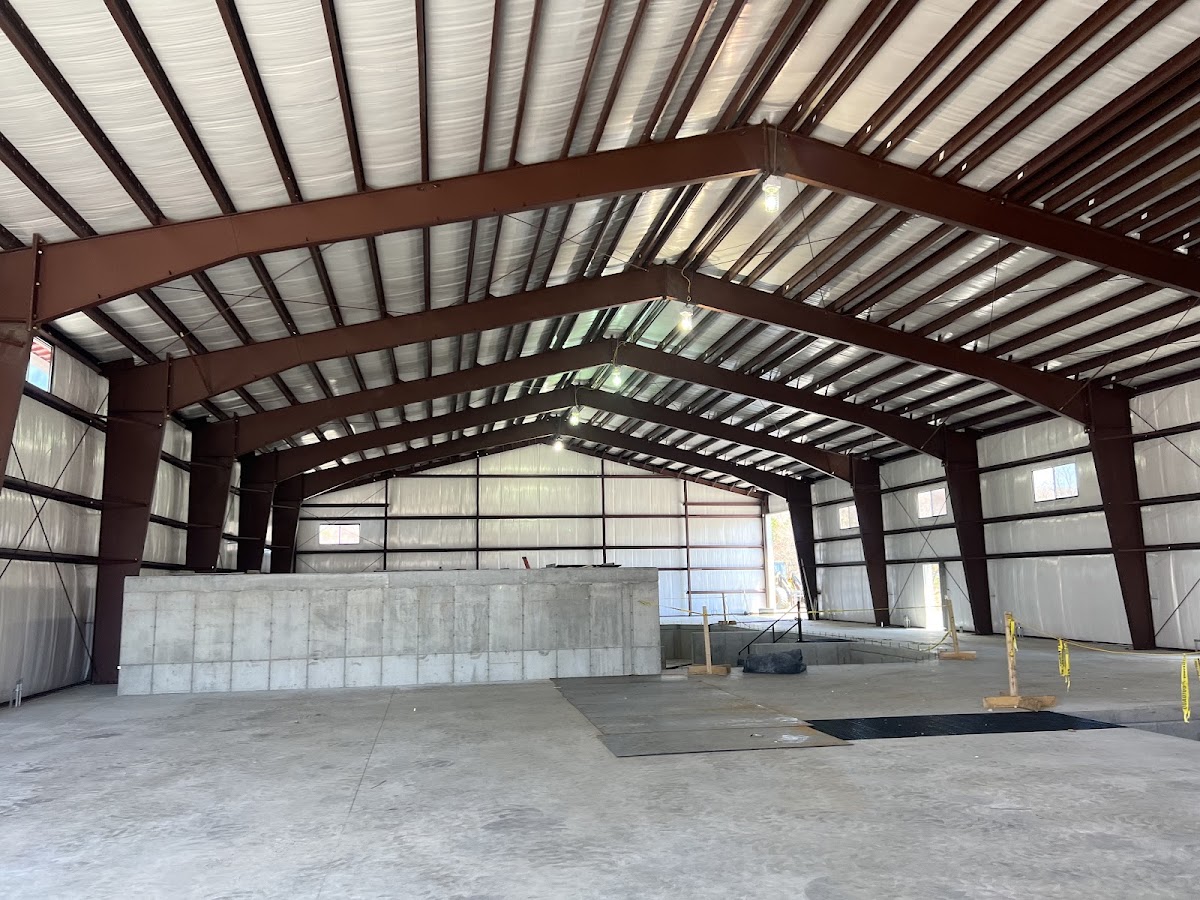
Red iron rigid frame is the industry workhorse: hot-rolled, shop-welded I-beam frames, bolted together on site. It costs the most per square foot at small sizes and the least engineering anxiety at every size, because it clear-spans 40 to 200+ feet, carries heavy snow and wind ratings routinely, and is what most county plan reviewers see every week. Above roughly 40 feet of width it usually stops being a choice; it is simply what works.
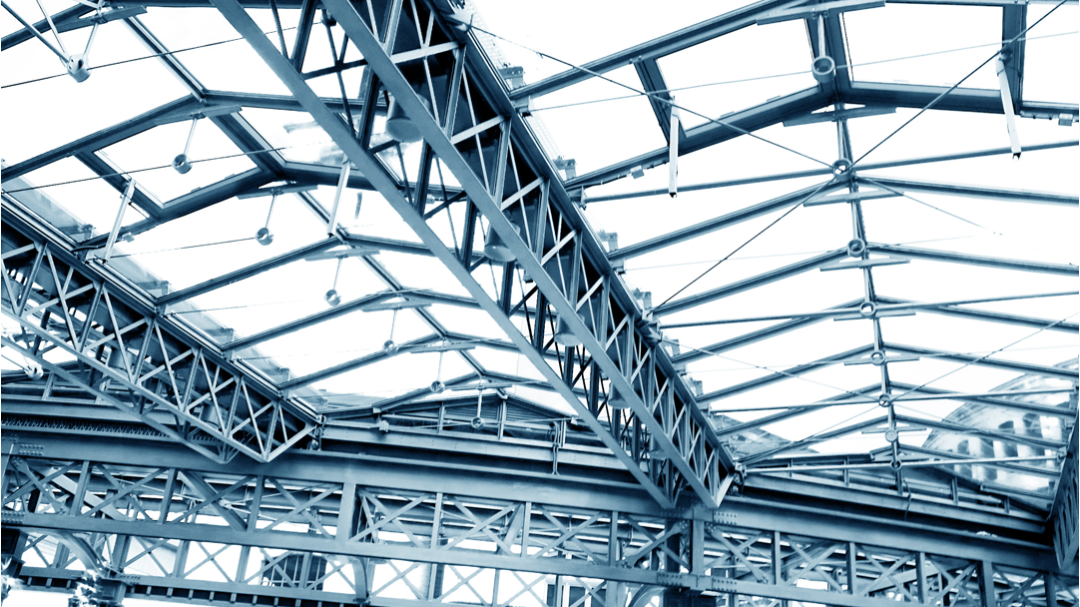
Cold-formed steel frames bend heavy-gauge sheet into C-shaped sections. Lighter to freight and assemble than red iron and cheaper below 60 feet of width, it is the value play for garages and modest shops. The trade is headroom: load capacity and spans cap out sooner, and heavy-snow counties can engineer the savings right back out of it.
Tubular framing, square galvanized tube bent into bows, is what carport companies build with, scaled up into fully enclosed garages. It is the cheapest enclosed steel per square foot and frequently sold installed at no extra labor line, which makes small tubular garages excellent value. The ceiling is structural: spans, eave heights, and load ratings all cap lowest of the four, so confirm your county’s loads in writing before falling for the price.
Quonset arches delete the frame entirely: corrugated, heavy-gauge arch panels bolt together so the skin is the structure. Kit prices look aggressive, DIY assembly is genuinely realistic, and the arch sheds snow well. The costs hide at the ends and the edges, which is why quonsets get their own math below.
What does the same 30×40 cost in each frame?
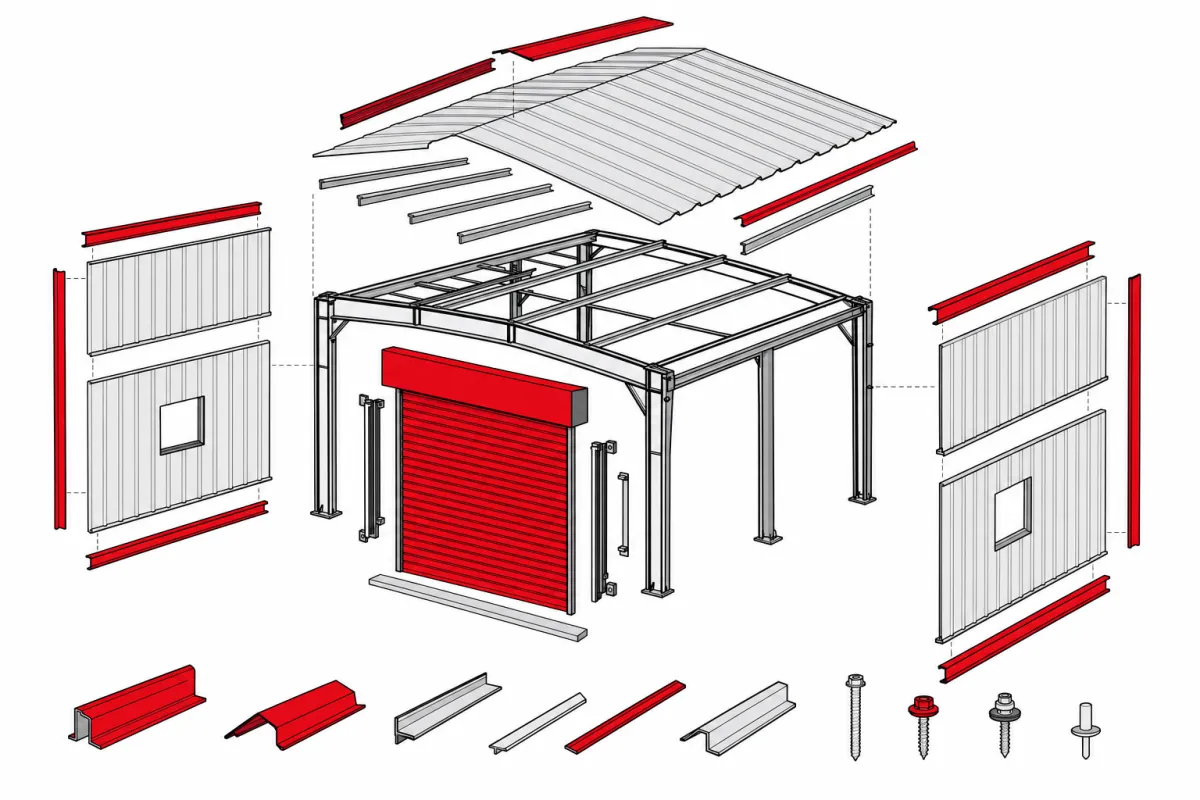
Ranges by category flatter the light frames, so here is one identical footprint, 30×40 (1,200 sqft), priced in all four. This is where frame marketing meets arithmetic.
| Frame | 30×40 kit modeled | What the price does not say |
|---|---|---|
| Red iron rigid frame | $17,000 – $25,000 | Highest resale familiarity; permits sail through |
| Cold-formed steel | $12,000 – $21,500 | Heavy-load counties push it toward red iron money |
| Tubular frame | $10,000 – $19,000 | Often includes installation; verify load ratings |
| Quonset arch | $18,000 – $26,000 | End walls are extra: $3,000 – $12,000 each |
Baseline enclosed spec with standard openings, engineered for 20-40 psf snow and 115-140 mph wind. Kit scope, July 2026. Tubular quotes are frequently kit + installation combined; normalize before comparing.
Worked example of a fair comparison: a $14,500 cold-formed 30×40 kit plus $1,200 freight, $9,600 slab ($8/sqft), $7,800 erection ($6.50/sqft), and $900 permits totals $34,000. The red iron version of the same building, $21,000 kit with the same site numbers, totals $40,500. The $6,500 gap is real, but it buys span headroom, easier future add-ons, and the frame every appraiser recognizes. Run your own footprint through the steel building cost calculator, then get one quote from each frame family and normalize the scope.
Which levers move each frame’s price?
| Lever | Typical impact modeled | Worth it when |
|---|---|---|
| Eave height +2 ft (rigid frames) | +6 – 9% on the kit | Lifts, RVs, mezzanines; tubular caps out early |
| Heavy snow/wind engineering | +8 – 15% on the kit | Set by county; can disqualify light frames entirely |
| 24-gauge panels over 26 | +8 – 12% on panel cost | Hail country; quonsets already use heavy gauge |
| Quonset end walls | +$3,000 – $12,000 each | Unavoidable if you want doors and weather sealing |
| Quonset thrust foundation | +$2,000 – $6,000 vs plain slab | Required by arch design; budget it up front |
| Extra roll-up door | +$1,500 – $4,500 installed | Any frame; cheapest to frame at order time |
The quonset row deserves its own math
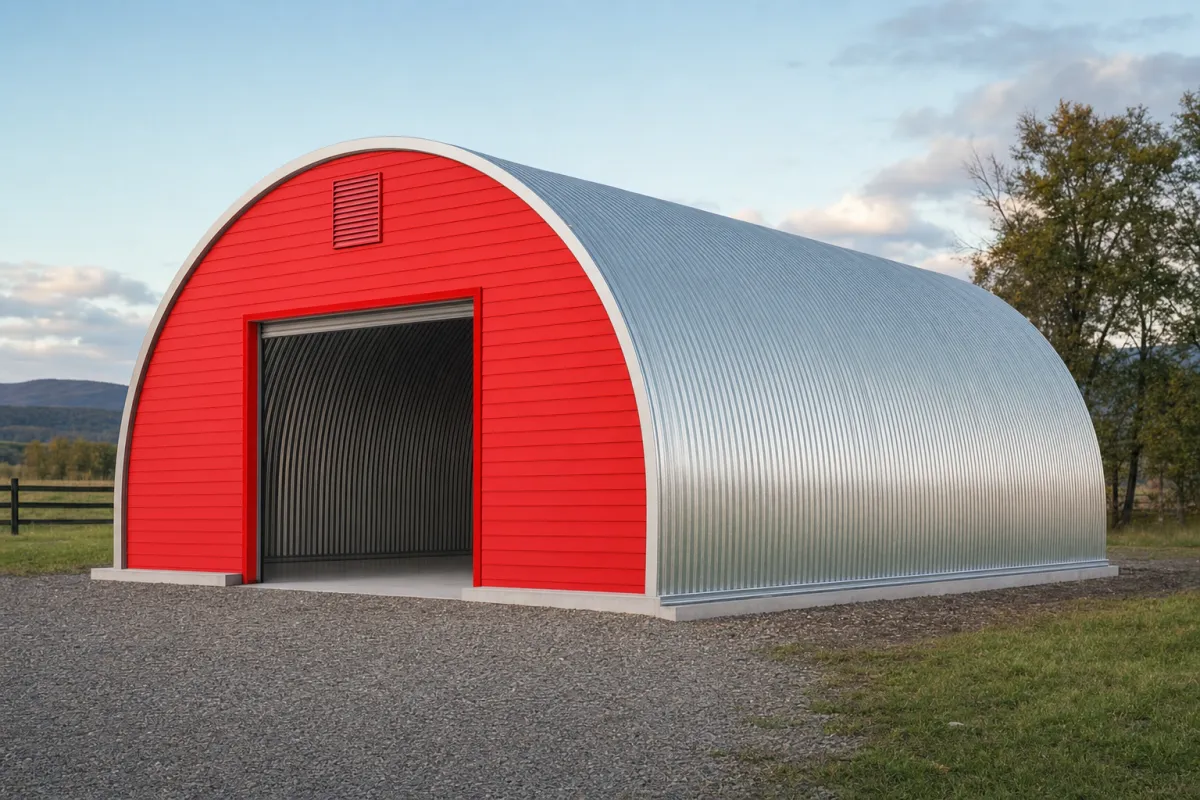
Quonsets earn their reputation as the budget-and-DIY play, but the honest comparison includes three lines the arch price omits. End walls run $3,000-$12,000 each, and you need two. The arch pushes outward, so the foundation needs thrust engineering, +$2,000-$6,000 over a plain slab. And straight-walled interiors fit shelving and lifts better than curved ones, so compare usable volume, not floor area. In exchange, quonset DIY assembly is the most achievable in steel and saves $6,000-$15,000 on mid-size buildings. A 30×40 quonset runs $18,000-$26,000 kit and $32,000-$48,000 turnkey (modeled July 2026), right on top of red iron money once end walls land. The full arch-specific math lives in our quonset and framing hub, and the quonset hut cost guide prices the popular sizes line by line.
How does steel framing price against a wood pole barn?
The frame decision often includes one non-steel contender, so here is the honest cross-comparison. On small, simple builds, a wood pole barn typically prices 10-20% below a comparable steel building upfront (modeled July 2026): posts in the ground beat engineered foundations on day one, and rural pole-barn crews are plentiful. The economics flip with time. Steel carries insurance premiums that run 10-25% lower in many markets, never rots or takes termites, and skips the repaint-and-repair cycle that costs wood owners roughly $3,000-$6,000 per decade. By year ten, the modeled total cost of ownership favors steel on most enclosed buildings, and the gap widens every year after. Pole barns keep a legitimate lane: minimal-budget, open-sided ag cover where the upfront number is the whole decision. For anything enclosed, conditioned, or expected to outlast its loan, the frame-type table at the top of this page is the better shopping list.
One more decision rule worth writing down: pick the frame family by your widest clear span and your county’s loads first, and only then by price. A frame that needs interior columns in the middle of your shop layout, or reinforcement packages to pass plan review, is not cheaper; it is a different, worse building at a similar final number.
How your location moves frame prices
Location decides more than price here; it can decide the frame itself. County snow and wind loads add 8-15% to any kit, but they hit the light frames hardest: a 50 psf snow requirement can push cold-formed and tubular buildings into reinforced specs that erase their price advantage, or off the approved list entirely. Frost depth moves foundations for every frame ($800-$2,500 extra for northern footings on a mid-size slab), with quonset thrust foundations stacking on top. Freight favors whoever roll-forms nearby: $500 close in, $3,000+ cross-country, and quonset arch bundles ship compactly, which helps remote sites. Labor swings erection thousands either way, except on tubular packages where installation is usually bundled. Permit offices are the quiet factor: red iron drawings move through plan review fastest because reviewers see them most, worth real weeks in strict counties.
The frame-type quote checklist
Frame-family shopping fails when quotes are not normalized. Force every quote through this list first.
- Frame type named explicitly on the quote: red iron, cold-formed, tubular, or quonset, not “steel building”
- Scope normalized: kit only vs installed vs turnkey, stated in writing on every quote
- Load ratings for YOUR county confirmed for the specific frame, especially tubular and cold-formed
- Tubular quotes split into kit and installation so they compare honestly with kit-only pricing
- Quonset quotes include both end walls and the thrust-engineered foundation
- Gauge specified for framing and panels, not “heavy-duty steel”
- Clear-span width confirmed against your layout; interior columns change everything
- Stamped engineering drawings included for the frame type quoted
The arch’s sharpest matchup is against posts: the quonset vs pole barn comparison runs it with lifetime numbers on both sides.
The same line-by-line pricing continues in how location changes costs and in cost by use.
Frame type pricing FAQs
Which metal building frame type is cheapest?
By kit price per square foot: tubular ($8-$16) and quonset ($8-$20), then cold-formed ($10-$18), then red iron ($12-$25), modeled July 2026. On a finished project the gaps narrow: quonset end walls and foundations, and load upgrades on light frames, hand back much of the sticker savings.
Is red iron worth the extra cost?
When you need spans past 40-60 feet, heavy load ratings, easy future expansion, or smooth plan review, yes: that is what the extra $2-$7/sqft buys. For a modest garage in a mild county, cold-formed or tubular delivers the same enclosed square footage for less, honestly.
What is the difference between red iron and cold-formed steel buildings?
Red iron uses hot-rolled, welded I-beam frames; cold-formed bends heavy-gauge sheet into C-sections. Red iron costs more ($12-$25/sqft vs $10-$18) but clear-spans 200+ feet and carries heavier loads. Cold-formed wins on price and freight below roughly 60 feet of width in moderate-load counties.
Are quonset huts really cheaper than straight-wall buildings?
At the kit line, often: $8-$20/sqft with genuine DIY savings of $6,000-$15,000 on mid sizes. At the project line, frequently not: two end walls at $3,000-$12,000 each and a thrust foundation at +$2,000-$6,000 close the gap. Compare turnkey totals, not arch prices.
Can tubular-frame buildings handle snow country?
Some can, with reinforced bows, tighter bow spacing, and certified ratings, and the upgrades cost real money: heavy-load engineering runs +8-15% and can push a tubular quote into cold-formed territory. Get your county’s snow load in writing first, then ask for the certified rating sheet, not a verbal assurance.
Which frame type is best for DIY assembly?
Quonset arches, by design: bolt-together panels, no crane, and modeled savings of $6,000-$15,000 on mid-size buildings. Bolt-up cold-formed and small red iron kits are DIY-realistic up to about 40 feet wide with rented lift equipment. Large red iron clear spans are crew-and-crane territory.
How much does a 40×60 cost in each frame type?
Modeled July 2026, kit scope: red iron $28,000-$44,000, cold-formed roughly $24,000-$43,000 where the span qualifies, and a 40×60 quonset $30,000-$46,000 before end walls ($3,000-$12,000 each). Turnkey, the red iron runs $65,000-$110,000 and the quonset $55,000-$85,000; normalize scope before comparing.
Ready to price this building for real? Compare verified metal building companies for this project type, with real reviews and track records.
Sources and methodology: published supplier price lists and advertised kit pricing (June-July 2026); component cost benchmarks for ready-mix concrete, erection labor, and freight; IBC and ASCE 7 for load context. All figures are modeled national estimates, labeled as modeled, and reviewed quarterly; see the full Cost Index methodology. This guide links to our independent company directory; listings never change published numbers.
Written by the Steel Building Editorial Team | Last updated July 10, 2026