

SteelBuildingKit Cost Index · Updated July 10, 2026 · Pricing collected June-July 2026
Five forces move metal building prices: quoted scope (turnkey runs 2.2-2.6x the kit), building size ($10-$28/sqft kit spread), county loads (+8-15% on the kit), options (each roll-up door +$1,500-$4,500), and the steel market itself, which is why quotes only lock for 7-30 days (modeled July 2026). Two of the five are fully in your control, two are not, and one rewards patience. Here is how each works.
Understanding the movers matters for one practical reason: when two quotes disagree, or when your quote beats or trails an online estimate, one of these five forces explains it. This post is the diagnostic layer of our cost fundamentals hub: not what buildings cost, but why the number in front of you is what it is.
| Price mover | Typical swing modeled | In your control? |
|---|---|---|
| Quoted scope (kit vs turnkey) | 2.2 – 2.6x between the two | Yes: state the scope on every quote |
| Building size and shape | $10 – $28 /sqft kit spread by size class | Partly: the site and mission decide |
| County snow, wind, seismic loads | +8 – 15% on the kit | No: the code office decides |
| Options and openings | $1,500 – $4,500 per roll-up door and up | Yes: the door schedule is yours |
| Steel market and timing | Quotes lock only 7-30 days | Partly: flexible schedules find discounts |
Swings are independent and stack: a small building with heavy loads and a long option list can price double a plain one of the same footprint. Modeled July 2026.
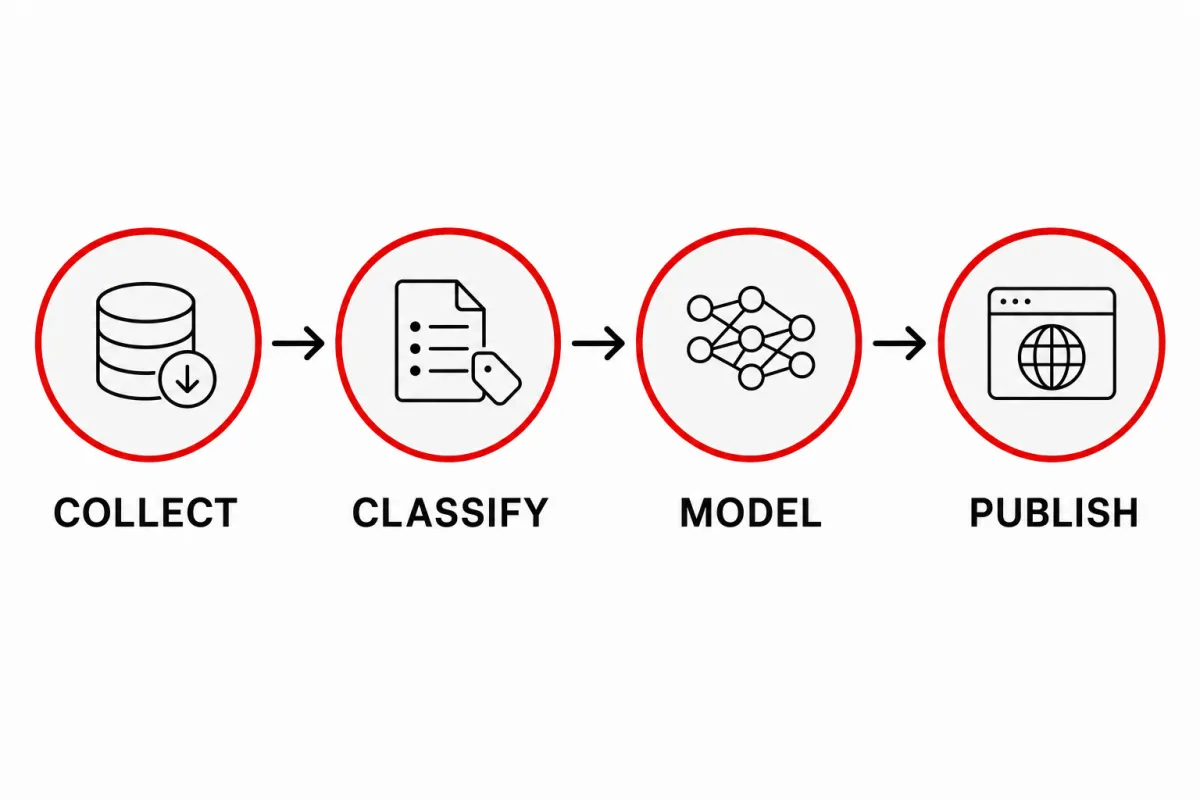
Effects are modeled from published supplier price lists and advertised kit pricing collected June-July 2026, compared across size classes, load specs, and option schedules, and cross-checked against component benchmarks for concrete, erection labor, and freight. We quantify each mover as a range because suppliers weight them differently; all figures are labeled modeled. Full methodology in the SteelBuildingKit Cost Index.
Why do steel prices themselves move?
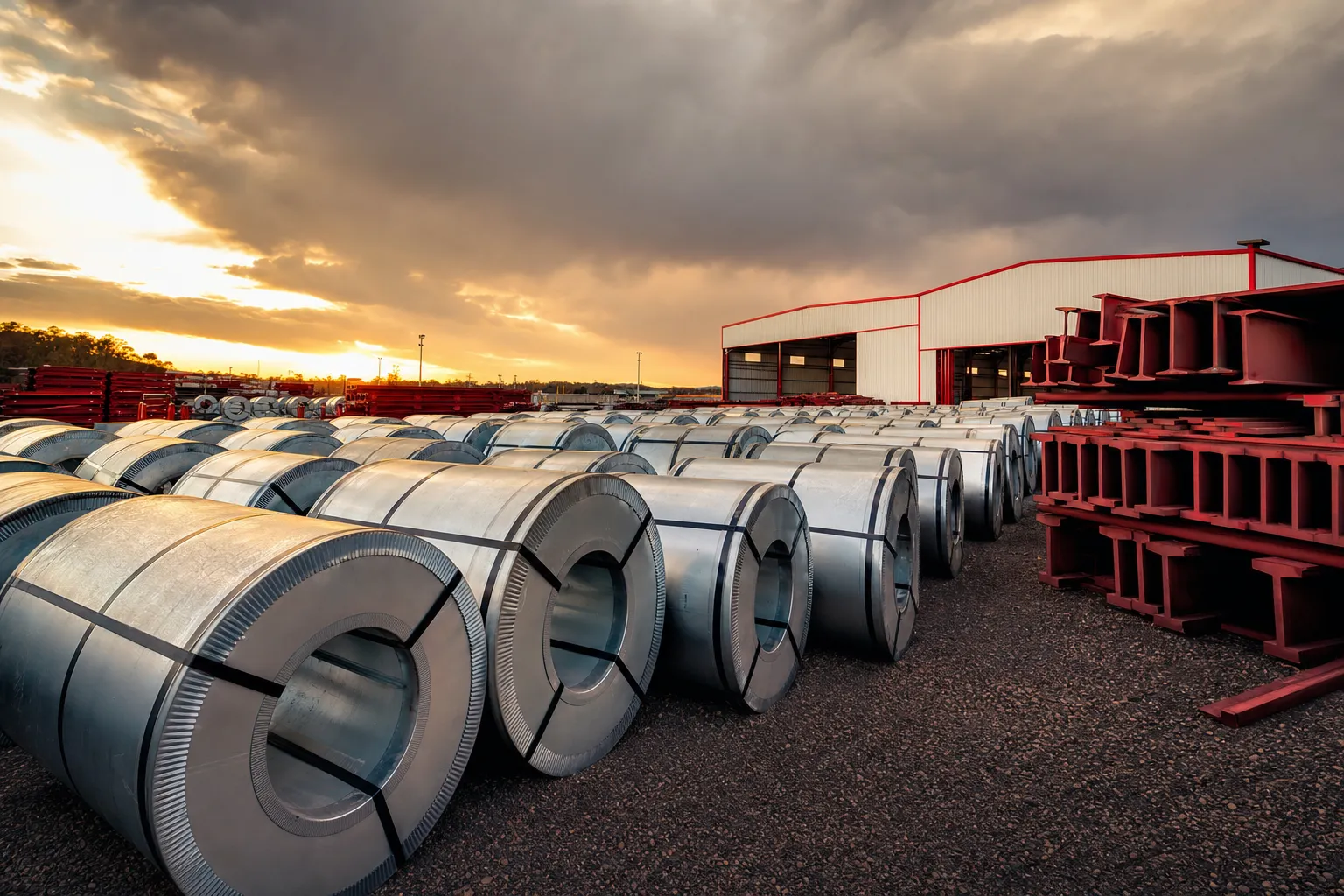
The steel in your building is a commodity before it is a kit. Mills reprice coil with demand, energy costs, and trade policy, and manufacturers pass that movement through, which produces the industry’s defining habit: a written quote locks its price for only 7-30 days. Miss the window and the quote gets refreshed at current mill pricing, up or down. The buyer’s tools are timing tools. Fabrication queues thin out in winter, and suppliers offer genuine winter-fab discounts to keep plants busy; a building ordered in December for spring erection often beats the identical April order. And because engineering, permits, and fabrication consume 10-14 weeks anyway, ordering that far ahead of your build date costs nothing and buys you the freedom to sign when the number looks right rather than when the calendar forces you.
How much do county loads really add?
Every legitimate kit is engineered to your county’s snow, wind, and seismic requirements, and heavier requirements mean more steel: thicker sections, tighter purlin spacing, stronger connections. Moving from a 20 psf snow baseline to a 50 psf mountain county, or from 115 mph inland wind to 150+ mph coastal, adds 8-15% to the kit, more on wide clear spans where the frame carries the load alone. Two practical consequences follow. Never compare a quote engineered for your county against an advertised price engineered for nowhere; the ad will win and mean nothing. And treat load engineering as the one line you never optimize: it is set by the code office, it is what the stamp certifies, and it is the part of the price that keeps the roof up in February.
What do the options actually cost?
| Lever | Typical impact modeled | Worth it when |
|---|---|---|
| Each roll-up door | +$1,500 – $4,500 installed | Real access need, not symmetry |
| Eave height +2 ft | +6 – 9% on the kit | Lifts, RVs, racking height |
| 24-gauge panels over 26 | +8 – 12% on panel cost | Hail country, warranty length |
| Blanket insulation | +$2.50 – $4.00 /sqft | Any conditioned use; cheapest at order |
| +10 ft of length | Cheapest square footage you can buy | Nearly always beats a later addition |
| Gutters and downspouts | +$6 – $12 per linear foot | Slab-edge and door protection |
Worked example of the movers stacking: a 30×40 kit advertised at $17,000 becomes $19,000 once engineered for a 45 psf snow county (+12%), $23,500 with a second roll-up door and 24-gauge panels, and roughly $47,000-$52,000 turnkey once slab, erection, and freight land. Nothing in that chain is padding; it is five forces, each visible if the quote is itemized. The steel building cost calculator lets you toggle each mover and watch the total respond, and our cost per square foot guide shows where the result should land by size class.
How does location stack on top of all this?
Location is the multiplier that works through every other mover at once. Loads are set by your county, adding 8-15% to the kit in heavy snow or coastal wind zones. Frost depth moves the foundation: northern footings run $800-$2,500 over shallow southern pours on a mid-size slab. Freight prices by distance from the roll-forming plant, $500 close in to $3,000+ across the country. Local labor markets swing erection thousands either way on the same building, and permits run $150 in a rural county to $4,000 with full plan review. Stacked, location alone moves the same drawings 20-30% in either direction, which is why every honest national number is a range and every serious budget starts with a county, not a state.
When is the best time to buy?
Combine the movers and a calm buying calendar falls out. Get quotes engineered to your county early, because the load question changes the number more than any negotiation will. Order 10-14 weeks ahead of when you want steel on site, letting engineering and permits (2-8 weeks) overlap fabrication (4-10 weeks). If your schedule can flex, point fabrication at winter and take the seasonal discount. And once a good number is in writing, respect the 7-30 day lock window: the cost of waiting past it is repricing risk on the entire kit, which dwarfs whatever the extra deliberation was worth. Price movement rewards the prepared and quietly taxes the hesitant.
The fair-price checklist
- Scope written on every quote: kit, installed, or turnkey, one identical spec across suppliers
- County loads stated on the quote and matched to the code office’s numbers
- Every option itemized: doors, eave height, gauge, insulation, gutters
- Price-lock window and steel-surcharge language read before the deposit
- Quote timed 10-14 weeks ahead of the build date, winter fab considered
- Total sanity-checked: turnkey at 2.2-2.6x the kit, $/sqft within the size-class band
- Freight quoted to your address, not left as “FOB factory”
When you are ready to act on these forces, the quote comparison guide turns them into a working checklist, and the frame type guide shows where the steel itself sets the floor.
For the adjacent questions, cost by use and how to read a price estimate run the same modeled worksheet on their own scope.
Metal building price FAQs
What affects metal building prices the most?
Scope, by far: the same building runs 2.2-2.6x more turnkey than as a kit (modeled July 2026). After scope come size class ($10-$28/sqft kit spread), county loads (+8-15%), options ($1,500-$4,500 per roll-up door), and steel market timing. Most quote shock is scope confusion, not price change.
Why do metal building quotes expire so quickly?
Because mill steel repricing flows straight into kits, suppliers hold a written number for only 7-30 days. It protects both sides: you get a firm price to act on, they avoid selling next quarter’s steel at last quarter’s cost. Sign inside the window or expect a refreshed number.
Are metal building prices going up or down right now?
Steel moves in cycles, so the honest answer is: check current quotes, not headlines. The structural features persist through every cycle: quotes lock 7-30 days, winter fabrication runs cheaper than spring, and ordering 10-14 weeks ahead lets you sign when the number is favorable instead of when the schedule demands.
How much do snow and wind loads add to a metal building?
Typically 8-15% on the kit moving from baseline (20-40 psf snow, 115-140 mph wind) to heavy-load engineering, more on wide clear spans. It is not optional or negotiable: the county sets the requirement and the stamped drawings certify it. Budget it early by asking the code office for your numbers.
What is the cheapest time of year to buy a metal building?
Winter, generally: fabrication queues thin and suppliers discount to keep plants running, so a December-January order for spring erection often beats an identical April order. Pair it with the 10-14 week lead time and winter buying costs you nothing in schedule.
Why is my quote higher than the advertised price?
Three movers explain nearly every gap: the ad was kit scope while your quote includes delivery or more, the ad assumed baseline loads while yours is engineered for your county (+8-15%), and your door and option schedule is real while the ad’s was minimal. Itemized quotes make the gap auditable line by line.
Ready to price this building for real? Compare verified metal building companies for this project type, with real reviews and track records.
Sources and methodology: published supplier price lists and advertised kit pricing (June-July 2026); component cost benchmarks for ready-mix concrete, erection labor, and freight; IBC and ASCE 7 for load context. All figures are modeled national estimates, labeled as modeled, and reviewed quarterly; see the full Cost Index methodology. This guide links to our independent company directory; listings never change published numbers.
Written by the Steel Building Editorial Team | Last updated July 10, 2026