

SteelBuildingKit Cost Index · Updated July 10, 2026 · Pricing collected June-July 2026
Heating and cooling a metal building costs $2,000 to $4,000 for a gas unit heater, $3,500 to $7,000 per zone for a mini-split that handles both heat and air conditioning, and $2.50 to $4.00 per square foot for the blanket insulation that should go in before either system (modeled national ranges, July 2026). For a typical 30×40 shop, the complete comfort package of insulation, heat, and cooling lands between $9,000 and $18,000 installed.
The order you spend that money matters more than any equipment brand. A bare steel shell sheds heat through its panels almost as fast as you can make it, so every dollar of insulation shrinks the system you have to buy and every winter’s fuel bill after that. This guide, part of our project planning hub, prices the insulate-first sequence line by line: what each system costs installed, how sizing follows your envelope, and which setup fits which building.
| System | What it covers | Installed cost modeled | Best fit |
|---|---|---|---|
| Blanket insulation (do this first) | Roof and walls, R-10 to R-19 class | $2.50 – $4.00 /sqft | Every heated or cooled building |
| Gas unit heater | Heat only, forced air | $2,000 – $4,000 | Shops heated on work days |
| Mini-split heat pump | Heat and cooling, one zone | $3,500 – $7,000 per zone | Daily workspaces and offices |
| Radiant tube heater | Heat only, infrared | $2,500 – $5,500 | Tall bays, doors that open often |
| Ducted central system | Whole-building heat and AC | $8,000 – $15,000+ | Living space, finished interiors |
Installed national mid-ranges for shop-class metal buildings, July 2026. Insulation is priced per square foot of floor area for a roof-and-walls blanket package at common shop sizes; larger and taller buildings trend toward the top of each equipment band.
Ranges are modeled national estimates built from published HVAC equipment pricing, insulation supplier price lists, and advertised installation rates collected June-July 2026, cross-checked against component benchmarks: blanket insulation at $2.50-$4.00/sqft, dedicated electrical circuits, and regional mechanical labor. Every figure is labeled modeled because system sizing follows your envelope and climate more than any list price. Full methodology lives in the SteelBuildingKit Cost Index.
Insulate first: the cheapest BTUs you will ever buy
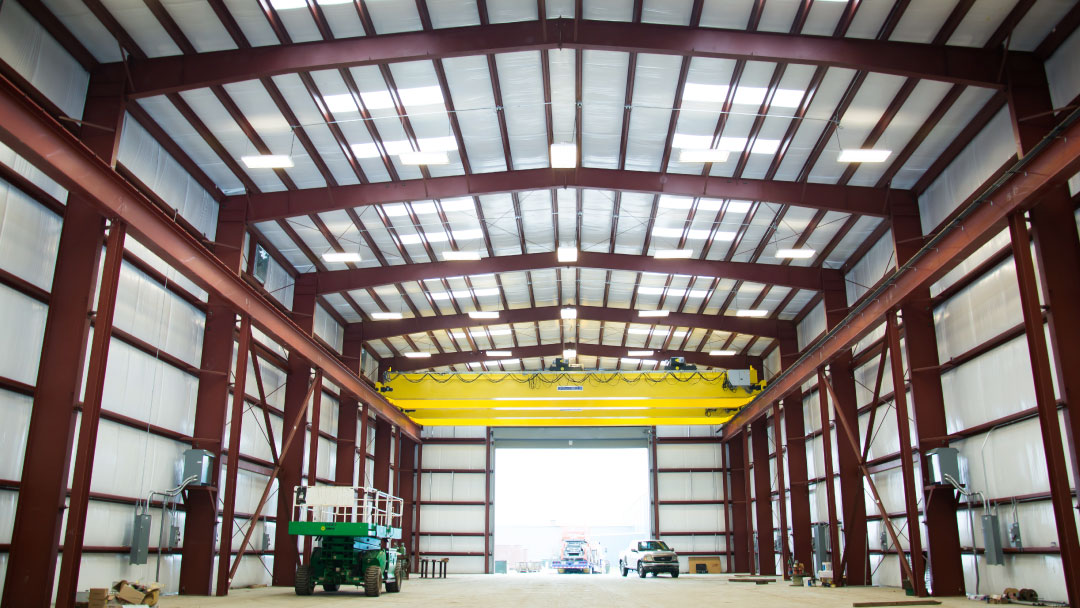
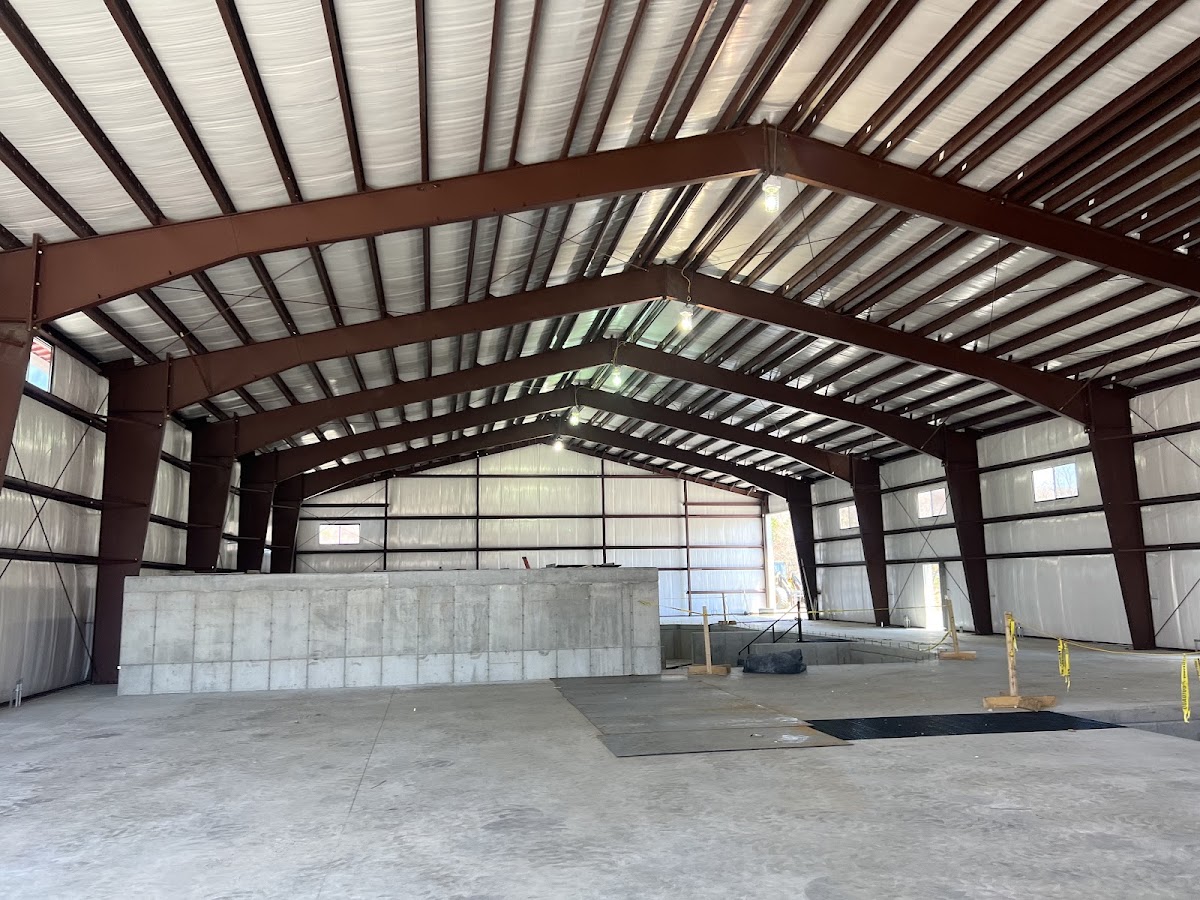
A 26-gauge steel panel has effectively no insulating value, which makes an uninsulated metal building a very durable radiator. Heat it and the panels hand your BTUs to the sky; cool it and the summer sun loads the interior faster than a reasonably sized air conditioner can fight back. Condensation piles on: warm interior air meeting cold bare panels drips onto whatever you stored inside.
Insulation fixes all three problems at once and costs less than the equipment it replaces. A blanket package for roof and walls runs $2.50-$4.00 per square foot; spray foam applied to the shell runs $1.50-$3.00 per square foot of surface and adds an air seal (modeled, July 2026). Either one can cut the heater size you need roughly in half versus bare panels, which is why an insulated shop with a modest unit heater is warmer in January than a bare shell with a heater twice the size. Our insulation cost guide prices the options in detail, and the companion insulating steel buildings guide covers installation methods.
The 30×40 comfort worksheet, line by line
Here is the whole comfort budget for the most common shop size, priced the way a real project invoices. Every line scales with your own footprint.
| Line item | Typical range modeled | Notes |
|---|---|---|
| Blanket insulation, roof and walls | $3,000 – $4,800 | $2.50 – $4.00/sqft on 1,200 sqft |
| Gas unit heater, installed | $2,000 – $4,000 | Includes venting and gas line stub |
| Mini-split, one zone | $3,500 – $7,000 | Heat and cooling; skip if heat-only |
| Circuits and controls | $500 – $1,500 | 240V circuit, condensate line, thermostat |
| Ceiling fan / destratification | $300 – $900 | Pushes warm air back down from the ridge |
| Comfort package total | $9,300 – $18,200 | Insulation plus one heat and one cooling source |
Worked example at national mid-range rates: $3,900 of insulation ($3.25/sqft), a $3,000 unit heater, a $5,000 single-zone mini-split, $900 of circuits and controls, and a $500 ceiling fan comes to $13,300 on top of the building itself. If you only heat, drop the mini-split line and the same shop conditions for about $8,300. The steel building cost calculator carries insulation and options lines, so you can price the building and its comfort package in one pass.
Sizing the system to the insulation, not the floor
The most expensive mistake in this category is letting anyone size equipment by floor area alone. BTUs follow the envelope: an uninsulated 30×40 can demand two to three times the heater an insulated one needs, and an oversized mini-split short-cycles, dehumidifies poorly, and wears out early. Volume matters too; a 14-foot eave holds about 17% more air than a 12-foot eave on the same floor, and all of that air stratifies, stacking your warmest air against the roof where nobody works.
The practical sequence: decide the insulation package first, then have the load calculation run against that envelope, your climate, and your eave height. A contractor who quotes a heater without asking what is in your walls is guessing with your money. And if the building is not built yet, tell your kit supplier the building will be conditioned; framed openings for wall units and thermal blocking under panels cost almost nothing at order time.
Configuration levers and what they cost
| Option | Typical impact modeled | Worth it when |
|---|---|---|
| Spray foam instead of blanket | $1.50 – $3.00/sqft of shell surface | Humid climates, tight air sealing |
| Second mini-split zone | +$3,500 – $7,000 | Partitioned office or finished corner |
| Radiant tube over forced-air heat | +$500 – $1,500 vs a unit heater | Tall bays, doors opening all day |
| Destratification fan | +$300 – $900 | Eaves 14 ft and up |
| Smart thermostat with setback | +$150 – $400 | Buildings heated on a schedule |
| Ducted system for living space | $8,000 – $15,000+ | Barndominium and office interiors |
Which system fits which building
Match the system to how the building actually gets used, not to its square footage. A weekend hobby shop is best served by a $2,000-$4,000 unit heater on a setback thermostat: fast recovery when you walk in, nothing running when you are gone. A daily workspace earns the mini-split at $3,500-$7,000 per zone, because heat-pump efficiency pays for itself when the system runs most days, and summer cooling comes in the same box. Buildings with open bay doors all day (equipment barns, working shops) favor radiant tube heat, which warms objects and people instead of the air you keep losing. And finished living space gets priced like a house: a ducted system at $8,000-$15,000+, sized to a proper load calculation. Our workshop cost and sizes guide shows where conditioning fits in the full shop budget.
How your location moves these numbers
Climate sets this budget twice. First it sets the load: a northern shop needs more insulation and a bigger heater, while a Gulf Coast building spends the same dollars on cooling and humidity control instead. Second, the same county conditions that move HVAC also move the building: heavy snow and wind engineering adds 8-15% to the kit, frost-depth footings add $800-$2,000 on small buildings, and freight runs $500-$3,000+ depending on distance from the plant. Local mechanical labor swings installed equipment prices $500-$1,500 either way between rural and metro markets, and permits run $150-$4,000 for the project, with the mechanical permit usually riding along for a small add. Net effect: the same 30×40 comfort package that models at $13,300 nationally can land near $10,000 in a mild-climate county and past $16,000 in a snow-belt metro.
The heating and cooling quote checklist
Run any HVAC or insulation quote through this list before scheduling. The classic gaps are electrical circuits and condensate drainage, which show up as change orders if nobody prices them up front.
- Insulation package decided and in writing before any equipment is sized
- Load calculation run against your envelope, climate, and eave height, not floor area alone
- Equipment capacity stated in BTUs or tons, with the model number on the quote
- Electrical scope named: who runs the 240V circuit and what panel space it needs
- Condensate routing for mini-splits and AC planned to a drain or daylight, not the slab
- Venting path for gas heaters shown on the drawing, with roof or wall penetration flashing priced
- Thermostat type and location included, with setback capability for part-time buildings
- Warranty terms split between equipment and labor, in writing
This guide sits between two others in the series: warehouse layout guide on one side and electrical cost on the other, both priced with the same methodology.
Heating and cooling FAQs
How much does it cost to heat a metal building?
For a typical insulated shop: $2,000-$4,000 installed for a gas unit heater or $3,500-$7,000 per zone for a mini-split that also cools (modeled July 2026). Add $2.50-$4.00/sqft for blanket insulation if the building is bare; without it, plan on roughly double the equipment capacity and much higher operating bills.
Can you air-condition a metal building without insulation?
You can, but you will pay for it twice: an uninsulated steel shell gains solar heat so fast that cooling loads can double or triple, and cold interior surfaces sweat. Insulation at $2.50-$4.00/sqft is nearly always cheaper than the extra equipment capacity and the summer bills it prevents. Insulate first, then size the system.
What size heater does a 30×40 metal building need?
An insulated 30×40 with a 12-14 foot eave typically lands in the 45,000-75,000 BTU unit-heater class in cold climates, and smaller in mild ones. Uninsulated, the same building can need double that. Have the load calculation run against your actual insulation and climate; sizing by square footage alone is how shops end up with short-cycling, oversized equipment.
Are mini-splits good for metal buildings?
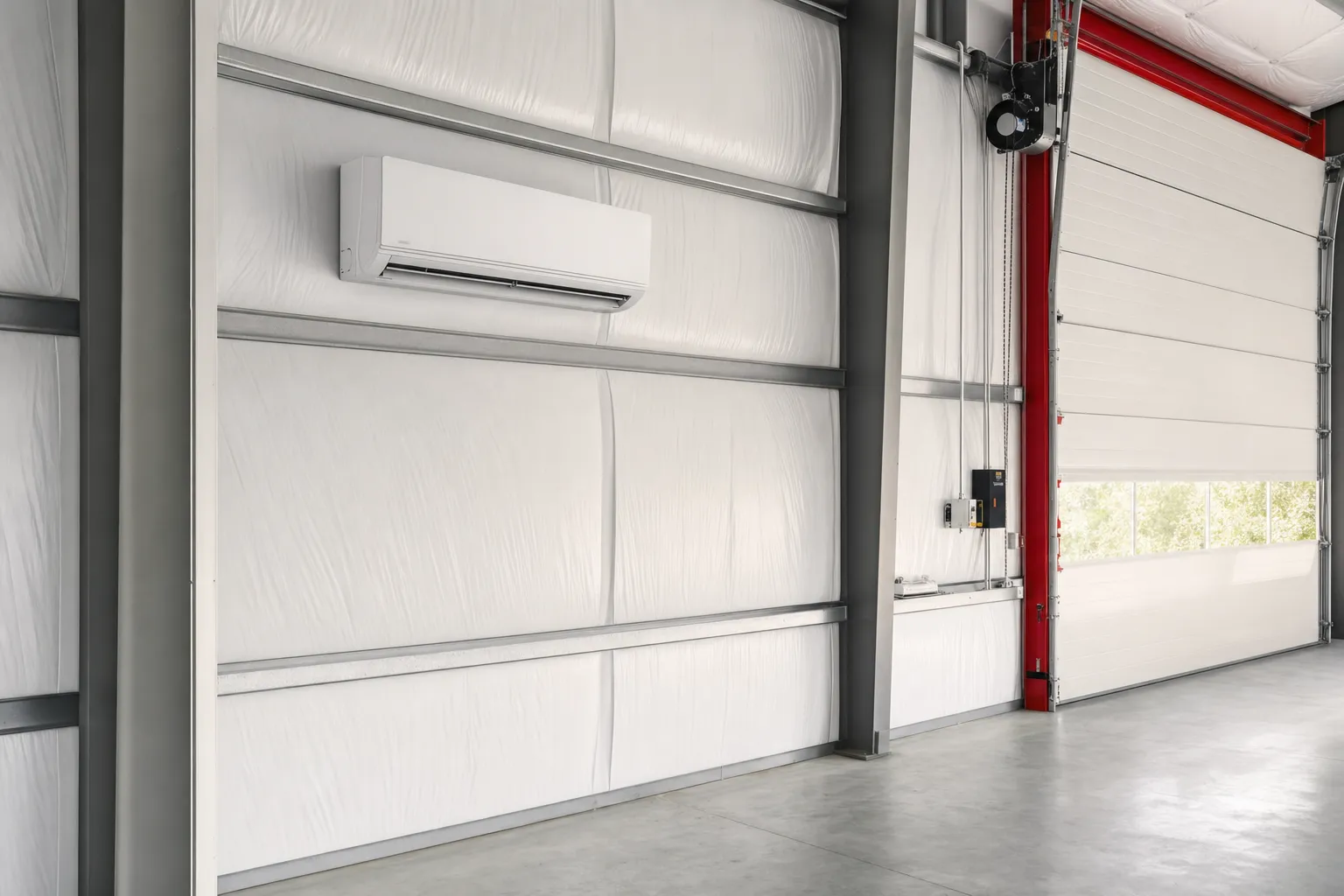
Very good, for insulated ones. A $3,500-$7,000 per zone mini-split needs no ductwork, mounts high on a wall panel out of the way, heats and cools from one unit, and modulates efficiently for daily use. The caveats: insulate the building first, plan the 240V circuit and condensate drain, and add zones rather than oversizing one head for a partitioned space.
What is the cheapest way to heat a metal shop?
Blanket insulation plus a single gas unit heater on a setback thermostat: roughly $5,000-$8,800 all-in on a 30×40 (modeled July 2026). It recovers fast for part-time use and burns nothing while you are away. Portable heaters look cheaper on day one but cost more per delivered BTU and do nothing about condensation.
Does a heated metal building need ventilation?
Yes, some. A tightened, insulated building needs makeup air for any gas appliance and enough air exchange to control moisture from vehicles, concrete, and people. Ridge vents and louvers run $150-$500 each installed, and an exhaust fan runs $400-$1,200. Cheap insurance against the condensation problems that show up in tightly sealed shells.
Ready to price this building for real? Compare verified metal building companies for this project type, with real reviews and track records.
Sources and methodology: published supplier price lists and advertised HVAC and insulation pricing (June-July 2026); component cost benchmarks for ready-mix concrete, erection labor, and freight; IBC and ASCE 7 for load context. All figures are modeled national estimates, labeled as modeled, and reviewed quarterly; see the full Cost Index methodology. This guide links to our independent company directory; listings never change published numbers.
Written by the Steel Building Editorial Team | Last updated July 10, 2026