


SteelBuildingKit Cost Index · Updated July 10, 2026 · Pricing collected June-July 2026
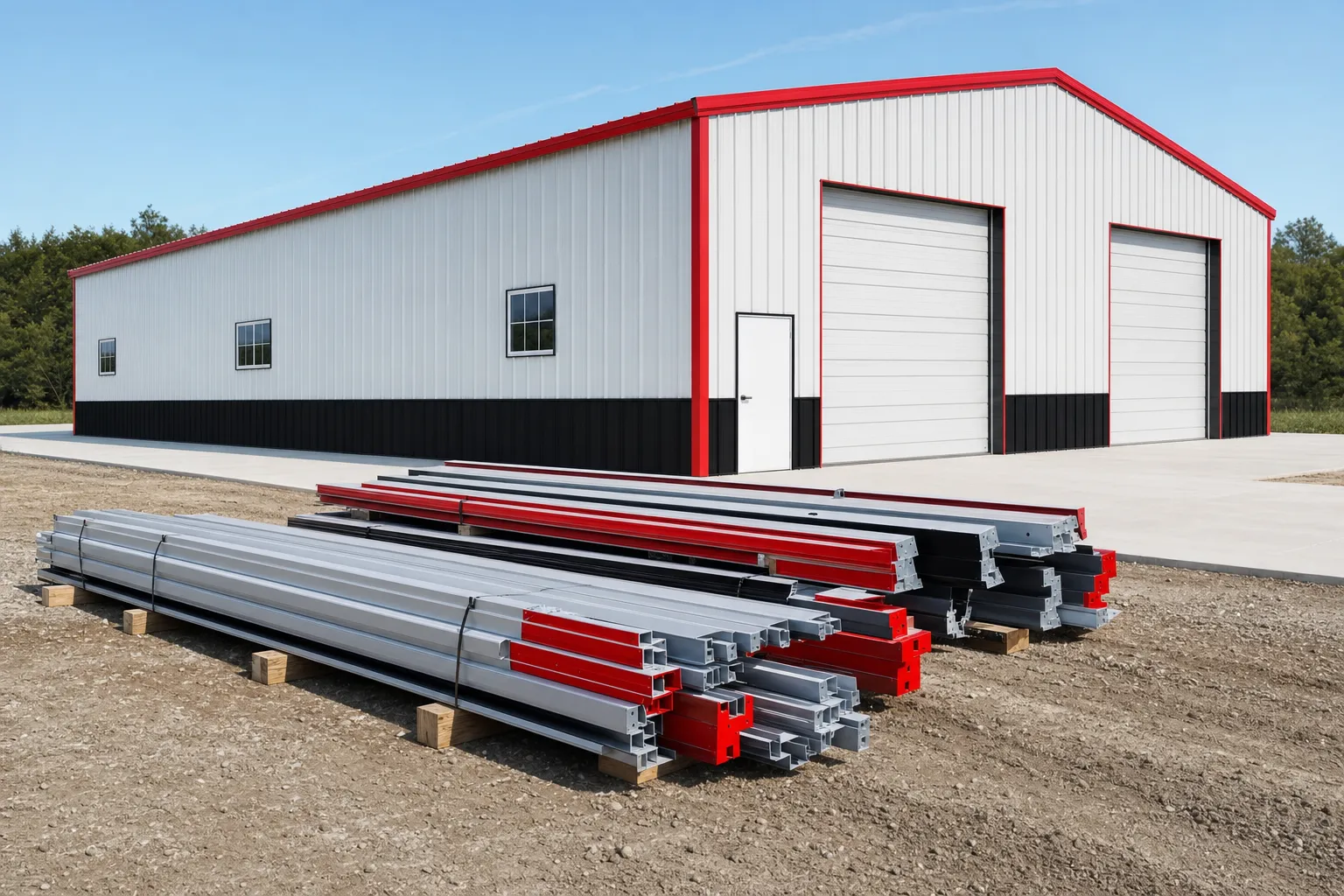
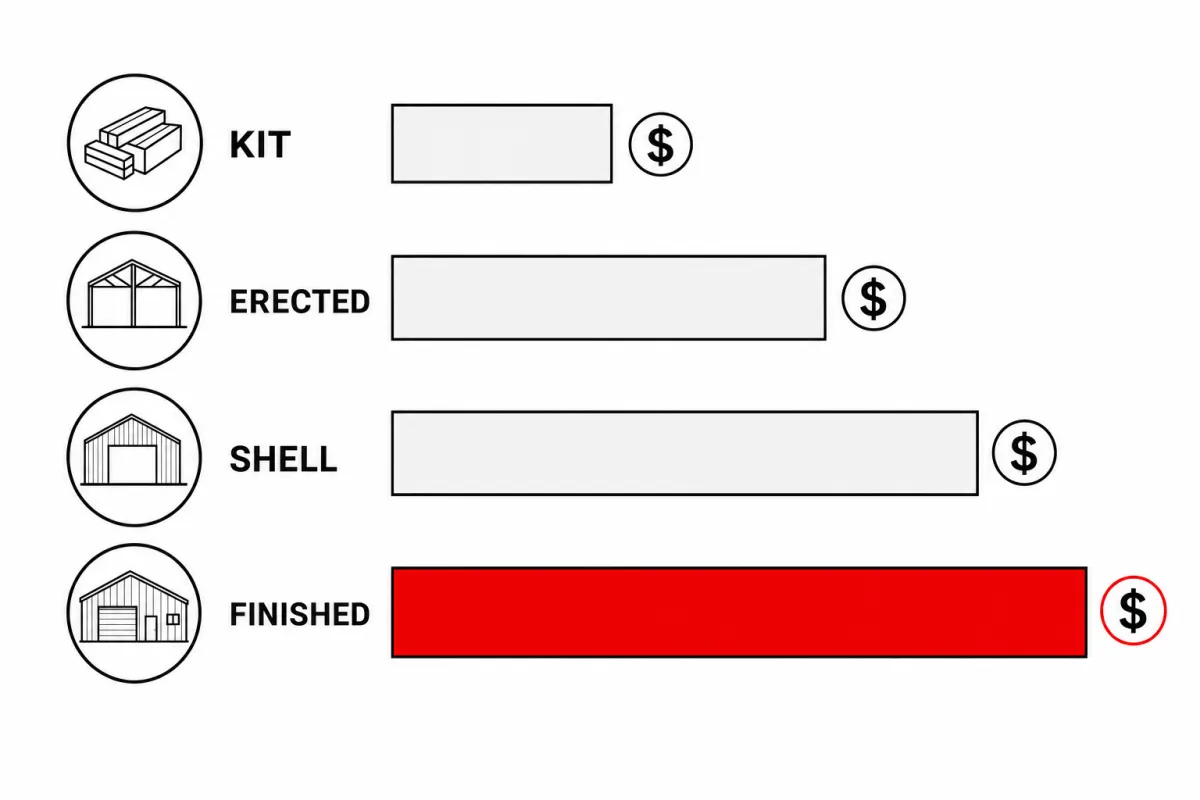
A metal building kit runs $10 to $28 per square foot; the same building delivered turnkey runs $24 to $45 per square foot, or 2.2 to 2.6 times the kit price once slab, erection, and delivery are included (modeled national ranges, July 2026). The money question is settled math. The real question is which route fits you, and it comes down to one test: are you willing to be the manager of three contracts for the next three months?
This guide is the decision side of the pair. Its price-scope companion, our kit price vs turnkey cost breakdown, prices the gap between the two scopes line by line; this page assumes those numbers and helps you choose the route. Both live in our buying decisions hub.
| Kit route modeled | Turnkey route modeled | |
|---|---|---|
| Cost, 30×50 example | $20,000 – $29,000 kit + your contracts | $43,000 – $64,000 complete |
| Your role | General contractor: steel, concrete, erection | Sign-off and site access |
| Contracts you manage | Three or more | One |
| Schedule risk carrier | You (sequencing slab, delivery, crew) | The builder |
| Warranty seams | Three vendors pointing at each other | One throat to choke |
| Typical total savings | 10 – 25% vs turnkey on managed projects | Zero, by definition |
Modeled national comparison at identical building spec, July 2026. Kit-route savings assume competent owner management; a mismanaged sequence can erase them in idle-crew and remobilization fees.
Route comparisons are modeled from published kit price lists and advertised turnkey packages collected June-July 2026, cross-checked against component benchmarks: slab at $6-$12/sqft, erection at $4-$10/sqft, freight by lane, and the 2.2-2.6x kit-to-turnkey multiplier that holds across size classes. All figures are labeled modeled. Full methodology in the SteelBuildingKit Cost Index.
The manager-of-three-contracts test
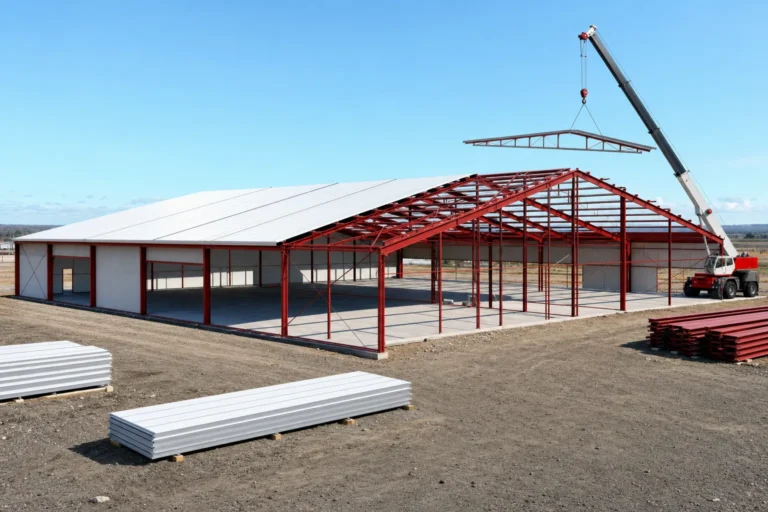
Strip away the marketing and the kit route is a job title. You will hold a steel contract (the kit, its engineering, its delivery date), a concrete contract (a slab poured to the kit’s anchor-bolt plan, cured 7 days minimum before erection), and an erection contract (a crew whose calendar must land after the steel and after the cure). You will sequence them, and when the steel slips two weeks, you will be the one calling the erector before their crew books elsewhere, and absorbing the remobilization fee if you miss. Turnkey pays a builder 2.2-2.6x the kit price partly for materials and labor, and partly to make that sequencing someone else’s problem.
Answer three questions honestly. Have you hired and scheduled trades before? Can your weekdays absorb phone calls and site visits for a season? Can your budget absorb a $1,000-$3,000 sequencing mistake without drama? Three yeses and the kit route’s savings are real and probably yours. One no, and turnkey is not the expensive option; it is the correctly priced one.
The worked math on a 30×50
Kit route: a $24,000 kit (mid-band, modeled July 2026), $1,500 freight, slab at $8.50/sqft ($12,750), erection at $6.50/sqft ($9,750), and $1,500 permits and extras totals $49,500 with you as manager. The same building quoted turnkey at the $53,000 midpoint hands the sequencing away for roughly $3,500-$6,000, before counting your hours. On smaller buildings the management premium shrinks toward $2,000; on larger ones it grows with the stakes. Run your own footprint through the steel building cost calculator both ways; the gap it shows is the salary you are paying yourself to run the project.
The middle paths between the extremes
| Route | Cost effect modeled | Worth it when |
|---|---|---|
| Kit + your own hired erector | Saves 10 – 18% vs turnkey | You can manage two contracts, not three |
| Kit + erection package from supplier | Saves 5 – 12% vs turnkey | You only want to own the concrete |
| Kit + DIY erection | Saves $4 – $10/sqft more | Small bolt-up buildings, honest weekends |
| Full turnkey, single contract | Baseline | Time-poor, first build, or financed projects |
| Turnkey + owner finish-out | Defers $20 – $60/sqft interior | Shell now, interior as budget allows |
The middle rows are where experienced buyers most often land. Buying the kit and hiring a single erector who has stood up your manufacturer’s frames before converts the three-contract job into two, keeps a modeled 10-18% of the turnkey premium in your pocket, and leaves the concrete, the one trade nearly every county has in depth, as your only real sourcing task (modeled, July 2026). It is the route to point first-time-but-handy buyers toward when the pure kit path feels like exactly one contract too many.
Who should choose which: the honest sort
Choose the kit route if any of these is you: you have GC’d or built before, you live near the site with weekday flexibility, you already know your concrete sub, or the project is a shop or barn where a two-week slip costs patience rather than money. Choose turnkey if the building gates a business opening, a lender is involved (draw schedules love single contracts), the site is remote from your weekdays, or this is your first construction project of any kind. The scope decoder in our kit vs installed vs finished price guide shows what each contract type must contain, whichever side you land on.
How location tilts the choice
Location moves the two routes differently. County loads hit both equally (8-15% on the kit either way), but everything after the steel is local. In markets with deep contractor benches, kit-route owners find slab and erection subs easily and the 10-25% saving is real; in thin rural markets, finding one reliable turnkey builder may beat chasing three scarce trades. Frost-depth counties raise the sequencing stakes: a slab that must cure 7+ days between fall frosts punishes owner-managed calendars. Freight ($500-$3,000+) is identical either way, but turnkey builders absorb delivery coordination, worth real money on tight sites needing offload equipment. Permits run $150-$4,000 in both routes; the difference is whose name is on the application and who answers the plan reviewer’s questions, which in strict metro counties is a job in itself.
The kit-or-turnkey decision checklist
- Take the three-contracts test honestly: trades experience, weekday capacity, error budget
- Price both routes at one identical spec before deciding anything
- Kit route: get erector and concrete quotes BEFORE ordering steel, not after
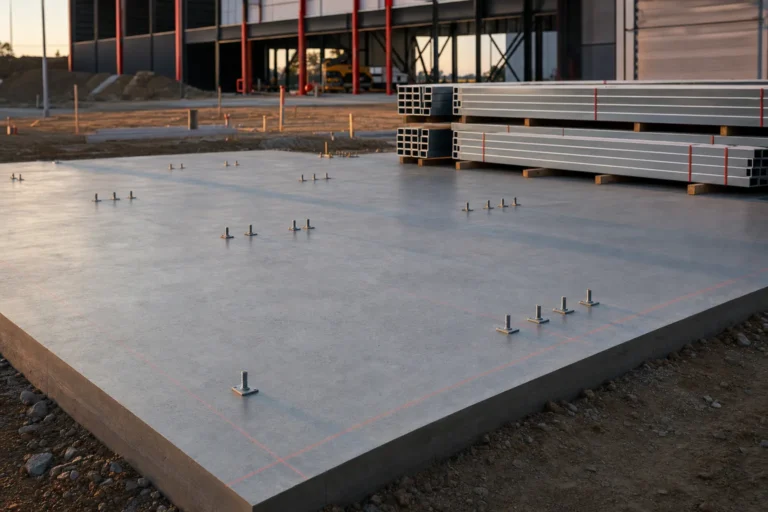
- Kit route: confirm the slab contractor will pour to the kit’s anchor-bolt plan
- Turnkey: confirm the single contract truly includes slab, erection, freight, and permits
- Turnkey: check the builder’s erection crew is theirs, not a sub you are paying markup on
- Either route: verify the 7-day minimum slab cure sits in the schedule
- Either route: hold 10% contingency until steel is delivered and checked off
If this page answered your question, the natural next reads are DIY kit vs contractor and steel vs pole barn cost.
Kit vs turnkey FAQs
Is it cheaper to buy a metal building kit or go turnkey?
The kit route is cheaper when managed well: turnkey runs 2.2-2.6x the kit price, and owner-managed projects typically save 10-25% of the turnkey number (modeled, July 2026). The saving is payment for managing three contracts; mismanaged sequencing can hand it back.
What exactly does turnkey include?
A complete delivered building on one contract: engineered kit, freight, concrete slab, professional erection, and usually permit handling, at $24-$45 per square foot (modeled, July 2026). Confirm each item in writing; some builders quote turnkey while excluding the slab, which is $6-$12/sqft of surprise.
How much work is the kit route really?
Plan on a season of project management: three contracts, 20-40 phone calls, weekly site attention, and sequencing steel delivery, a 7-day slab cure, and an erection crew’s calendar. Experienced owners absorb it easily; first-timers should price the $3,500-$6,000 turnkey premium as tuition avoided.
Can I start with a kit and hire out just the erection?
Yes, and it is the most popular middle path: buy the kit, hire your own slab contractor and erector, and save a modeled 10-18% versus turnkey while managing two contracts instead of three. Erection alone runs $4-$10 per square foot (modeled, July 2026).
Does financing favor one route?
Usually turnkey. Lenders prefer a single contract with milestone draws over reimbursing an owner juggling three vendors, and construction-to-permanent loans often require a licensed GC of record. If you are financing the build, get lender terms before falling in love with kit-route savings.
Which route is faster?
On paper they are similar: engineering 2-4 weeks, fabrication 4-10, erection 3-10 days. In practice turnkey is faster more often, because builders sequence slab and crew around the steel date daily. Owner-managed gaps between trades add 2-6 weeks to typical first-time kit projects (modeled, July 2026).
Ready to price this building for real? Compare verified metal building companies for this project type, with real reviews and track records.
Sources and methodology: published supplier price lists and advertised kit pricing (June-July 2026); component cost benchmarks for ready-mix concrete, erection labor, and freight; IBC and ASCE 7 for load context. All figures are modeled national estimates, labeled as modeled, and reviewed quarterly; see the full Cost Index methodology. This guide links to our independent company directory; listings never change published numbers.
Written by the Steel Building Editorial Team | Last updated July 10, 2026