


SteelBuildingKit Cost Index · Updated July 10, 2026 · Pricing collected June-July 2026
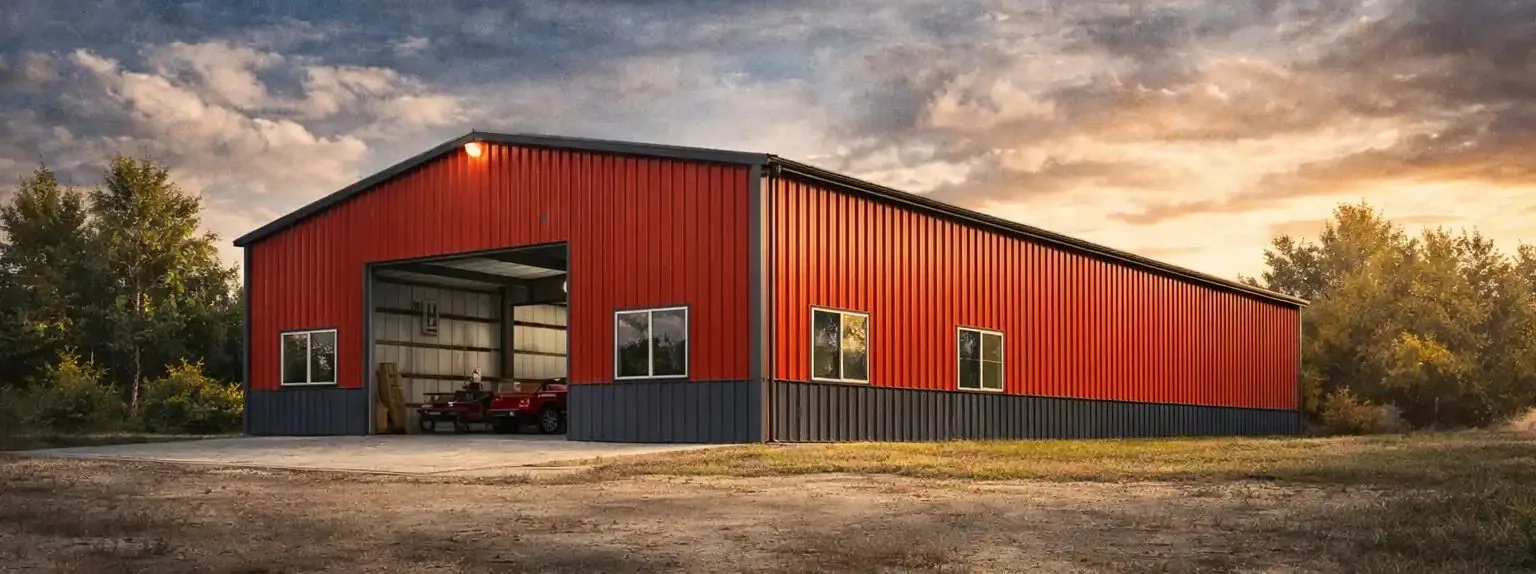
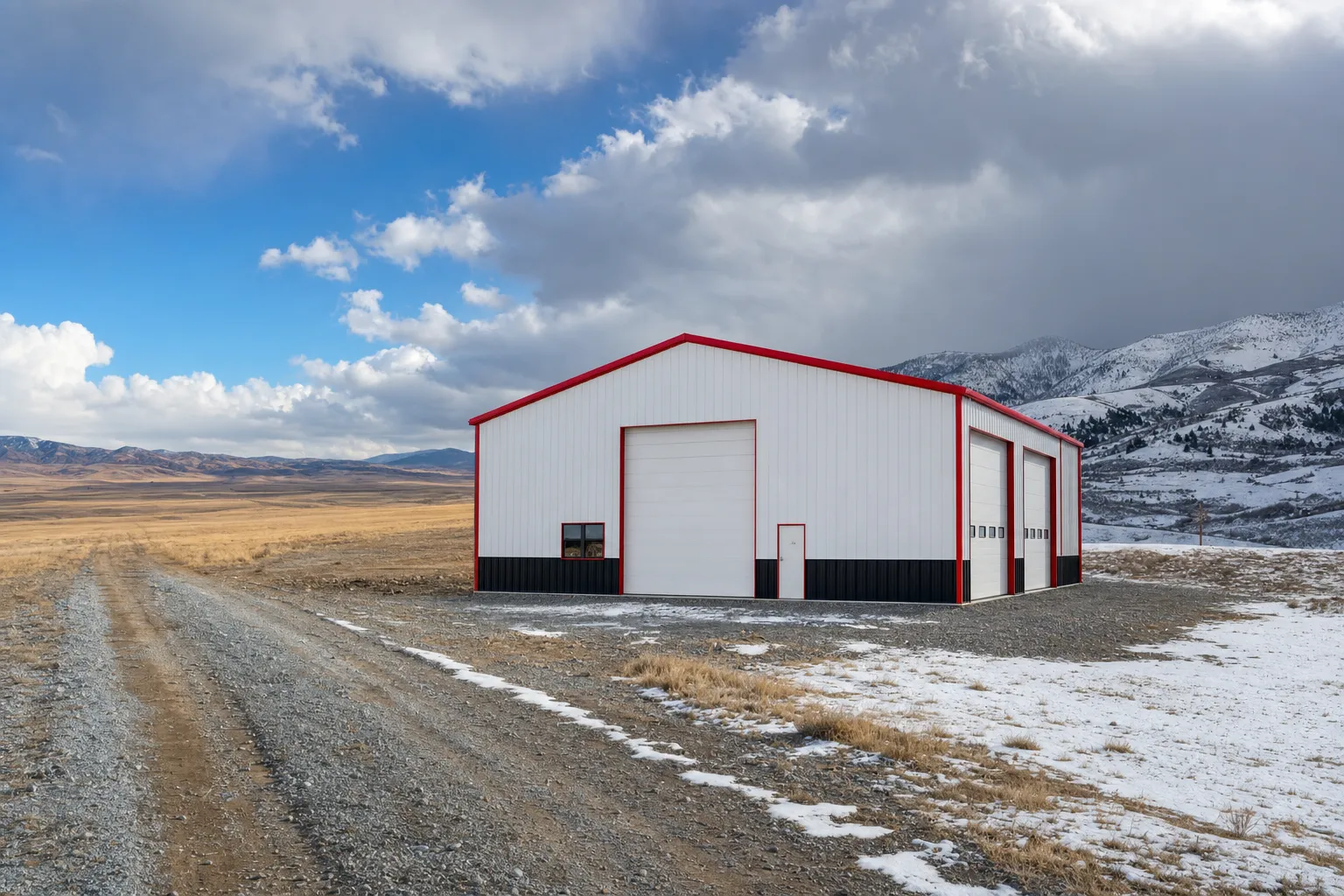
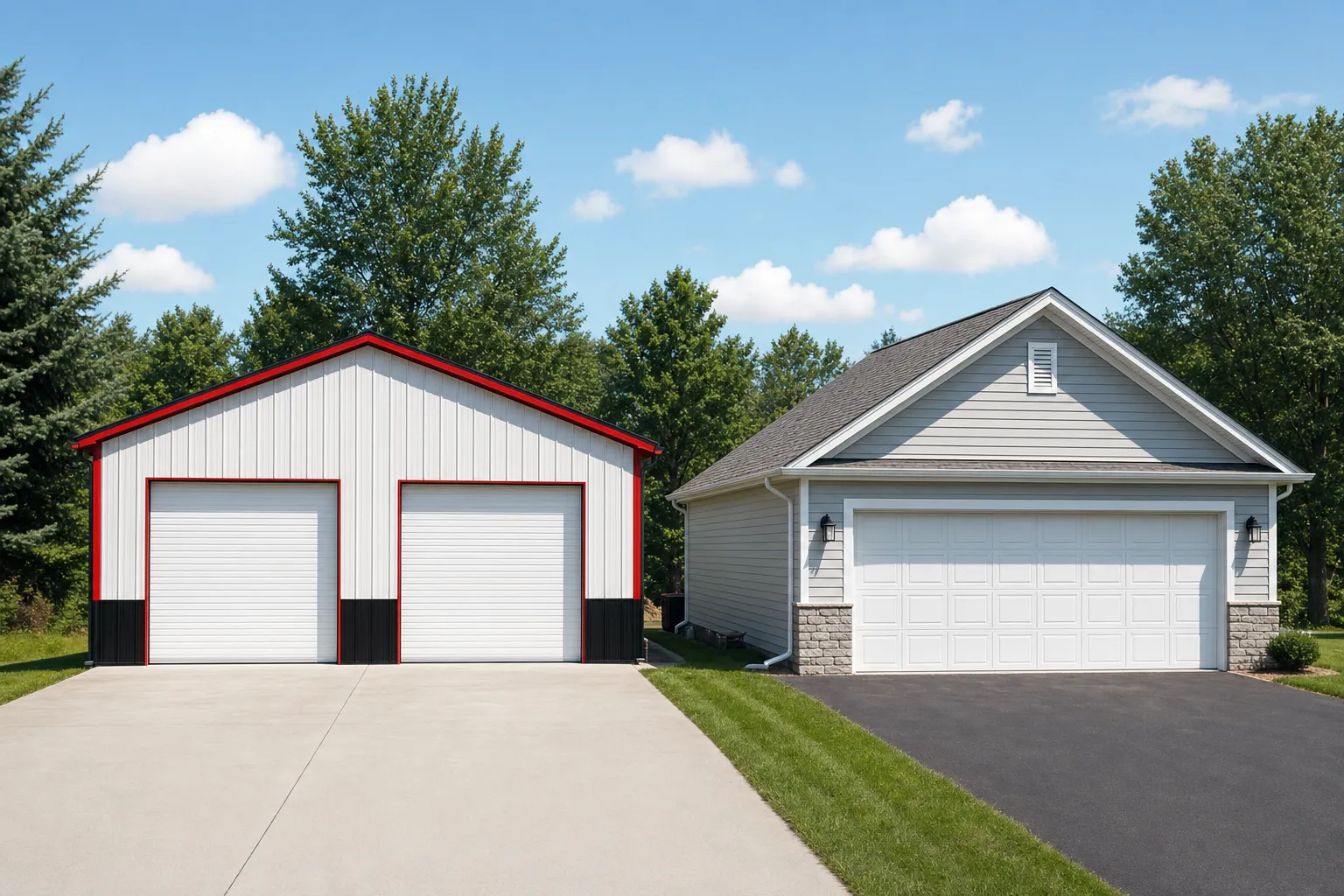
A steel 2-car garage costs $18,000 to $38,000 turnkey; the same garage stick-built in wood costs $28,000 to $45,000 (modeled national ranges, July 2026). Steel opens $8,000-$10,000 cheaper at the midpoints, then widens the gap over time: wood wants a $3,000-$6,000 repaint or re-side cycle every decade while steel panels carry 25-40 year finish warranties, and steel structures commonly insure 10-25% lower. Wood’s remaining advantages are curb appeal and HOA peace.
This page prices the steel-versus-wood decision for garages specifically: upfront, maintenance, lifespan, and the situations where wood still deserves the premium. It belongs to our buying decisions hub; for the full steel garage pricing menu by size and configuration, our metal garage cost guide is the companion page.
| Garage | Steel turnkey modeled | Wood stick-built modeled |
|---|---|---|
| 2-car (20×20 – 24×30) | $18,000 – $38,000 | $28,000 – $45,000 |
| 3-car (24×36 – 30×40) | $28,000 – $46,000 | Wood carries a similar 25-45% premium |
| 4-car / shop combo (30×40 – 40×40) | $34,000 – $56,000 | Premium widens with roof complexity |
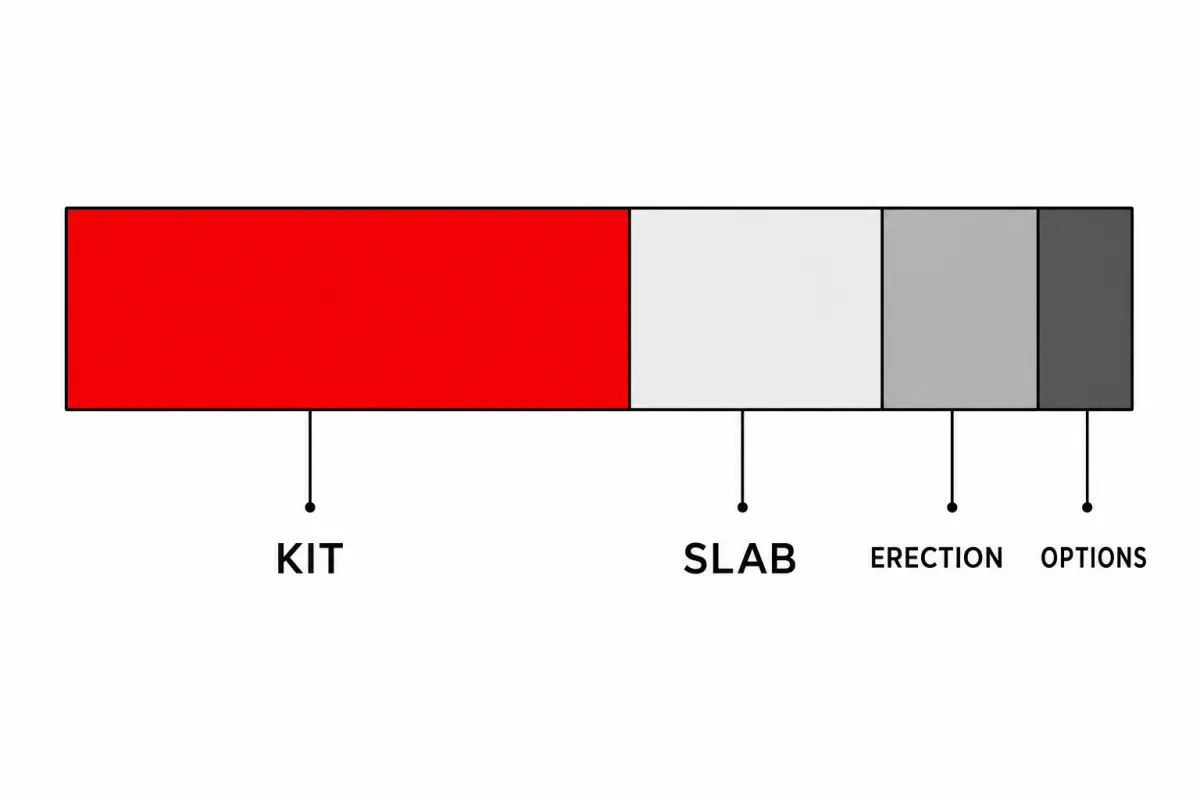
Turnkey scope: slab, erection, one garage door bay per car, baseline loads. Wood figures are modeled stick-built contractor builds, July 2026; wood pricing varies with local lumber and framing labor more than steel varies with anything.
Steel garage figures come from published supplier price lists and advertised packages collected June-July 2026, built up with slab and erection benchmarks. Wood figures are modeled from stick-built contractor pricing over the same window at matching footprints and door schedules. Maintenance lines model repaint/re-side cycles at $3,000-$6,000 per decade and steel fastener checks at $0-$300 per year; all figures are labeled modeled. Full methodology in the SteelBuildingKit Cost Index.
Where wood’s extra $10,000 goes
Wood is not overpriced; it is labor-dense. A stick-built garage is cut and assembled board by board on site, so framing labor dominates the invoice, and every truss, sheet, and shingle rides local labor rates. Steel arrives as a pre-engineered kit that a crew bolts together in days, which is why the same footprint invoices $8,000-$10,000 lighter at the midpoints (modeled, July 2026). Wood buys real things with the difference: conventional curb appeal, any siding you like, effortless HOA approval, and interior walls that accept a finish nail anywhere. Whether those are worth five figures is a neighborhood question as much as a construction one.
The worked math, twenty years out
| Line | Steel modeled | Wood modeled |
|---|---|---|
| Upfront (midpoint) | $28,000 | $36,500 |
| Exterior cycles, 20 yrs | $0 – $2,000 (washes, sealant, fasteners) | $6,000 – $12,000 (two repaint/re-side cycles) |
| Roof at year 20 | Panel warranties run 25 – 40 yrs | Asphalt shingles due or done ($4,000-$8,000 exposure) |
| Insurance position | 10 – 25% lower on the structure | Baseline |
| 20-year modeled position | ~$8,500 – $18,000 ahead | Premium never recovered |
Worked example: start both garages at the midpoints ($28,000 steel, $36,500 wood, modeled July 2026). Wood then takes a $4,500 repaint near year 10 and faces a shingle roof aging out just past the ledger’s edge, while steel’s twenty-year exterior bill models under $2,000 in washes and fastener checks. Add an insurance delta of 10-25% on the structure portion and the steel owner finishes roughly $8,500-$18,000 ahead. The steel building cost calculator prices the steel side of this ledger for your exact size and county in about two minutes.
Options that close the looks gap
| Upgrade | Typical cost modeled | Worth it when |
|---|---|---|
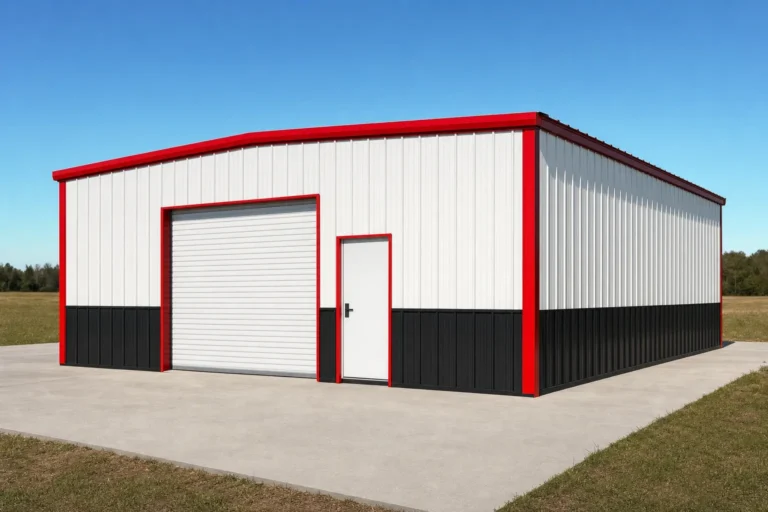
| Black wainscot + trim package | +$800 – $2,000 | Curb appeal on street-facing garages |
| 24-gauge panels over 26 | +8 – 12% on panel cost | Hail country, longer finish warranty |
| Carriage-style overhead doors | +$600 – $1,800 per door | Matching the house’s character |
| Gutters and downspouts | $6 – $12 per linear foot | Always; protects slab edge and siding |
| Insulation (blanket) | +$2.50 – $4.00/sqft | Any heated or workshop use |
| Brick or stone veneer front | +$3,000 – $8,000 | Strict HOAs; still cheaper than full wood |
Attached, detached, and the hybrid middle
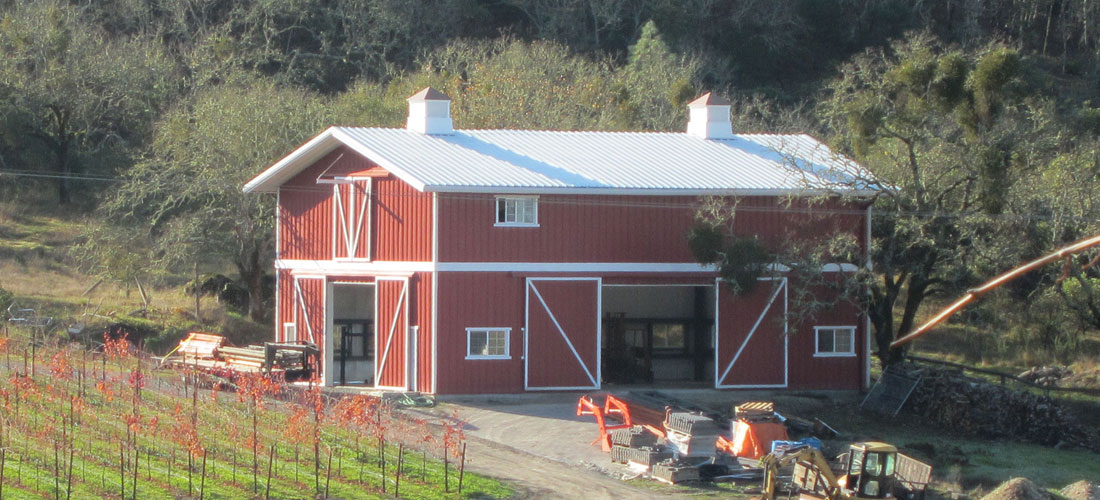
Placement tilts the comparison before price does. Detached is steel’s home field: a freestanding garage on its own slab is exactly the pre-engineered box the factory optimizes, and everything in the tables above applies at full strength. Attached garages complicate it: tying steel into a wood-framed house means matching rooflines and finishes, fire-separation requirements at the shared wall, and often HOA elevation review, and stick framing simply integrates with stick framing more naturally, which is why attached additions usually stay wood even on budgets that would prefer steel’s number. The hybrid middle is underused: a detached steel building carrying a wood, brick, or fiber-cement street elevation ($3,000-$8,000 for a veneer front, modeled July 2026) buys wood’s curb appeal on the one face anyone sees while keeping steel’s price and maintenance profile on the other three. If the mission is detached, run the steel math first; if it is attached, get one wood bid before anything else.
How location decides this one
The steel-wood gap is widest where framing labor is expensive: metro and coastal labor markets price stick-built garages toward the top of the band while steel kits arrive at factory pricing regardless. Humid Southeast and wet Northwest climates accelerate wood’s repaint clock and rot exposure, tilting further toward steel; arid mountain and desert West climates are kind to wood and stretch its cycles. Snow and wind counties add 8-15% to steel kit engineering, but wood pays its own way in heavier framing and sheathing there. Frost-depth counties add $800-$2,000 in footings to either garage. Freight ($500-$1,500 typical for garage-size kits, modeled July 2026) is steel’s only location-specific line; lumber yards are everywhere. Permits run $150-$4,000 for both, though HOA review, where it exists, is wood’s home field and the one venue where steel needs the upgrade table above.
The steel-or-wood garage checklist
- Get one written quote per system at the same footprint, doors, and slab spec
- Check HOA covenants before pricing anything; some mandate materials outright
- Ask your insurer to quote the structure both ways; the 10-25% delta is real money
- Price wood’s decade repaint cycle into any ownership horizon past 8 years
- Compare roof lifespans in writing: panel warranty years vs shingle warranty years
- If curb appeal drives the choice, price the steel wainscot/door upgrades first
- Confirm both quotes carry your county’s snow and wind loads, not generic ones
- Attached garages: wood integrates easier; detached is where steel’s math shines
Readers comparing options usually open steel vs pole barn cost and lifetime cost next; both follow the same July 2026 cost model.
Steel vs wood garage FAQs
Is a metal garage cheaper than a wood garage?
Yes, meaningfully: a 2-car steel garage runs $18,000-$38,000 turnkey versus $28,000-$45,000 stick-built in wood (modeled, July 2026). The gap comes from labor: pre-engineered kits bolt up in days while stick framing is built board by board.
How much maintenance does each garage need?
Wood wants a repaint or re-side cycle at $3,000-$6,000 per decade plus eventual shingle replacement. Steel wants washdowns, sealant checks, and fastener attention at $0-$300 per year, with panel finishes warrantied 25-40 years (modeled, July 2026).
Does a metal garage lower my insurance?
Commonly, yes: steel structures rate 10-25% lower on the building portion than comparable wood framing (modeled, July 2026), driven by fire and wind ratings. Quote both with your actual carrier; deltas vary by region and policy more than any national figure.
Which lasts longer, a steel or wood garage?
Both outlive their owners when maintained, but steel does it cheaper: panels carry 25-40 year finish warranties and the frame is inorganic, while wood’s lifespan is a maintenance subscription. Skip wood’s repaint cycle and its lifespan shortens; skip steel’s washdown and it mostly just looks dusty.
Will a metal garage hurt my home’s resale value?
A permitted, well-finished steel garage on a slab appraises as a solid outbuilding and sells rural and semi-rural properties. In design-controlled suburbs, buyer taste and HOA rules matter more; the wainscot, trim, and carriage-door upgrades ($1,400-$3,800 combined, modeled July 2026) close most of the gap for a fraction of wood’s premium.
Can I match a metal garage to my house?
Closer than most owners expect: modern panel systems come in dozens of baked-on colors, wainscot two-tones, and carriage-style doors at +$600-$1,800 per door (modeled, July 2026), and a veneer front carries the look further at $3,000-$8,000. What steel cannot fake is lap-siding texture up close; strict HOAs sometimes care.
Ready to price this building for real? Compare verified metal building companies for this project type, with real reviews and track records.
Sources and methodology: published supplier price lists and advertised kit pricing (June-July 2026); component cost benchmarks for ready-mix concrete, erection labor, and freight; IBC and ASCE 7 for load context. All figures are modeled national estimates, labeled as modeled, and reviewed quarterly; see the full Cost Index methodology. This guide links to our independent company directory; listings never change published numbers.
Written by the Steel Building Editorial Team | Last updated July 10, 2026