


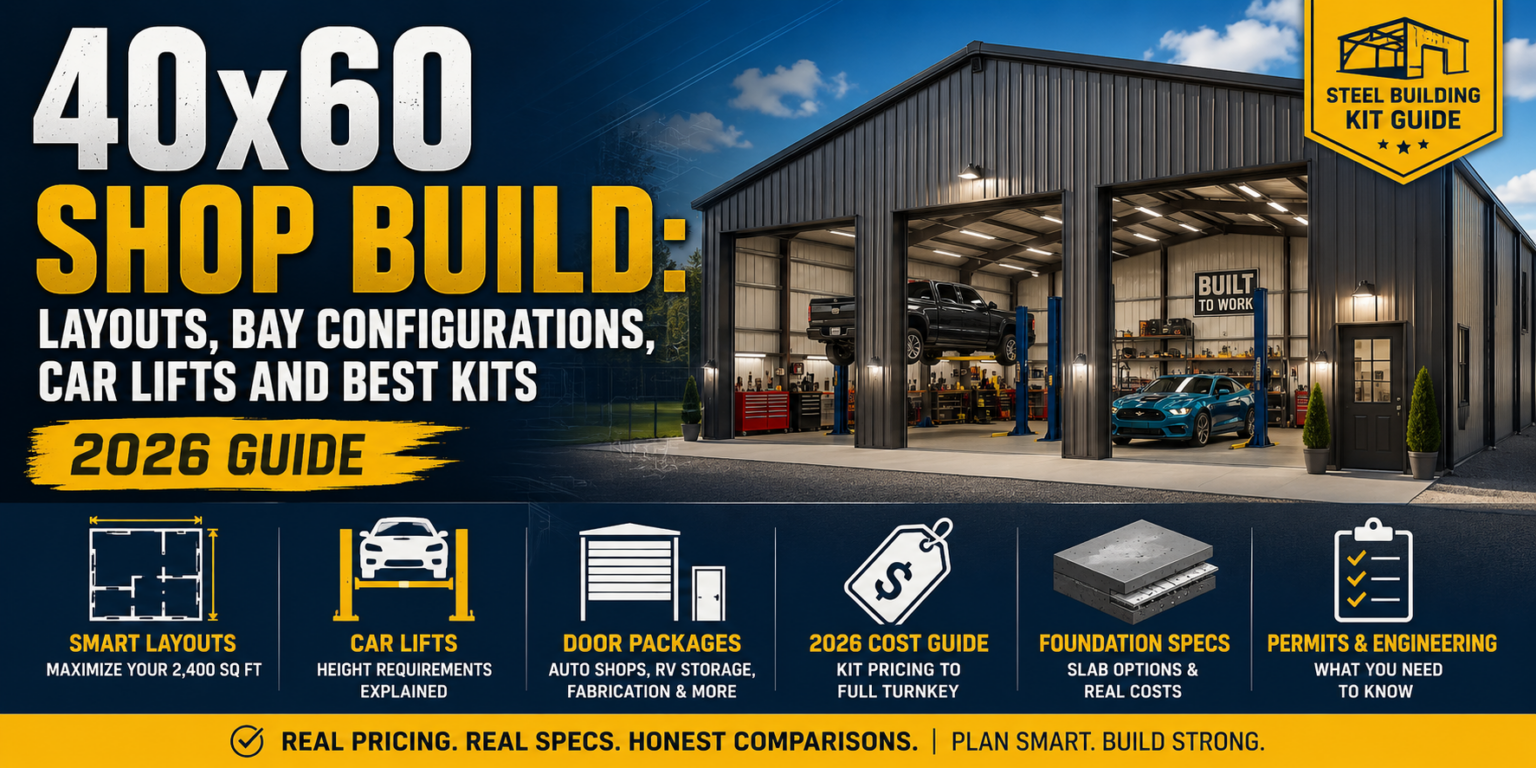
40×60 Shop Build: Layouts, Bay Configurations, Car Lifts and Best Kits (2026)
What You’ll Learn
- Exactly what a 40×60 shop gives you in usable square footage and height options
- Real 2026 cost ranges from kit-only to full turnkey with concrete and electrical
- How to lay out 4 bays, car lifts, woodworking tools, or a fabrication setup
- Minimum eave heights required to safely run 2-post and 4-post car lifts
- Which door packages work for auto shops versus fabrication or woodworking
- How to compare the best metal building companies for a shop build
- Foundation specs and what they actually cost in 2026
- Permit requirements and what engineer-stamped drawings run in most states
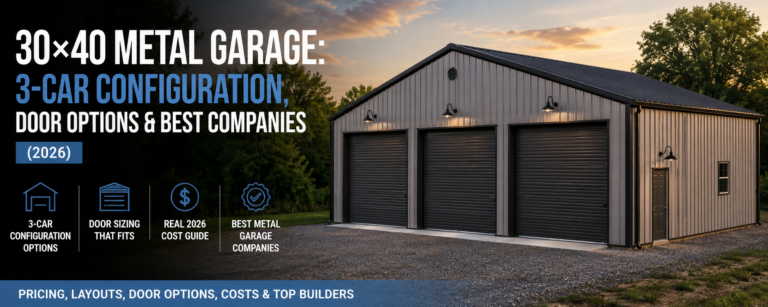
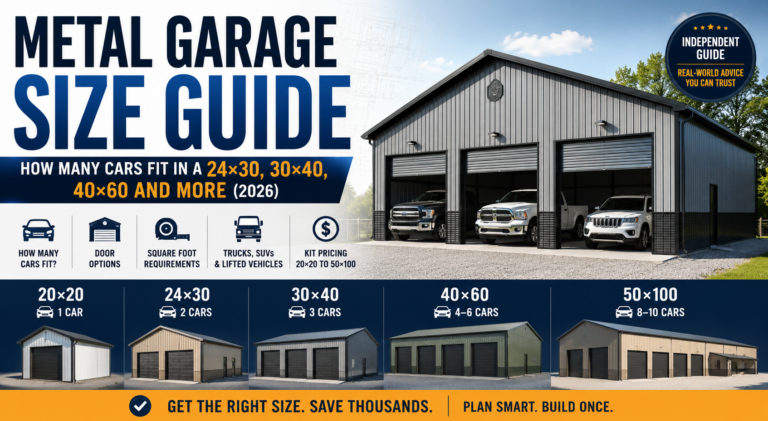
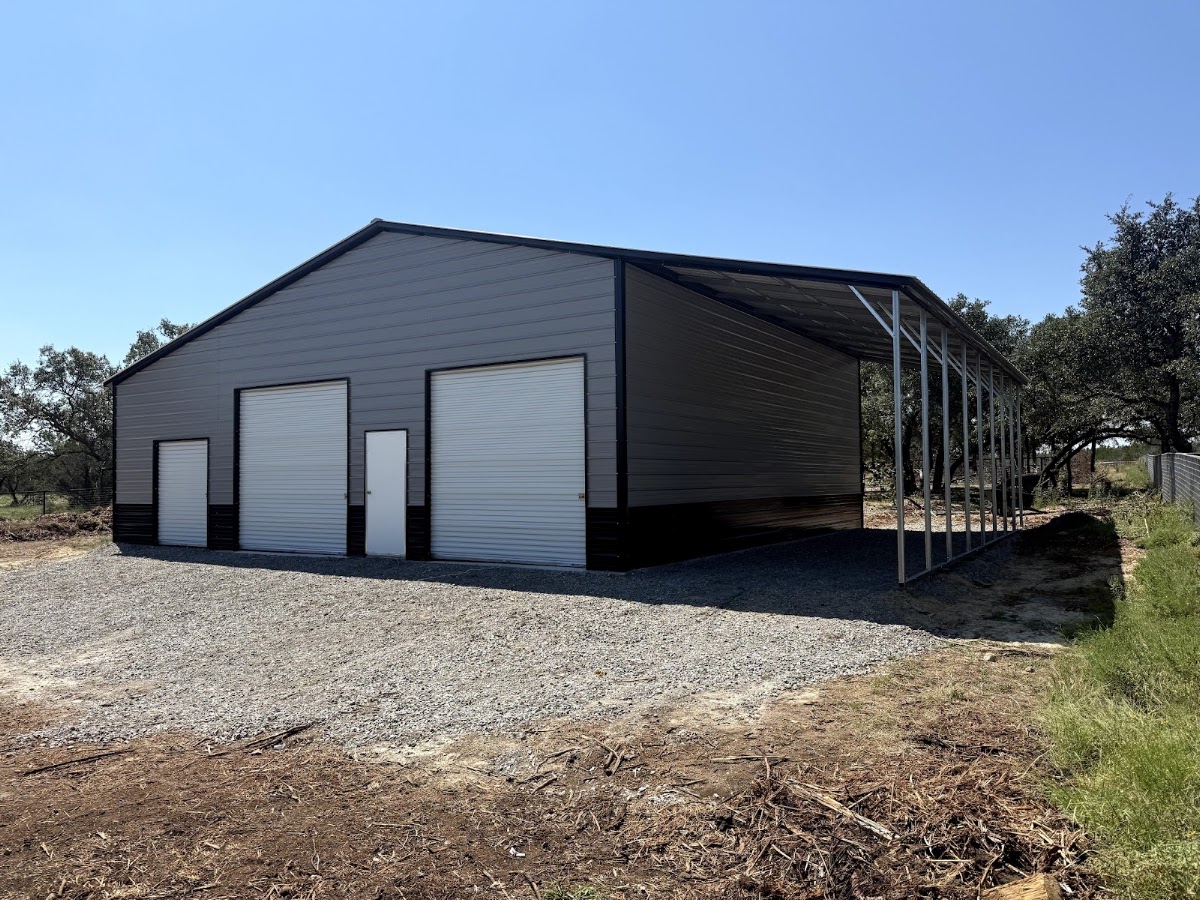
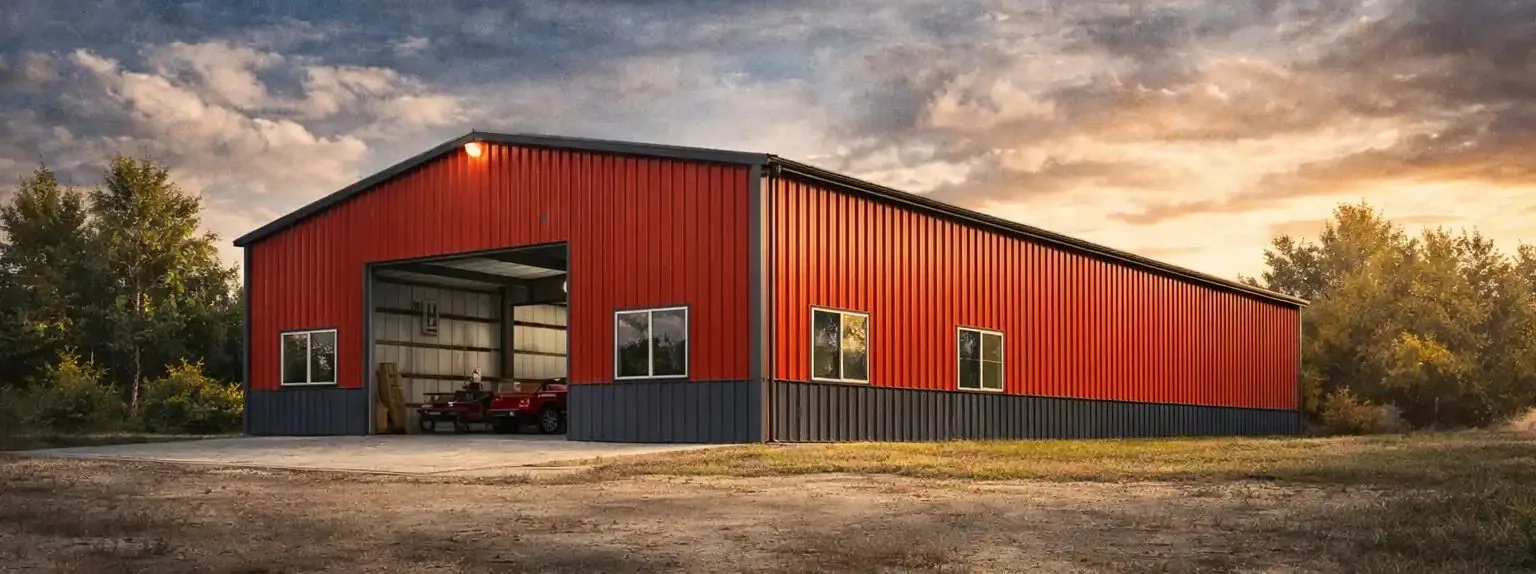
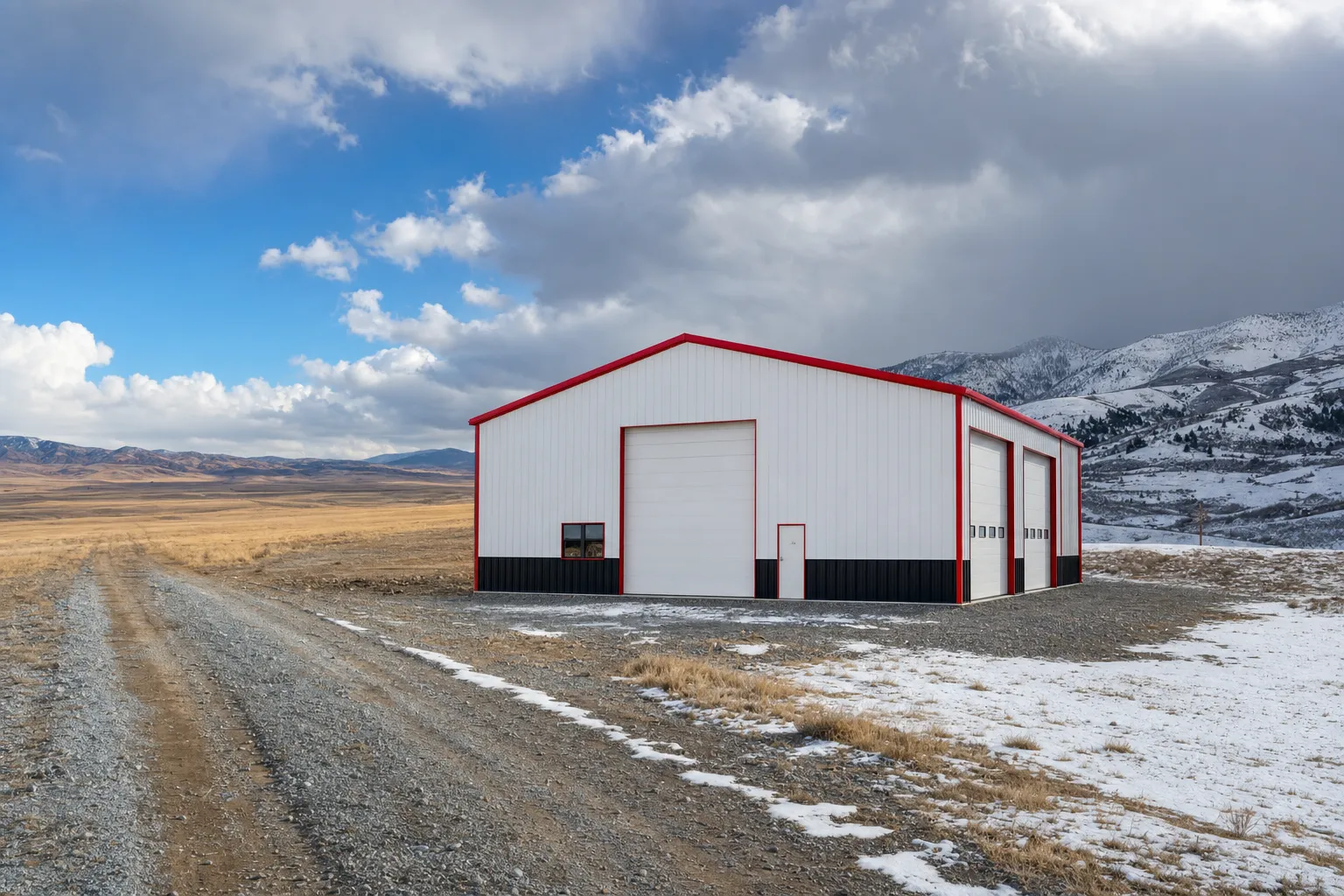
A 40×60 shop is the most practical shop size most contractors and serious hobbyists ever build. At 2,400 square feet of clear-span interior space, a 40×60 shop gives you room for 4 full bays, overhead equipment, parts storage, and a dedicated office — without the cost of going commercial. Whether you are planning a 40×60 auto shop metal building, a woodworking shop, or a fabrication setup with welding bays, this is the size that professional builders reach for first.
At SteelBuildingKit.com, we review steel building kits from an independent perspective — no manufacturer kickbacks, no affiliate quotas. We compare real pricing, structure specs, and long-term value across the major suppliers. If you are pricing a 40×60 shop build and want honest comparisons, our steel building cost calculator is a good starting point before you call any manufacturer.
Quick Answer Block
What is a 40×60 shop good for and what fits inside?
- Auto shop: 4 service bays (2 with in-ground or 2-post lifts), parts storage wall, and a 200 sq ft office
- Woodworking shop: Full tool layout including table saw, jointer, planer, bandsaw, and lumber storage with 12-foot clearance zones
- Fabrication shop: Plasma table, 3-4 welding bays, overhead crane rails, and material storage
- Mixed use: 2 bays for vehicles + 800 sq ft workshop + 400 sq ft office + bathroom
- Storage + workspace: Park up to 6 vehicles plus full workbench perimeter
At 2,400 sq ft, a 40×60 shop is roughly half a regulation NBA basketball court. That translates to meaningful scale indoors — large enough to run professional shop work, small enough to manage with a 6″ slab and standard commercial footings.
Section 1: What Does a 40×60 Shop Give You?
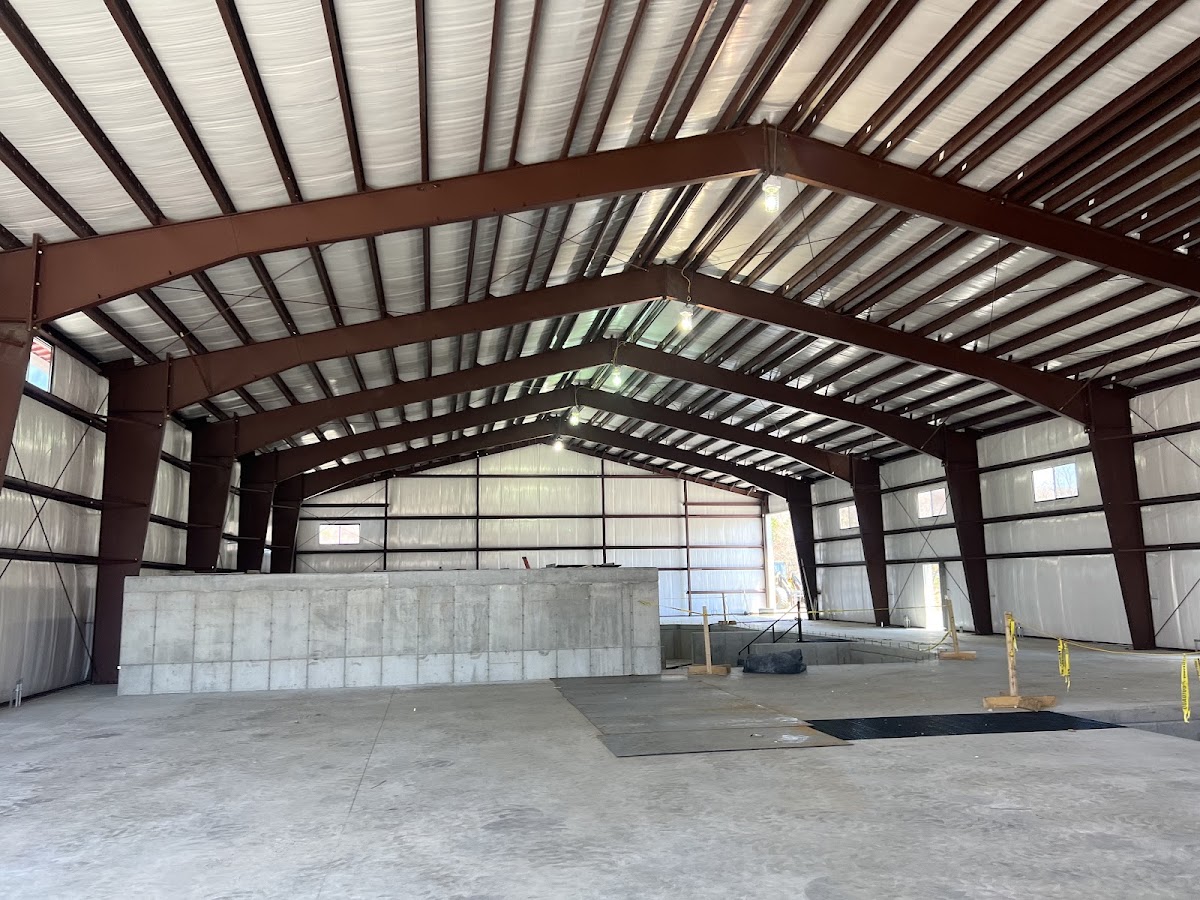
A 40×60 shop delivers 2,400 square feet of clear-span interior space with no interior columns. That matters for shop work. You can run a vehicle lift anywhere across the floor, install an overhead crane, or reconfigure your tool layout without working around a structural post in the middle of your bay.
The standard eave heights for a 40×60 shop are 12 feet, 14 feet, and 16 feet. Each height opens up different equipment options:
- 12′ eave: Minimum for most shop work, suitable for 4-post lifts and standard overhead doors up to 10 feet
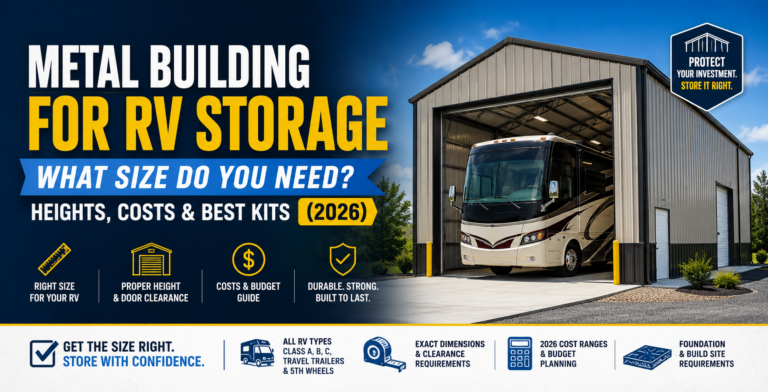
- 14′ eave: The sweet spot for most auto and fabrication shops — accommodates 12-foot overhead doors, 2-post lifts, and most RV clearances
- 16′ eave: Commercial and industrial use, supports overhead cranes and large equipment
Compared to a basketball court at roughly 4,700 sq ft, your 40×60 shop covers just over half that floor area. Picture half a court — end line to half-court line, full width — then imagine it enclosed with 14-foot walls. That gives you a solid mental model of how much working room you actually have.
Section 2: 40×60 Shop Cost in 2026
The 40×60 shop cost in 2026 depends heavily on what you are pricing. A steel building kit and a finished turnkey shop are two different products.
| Line Item | Cost Range |
|---|---|
| Steel building kit (kit only) | $28,000 – $45,000 |
| Delivery to site | $1,800 – $4,500 |
| Concrete slab (4″ standard) | $8,000 – $14,000 |
| Concrete slab (6″ for lifts) | $11,000 – $18,000 |
| Erection labor | $12,000 – $22,000 |
| Door package (4 roll-ups + 2 walk doors) | $6,000 – $14,000 |
| Electrical rough-in | $8,000 – $18,000 |
| Insulation | $4,500 – $9,000 |
| Installed shell (no slab or electrical) | $52,000 – $85,000 |
| Full turnkey with concrete and electrical | $95,000 – $150,000+ |
The biggest variable is labor costs in your region. Texas, the Southeast, and the Midwest tend to run 15-25% lower on erection than the coasts or mountain states.
For a detailed 40×60 cost breakdown with regional adjustments, see our 40×60 steel building kit cost guide. You can also plug your zip code into the steel building cost calculator to get a starting estimate before you request manufacturer quotes.
Section 3: What Fits in a 40×60 Shop?
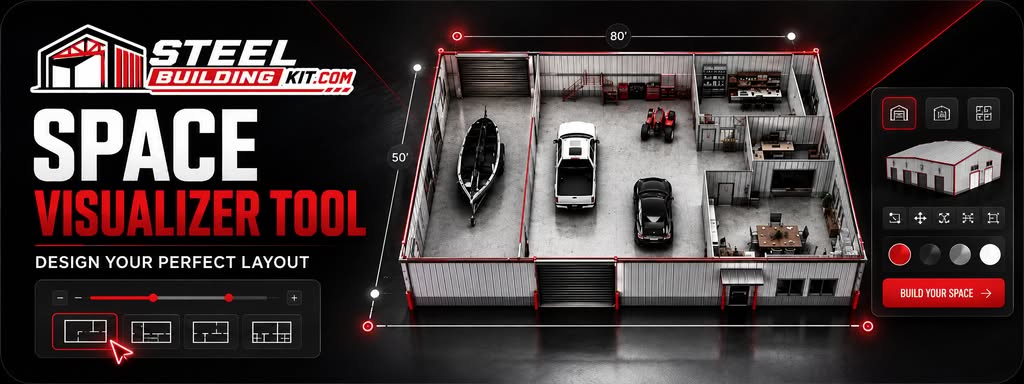
This is where the planning actually starts. The 40×60 shop layout you choose up front determines your door placement, slab thickness, eave height, and electrical rough-in locations. Getting this wrong at the design stage costs real money to fix later.
| Use Case | Layout | Recommended Eave Height |
|---|---|---|
| Auto shop (4 bays) | 4x (10’W x 40’D) bays across 60′ wall | 14′ minimum, 16′ preferred |
| Auto shop with 2-post lifts | 2 lift bays + 2 standard bays + parts + office | 14′ minimum |
| Woodworking shop | Tool islands, dust collection center, lumber storage | 12′-14′ |
| Fabrication shop | Plasma table, 3-4 welding stations, crane rails | 14′-16′ |
| Mixed use (vehicles + workspace) | 2 bays + 800 sq ft workshop + 400 sq ft office | 14′ |
| RV storage + workshop | 2 large bays (14’W x 40’D) + perimeter storage | 16′ |
Auto shop layout: In a 40×60 auto shop metal building, the standard configuration runs 4 bays across the 60-foot wall with a 12-foot overhead door per bay. The back 8-10 feet of the building holds parts shelving and a tire rack. A corner office of 200-250 sq ft fits cleanly in one back corner without disrupting bay flow.
Woodworking shop: The 40-foot depth works well for a woodworking shop because it gives you 12-foot outfeed clearance zones on both sides of a central table saw. Standard layout: table saw and router table center-left, jointer and planer center-right, bandsaw and scroll saw against the back wall, lumber storage along the full 60-foot back wall with overhead rolling racks.
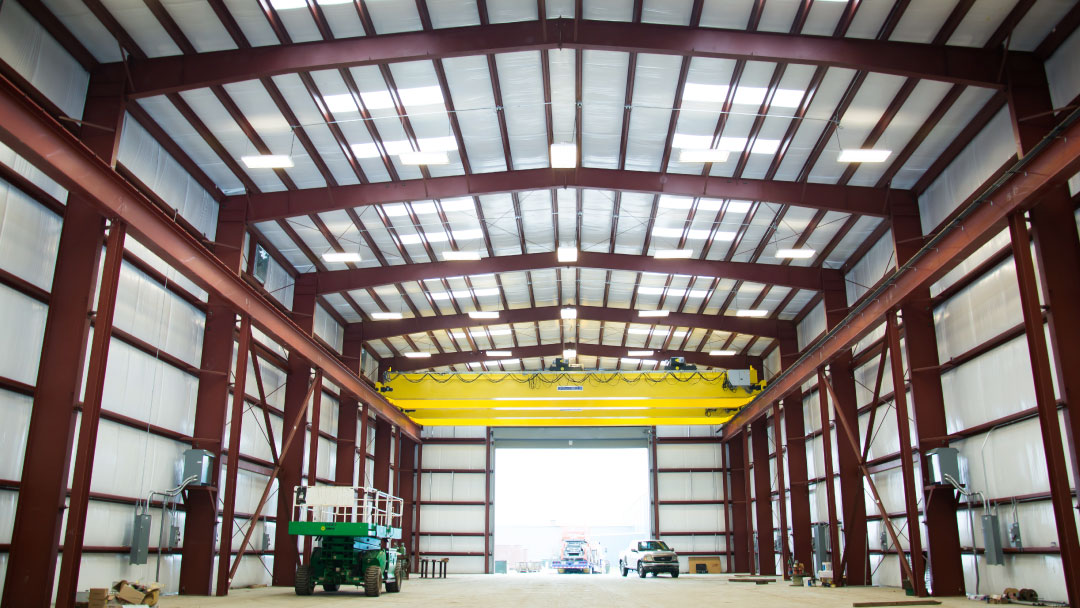
Fabrication shop: A 40×60 shop handles a 5×10 plasma table, three welding bays with 220V drops, and overhead crane rails along the 40-foot span. The 60-foot dimension runs parallel to the crane beam, giving you full floor coverage with a 2-ton overhead crane.
Mixed-use: Two 12-foot roll-up bays on one end, a framed 800 sq ft workshop in the middle, and a finished 400 sq ft office with bathroom on the other end. This is a popular configuration for contractors who need to park two trucks and run a tool-equipped shop behind them.
See our metal building workshop cost and sizes guide for more layout examples across different building sizes.
Section 4: 40×60 Shop Bay Configurations
The 60-foot wall is your primary planning dimension for a 40×60 shop. This is where your overhead doors go, and it sets how many bays you can run.
4-bay layout (each bay 10 feet wide by 40 feet deep)
Four 10-foot bays fit four 10-foot overhead doors across the 60-foot wall. This works for most standard vehicle work but gets tight for full-size pickup trucks and larger SUVs. Many buyers go with 12-foot wide bays instead, which requires dropping to 5 bays if the building were wider — but in a 40×60, the practical choice is 4 bays at 12 feet each with the remaining 12 feet used for a walk-in office door and utility panel alcove.
3-bay plus workshop (each bay roughly 13 feet wide)
Three 12-foot overhead doors across the 60-foot wall with a 24-foot enclosed workshop behind the third bay. This is a popular woodworking shop configuration — the 3-bay side handles material delivery and equipment access, the workshop side has a controlled interior environment with dust collection.
2-bay plus large workshop
Two 12-foot bays on one end, leaving 36 feet for a workshop. This gives you the most usable enclosed workspace and is a common choice for 40×60 woodworking shops and fabrication setups where you only need occasional vehicle access.
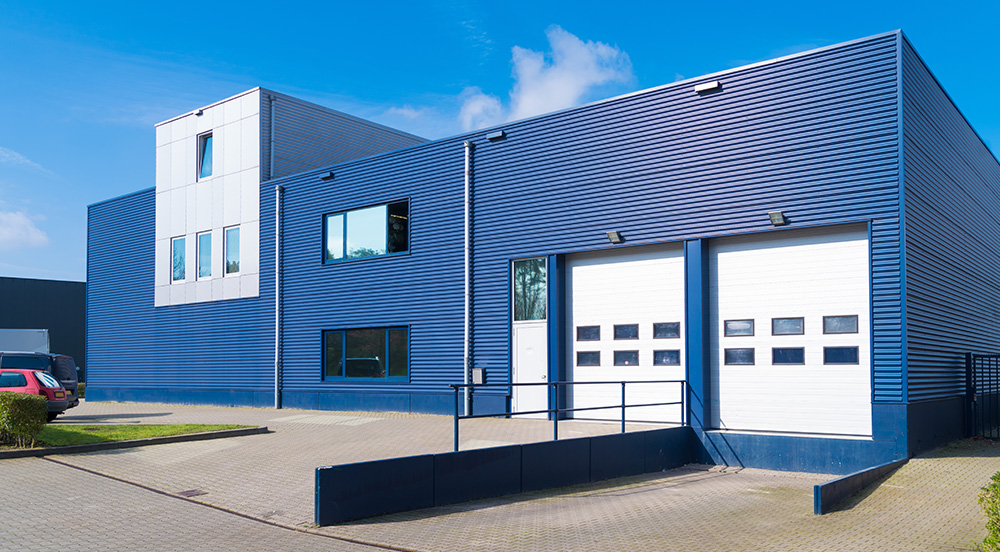
Door placement across the 60-foot wall: Running doors across the full 60 feet allows drive-through configurations if you also install doors on the back 60-foot wall. A drive-through shop — in one side and out the other — is practical for body shops and commercial service bays, and it costs only the added door package on the rear wall.
Section 5: Car Lift Requirements in a 40×60 Shop
Car lifts are where most buyers get surprised by height requirements. The steel building kit catalog will sell you a 12-foot eave building — and a 2-post lift — without warning you that the combination barely works and leaves almost no safety margin.
2-post lift: Needs a minimum clearance of 11 feet 6 inches from the floor to the lowest overhead obstruction. That means a 12-foot eave is the absolute minimum, and a 14-foot eave is what you actually want. At 14 feet with a 12-foot overhead door, a 40×60 shop can run 2 full-size 2-post lifts simultaneously with clearance to spare.
4-post lift: A 4-post lift requires 10 feet of clearance at minimum, making a 12-foot eave workable. At 12 feet, a 4-post lift fits, but you won’t be able to raise a lifted vehicle above the 10-foot point and still open most overhead doors. A 14-foot eave gives you real operating room.
Lift anchor bolt requirements: Both lift types require a concrete slab with anchor bolt embedment depth of at least 3.5 inches, which means a 4-inch slab is the absolute minimum. Most lift manufacturers and most state codes require a 6-inch slab when lifts are permanently installed. Budget for the 6-inch pour upfront — retrofitting a thicker slab later means demo and repour.
KEY INSIGHT: At a 14-foot eave height with 12-foot overhead doors, a 40×60 shop can operate two 2-post lifts simultaneously with vehicles raised to working height. This is the configuration that professional auto shops use when ordering a 40×60 auto shop metal building.
BUYER WARNING: If your 40×60 shop has a 10-foot eave, you cannot safely operate a standard 2-post lift at full extension. The vehicle will contact overhead framing before the lift reaches working height for most under-car repair. Do not let a manufacturer quote you a 10-foot eave shop if you plan to run 2-post lifts. This is a common upsell mistake — the lower eave kit costs less, but it limits your shop’s function permanently.
Section 6: Best Eave Height for a 40×60 Shop
| Eave Height | Best For | Limitations | Price Adder vs. 12′ |
|---|---|---|---|
| 12 feet | 4-post lifts, storage, woodworking, fabrication | Cannot safely run 2-post lifts, no RV clearance | Baseline |
| 14 feet | 2-post lifts, 12′ doors, RV storage, most commercial shops | Not ideal for overhead cranes without engineered header | +$3,500 – $6,000 |
| 16 feet | Overhead cranes, large commercial, RV service, industrial | Higher cost, may require upgraded local permits | +$7,000 – $14,000 |
The 14-foot eave is the right call for most 40×60 shop buyers. It adds roughly $3,500 to $6,000 to the steel kit price and unlocks the full range of shop functions — 2-post lifts, 12-foot overhead doors, and RV clearance — without the cost jump to 16 feet.
If you plan to run an overhead crane, you need 16 feet. Crane runway beams typically hang 18-24 inches below the peak of the frame, and you need clearance for the hook travel below the beam plus hook block height. A 16-foot eave with a proper overhead crane package from a steel building company like General Steel or Rhino Steel gives you the right structure from the start.
Section 7: Door Packages for a 40×60 Shop
Standard auto shop door package:
– 4 commercial roll-up doors, each 12 feet wide by 12 feet tall (or 12 x 14 for the 14′ eave version)
– 2 steel walk doors with glass panels
– Doors distributed across the full 60-foot front wall
Woodworking and fabrication shop door package:
– 2 roll-up doors at 14 feet wide by 14 feet tall (for lumber and material infeed)
– 2 steel walk doors
– Optional: 1 rear roll-up door for through-building material flow
Recommended door brands for shop applications:
– Clopay: Commercial series, best-in-class insulation ratings for climate-controlled shops
– Amarr: Strong commercial track record, widely available for replacement parts
– Wayne Dalton: Popular for heavy-use auto shop applications with high-cycle springs
Most steel building kit companies offer door packages as add-ons priced separately from the kit. Price the door package separately through a local commercial door supplier if the manufacturer’s package pricing feels high — you often save $1,500 to $3,000 this way on a 4-door shop.
Section 8: Best Metal Building Companies for a 40×60 Shop
Choosing the best metal building company for a 40×60 shop depends on your use case, location, and budget. Here is an honest rundown of the major suppliers for shop applications.
General Steel Buildings
Well suited for commercial shop builds. General Steel handles engineer-stamped drawings in all 50 states and has strong project management support for first-time builders. Pricing is mid-range for the industry. Their commercial framing packages work well for auto shops with overhead cranes.
Rhino Steel Buildings
One of the strongest warranty programs for shop applications — 50-year structural warranty and 40-year paint warranty on most packages. Rhino is a strong choice if you are running a professional shop and need long-term structural guarantees. Read our Rhino Steel Buildings review for detailed scoring.
Mueller Inc.
Mueller is a direct manufacturer popular for Texas shops and the broader Sunbelt. Factory-direct pricing cuts out the middleman and Mueller’s lead times are often shorter than distributors. Read our Mueller Inc. steel buildings review for specifics on their shop packages.
SteelMaster Buildings
SteelMaster focuses on Quonset-style arch buildings. Quonset construction is not ideal for most shop applications — limited door placement options and interior height profiles that create headroom problems along the sidewalls. Better for agricultural storage than shop work.
American Buildings / NUCOR Building Systems
NUCOR-backed commercial framing. Strong engineering resources and engineered-to-order systems for shops with specific overhead crane requirements. Higher price point, typically better for commercial contracts above $100,000.
For a full comparison of the top steel building companies including scoring across price, warranty, customer service, and shop suitability, see our top 10 steel building kit companies review.
Section 9: Foundation Requirements for a 40×60 Shop
The foundation is the part of your 40×60 shop build that most buyers underbudget. It is also the part that cannot be cut short.
Standard 4-inch slab: Minimum for a shop without lifts. Works for woodworking, fabrication, storage, and light vehicle parking. Cost: $8,000 to $14,000 depending on location, soil prep, and vapor barrier requirements.
6-inch slab for lifts: Required when installing 2-post or 4-post lifts. The added thickness provides the anchor bolt embedment depth that lift manufacturers and most state codes require. Cost: $11,000 to $18,000.
Perimeter footings in frost zones: If your site is in a climate with ground freeze depth greater than 12 inches, you need perimeter footings that extend below the frost line. This adds $4,000 to $8,000 to the foundation cost and is non-negotiable in northern states — it is a building code requirement in most jurisdictions.
Soil prep: Rocky or expansive clay soil adds $2,000 to $6,000 for grading, compaction, and base material. Get a soil report if you are building on a site with unknown soil conditions.
See our steel building foundation types guide for details on slab types, footer requirements, and regional considerations.
Section 10: 40×60 Shop Permit Considerations
Every state requires a permit for a permanent 40×60 shop structure. Some counties in rural areas have thresholds — typically below 200 sq ft — where small sheds are exempt, but at 2,400 sq ft, you will always need a permit.
What the permit process typically involves:
- Site plan showing setbacks from property lines
- Engineer-stamped drawings for the steel structure
- Foundation plan with footing specs
- Electrical plan (if running 200A service or higher)
- Mechanical plan (if adding HVAC)
Engineer-stamped drawings: Most steel building kit companies provide stamped drawings as part of their package, or as a paid add-on. Cost ranges from $500 to $2,500 depending on the complexity of the structure and the engineer’s fee schedule. Some states require a locally licensed engineer to stamp the drawings — confirm this with your local building department before ordering from a manufacturer based in another state.
Typical permit timeline: 4 to 12 weeks from submission to approval for a 40×60 shop permit in most jurisdictions. Rural counties are sometimes faster; dense suburban areas can run longer.
See our full article on metal building permit requirements for a state-by-state breakdown.
Section 11: Red Iron vs Tubular Steel for a 40×60 Shop
Red iron (welded I-beam framing) and tubular steel (cold-formed square tubing) are the two primary framing systems you will encounter when pricing a 40×60 shop.
Red iron for shop use: Red iron clear-span framing is the right choice for a 40×60 shop in almost every scenario. It handles overhead crane loads, lift anchor forces, and the kind of concentrated floor loads that fabrication shops generate. Red iron also gives you clean interior attachment points for crane rails, overhead cable trays, and mezzanines.
Tubular steel: Lower cost option, typically 15-25% less expensive per square foot than red iron. Works well for storage buildings, hobby garages, and light-use applications where you are not hanging overhead equipment or running vehicle lifts. Not recommended for commercial auto shops or shops with overhead crane requirements.
Cost difference: Expect to pay $3,000 to $7,000 more for a red iron 40×60 kit versus a comparable tubular steel kit at the same size and eave height. For a professional shop, this is money well spent — tubular steel is not rated for the loads a working shop generates over time.
For a full technical comparison, see our red iron vs tubular steel building guide.
For cost-per-square-foot comparisons across framing types, see our steel building cost per square foot guide.
Common Mistakes Table
| Mistake | Why It Costs You | Fix |
|---|---|---|
| Ordering a 12′ eave when planning 2-post lifts | Lifts cannot reach safe working height; you end up with a building that limits your shop function permanently | Order 14′ eave minimum when any 2-post lift is in the plan |
| Pouring a 4″ slab when lifts are planned | Lift anchor bolts require 3.5″ embedment minimum; a 4″ slab leaves almost no margin and most lift warranties are voided | Pour 6″ slab from the start if any lift is going in now or later |
| Placing all doors on one wall without rear access | Limits material flow; you can’t do drive-through vehicle work | Plan rear doors at the design stage; adding them later costs $4,000-$8,000 in structural modification |
| Buying a kit from a distributor without checking engineer stamp coverage | Some distributors provide drawings stamped only in their home state; your local building department rejects them | Confirm engineer stamp coverage for your specific state before ordering |
| Underestimating foundation cost | Foundation is often 20-30% of total project budget; buyers sticker-shock at the quote and cut corners on slab thickness | Budget $12,000-$18,000 for foundation before you price the kit |
| Not getting 3 quotes on erection labor | Labor costs vary 30-40% across contractors in the same region | Get 3 competitive bids from contractors with verifiable metal building erection experience |
Article Summary
- A 40×60 shop gives you 2,400 sq ft of clear-span interior, equivalent to half a basketball court
- Kit-only prices in 2026 run $28,000 to $45,000; full turnkey with concrete and electrical runs $95,000 to $150,000 or more
- The 40×60 shop layout supports 4 auto bays, a full woodworking setup, a fabrication shop with a plasma table, or mixed-use configurations
- A 14-foot eave is the recommended minimum for shops running 2-post car lifts — a 12-foot eave is too tight for safe full-extension operation
- Pour a 6-inch concrete slab whenever lifts are in the plan; 4 inches is the absolute code minimum and leaves no margin
- Red iron framing is the right choice for professional shop builds; tubular steel works for storage and hobby use
- The best metal building companies for shop applications include General Steel, Rhino Steel, and Mueller Inc. — each with different strengths by region and application
- Door packages for a standard 4-bay auto shop run four 12×12 or 12×14 commercial roll-up doors across the 60-foot front wall
- Permits are required in every state for a structure at this size; engineer-stamped drawings add $500 to $2,500
- Budget 4 to 12 weeks for permit approval; plan your construction schedule around this timeline
FAQ Section
Q: How many cars fit in a 40×60 shop?
A 40×60 shop can park 6 to 8 standard passenger vehicles with no lifts. With 4 bays configured for auto service and 2 of those bays running 2-post lifts, you can work on 6 vehicles simultaneously — 2 in the air on lifts and 4 on the floor. For pure storage, you can park up to 10 compact cars or 8 full-size trucks with a clean drive-in-and-park layout.
Q: What is the best eave height for a 40×60 auto shop?
14 feet is the best eave height for most 40×60 auto shops. At 14 feet, you can install a 12-foot overhead door, run standard 2-post lifts at full extension, and accommodate most light-duty trucks and SUVs without clearance problems. The 16-foot eave makes sense only if you are running an overhead crane or servicing Class 4 and above commercial vehicles.
Q: What does a 40×60 shop cost to build in 2026?
The steel building kit alone costs $28,000 to $45,000 in 2026. Adding erection labor, a 6-inch concrete slab, a commercial door package, and electrical rough-in brings the total to $95,000 to $150,000 for a turnkey shop. Regional labor costs, local foundation requirements, and door package choices are the main variables. Use the steel building cost calculator to estimate your specific project.
Q: Can I run a 2-post lift in a 40×60 shop with a 12-foot eave?
Technically, 12 feet is the minimum eave height for a 2-post lift, but it is too tight for most real-world shop work. A standard 2-post lift raises a full-size truck to about 6 feet for comfortable under-vehicle access, and a 12-foot overhead door barely clears that height with the door open. The 14-foot eave gives you the margin you need to work safely and to open your roll-up doors while vehicles are on the lift.
Q: Do I need a permit for a 40×60 metal shop?
Yes. At 2,400 square feet, a 40×60 shop requires a permit in every U.S. state. Permit exemptions for agricultural structures exist in some rural jurisdictions, but they almost never apply at this size. Plan for 4 to 12 weeks of permit processing time and budget $500 to $2,500 for engineer-stamped drawings as part of your permit submission package.
Q: What is the difference between red iron and tubular steel for a 40×60 shop?
Red iron uses welded I-beam framing and is rated for overhead crane loads, lift anchor forces, and the structural demands of a working shop. Tubular steel uses cold-formed square tubing and costs 15-25% less but is not appropriate for shops with overhead equipment or vehicle lifts. For any professional auto shop, fabrication shop, or woodworking shop running heavy machinery, red iron is the correct choice.