


STEEL BUILDING KIT GUIDE | Updated June 2026 | 11 min read
30×40 Metal Garage: 3-Car Configuration, Door Options & Best Companies (2026)
WHAT YOU’LL LEARN IN THIS GUIDE
- How many vehicles a 30×40 metal garage realistically holds and what eave height determines fit for trucks and SUVs
- Real 2026 cost ranges from kit-only through turnkey installation, including a full line-item budget breakdown
- The three door configuration options for a 3-car setup and the one door size mistake that costs buyers the most
- Which floor plan layouts give you more storage and workflow flexibility in the same 1,200 square feet
- Why red iron clear-span framing is the right choice for a 30×40 garage and what you give up with tubular steel
- Foundation specs for standard use versus heavier loads like car lifts and RVs
- The five best kit manufacturers for a 30×40 build, with price ranges and what each one is best for
- What a loft costs, when it makes sense, and why you should spec it into the original drawings rather than add it later
A 30×40 metal garage is the most popular three-car steel structure sold in the US today, and most buyers get at least one thing wrong before they sign the purchase order. The mistakes show up at delivery: 9-foot doors that a full-size pickup can barely squeeze through, a 10-foot eave that eliminates any chance of adding a car lift, or a door layout that forces all three vehicles to back out in sequence. Getting the configuration right before you order saves you money and years of frustration.
This guide covers the full picture for buyers comparing a 30×40 metal garage in 2026, including actual installed costs, door sizing, layout options, kit companies, and permit requirements. SteelBuildingKit.com does not sell buildings or earn referral commissions from any manufacturer, so the data here reflects what real buyers pay, not what manufacturers publish in their marketing materials. If you want a pricing baseline before working through the details, the Metal Garage Kits Complete Buyer’s Guide is a good starting point.
QUICK ANSWER: 30×40 Metal Garage
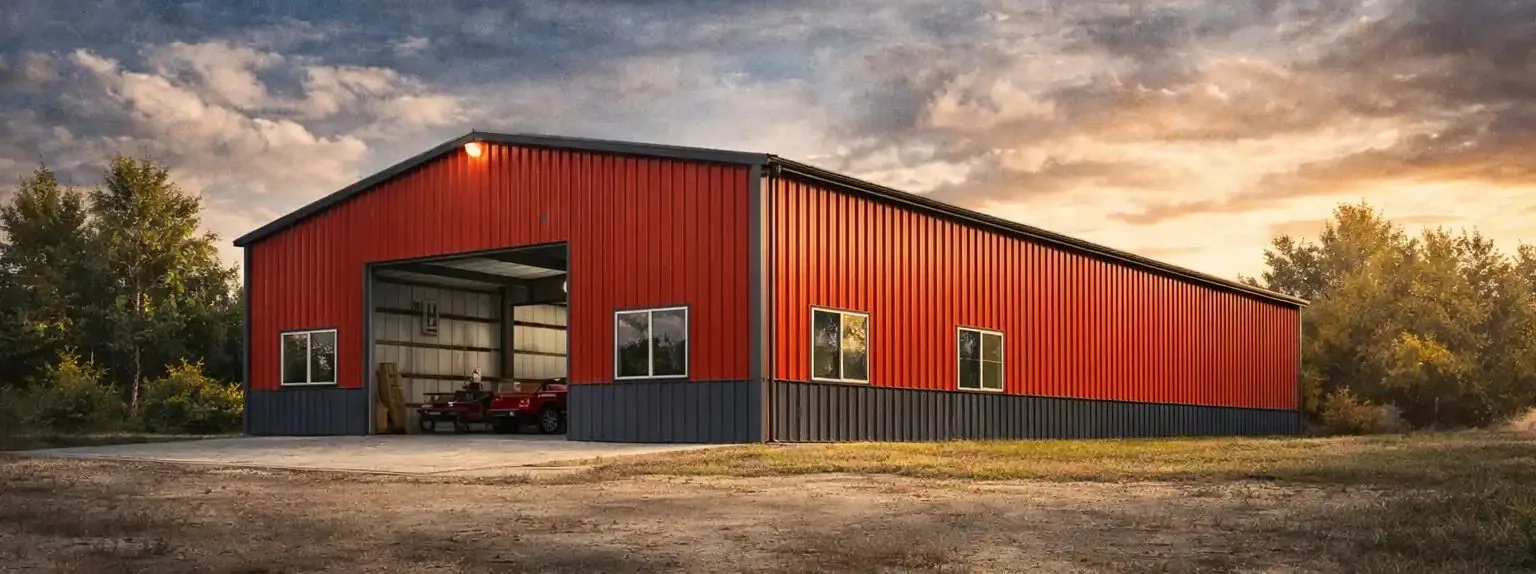
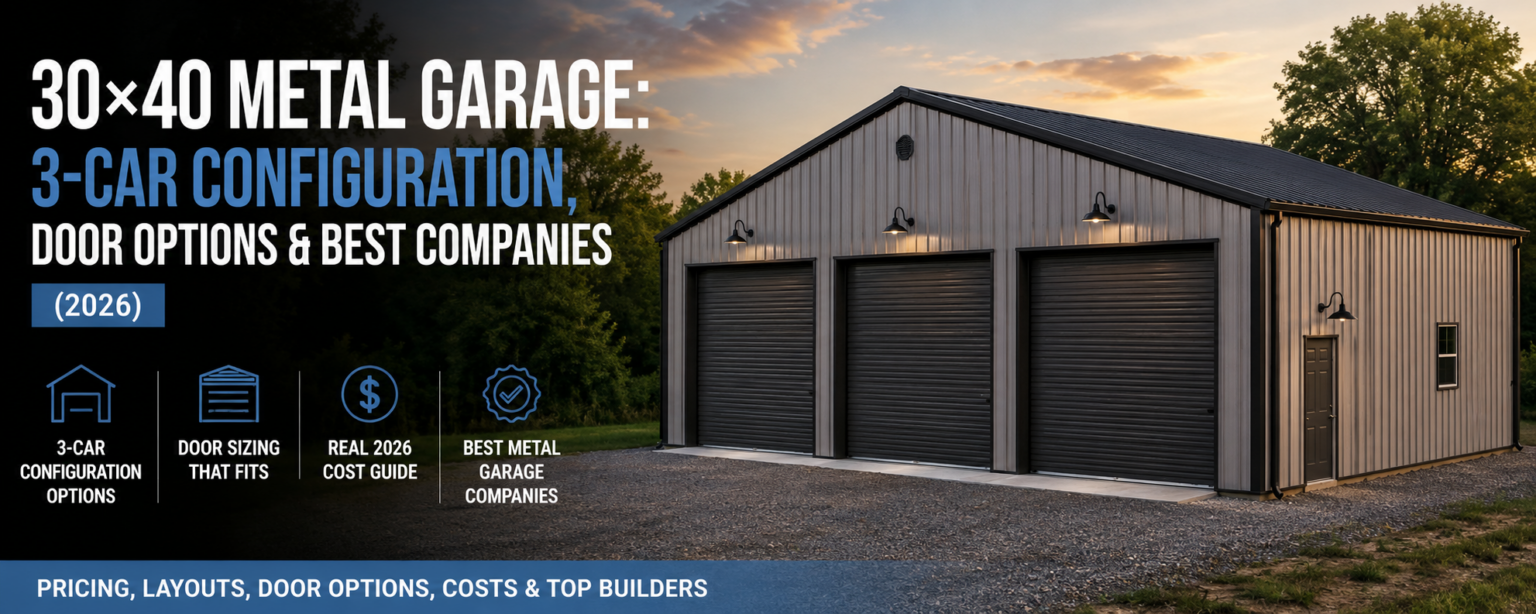
A 30×40 metal garage gives you 1,200 square feet of clear-span space configured as three 10-foot bays. Kit-only prices run $8,500 to $14,000 depending on gauge, eave height, and door package. A turnkey installation with a 4-inch concrete slab comes in at $22,000 to $35,000 for most US markets. Order 10×10 overhead doors for all three bays if you plan to park full-size trucks or large SUVs.
Section 1: Will a 30×40 Metal Garage Fit 3 Cars?
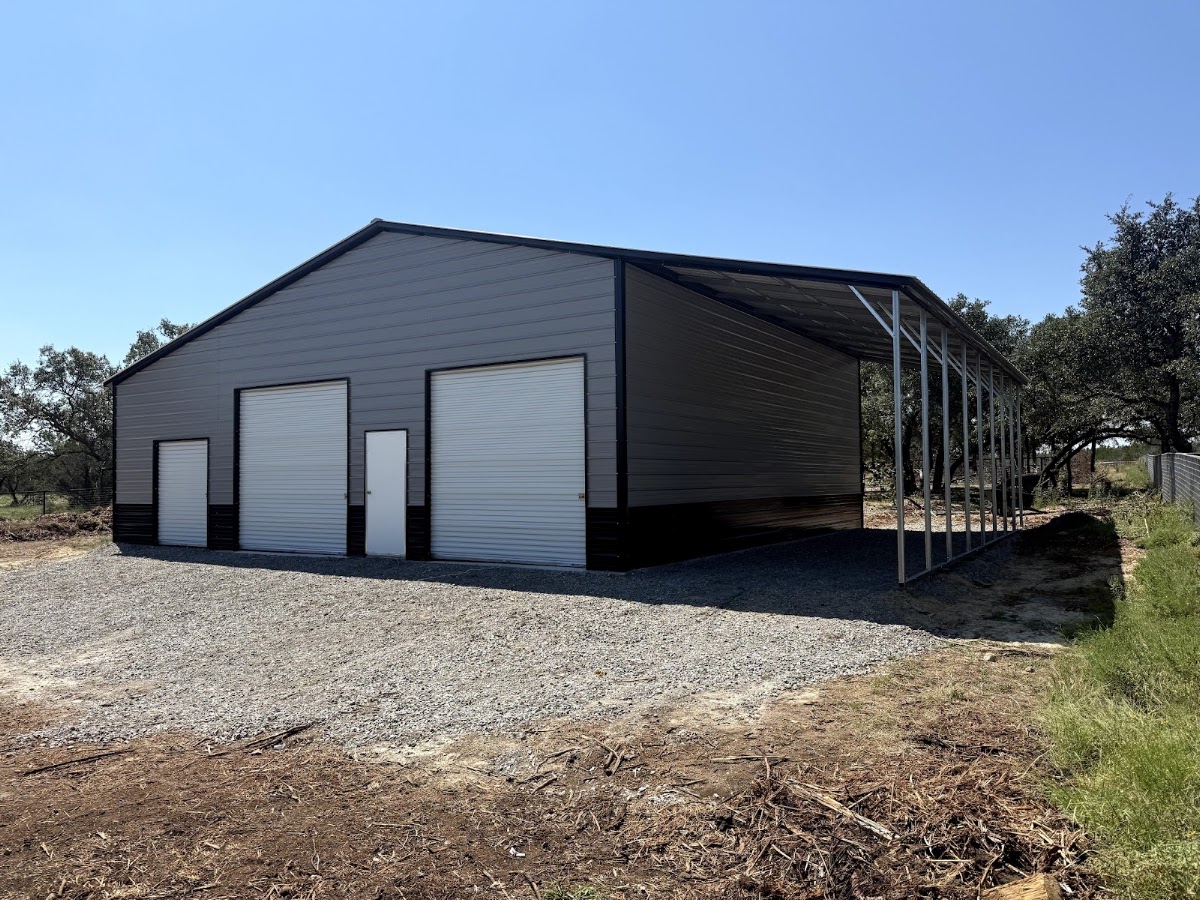
A 30×40 metal garage totals 1,200 square feet. The 30-foot width divides cleanly into three 10-foot bays, which is why this footprint became the standard 3-car configuration. Each 10-foot bay is wide enough for a mid-size sedan or compact SUV with a few inches of clearance on each side. For full-size trucks and larger SUVs, bay width is less of the constraint than eave height.
The 40-foot depth gives each vehicle a full parking lane with room for a workbench or storage shelving along the back wall. In a pure parking configuration with a 24-inch deep bench across the rear, you still have 37 feet 6 inches of usable depth per lane. That accommodates a full-size crew cab (typically 19 to 22 feet long) with room to open all doors and walk around.
Where buyers run into trouble is eave height. A 10-foot eave on a 30×40 metal garage is technically buildable but creates problems as soon as a taller vehicle enters the picture. A 12-foot eave is the minimum worth ordering for most buyers in 2026. If you own or plan to own a lifted truck, an RV, or any vehicle over 7 feet tall, or if you want to add a two-post car lift, 14 feet is the number to spec.
| Eave Height | What Fits | Notes |
|---|---|---|
| 10 ft | 3 standard cars | Not recommended for SUVs or pickups |
| 12 ft | 3 cars or SUVs | Minimal clearance for lifted pickups |
| 14 ft | Pickups, RVs possible | Car lift-ready with correct door package |
| 16 ft | Car lift + storage loft | Commercial or shop use |
If you’re unsure, go to 14 feet. The cost difference between a 12-foot eave and a 14-foot eave on a 30×40 metal garage is typically $800 to $1,500 on the kit price. That is the cheapest insurance you can buy against regretting your eave height the first time you pull in a taller vehicle.
Section 2: 30×40 Metal Garage Cost in 2026
Pricing for a 30×40 metal garage in 2026 falls into three tiers depending on how much of the project you’re purchasing.
Kit-only covers the panels, primary and secondary framing, hardware, and standard trim. You take delivery of the kit and either self-erect or hire a contractor separately.
Erected shell adds delivery and installation labor from a certified erection crew. The building is standing and weathertight, but no slab, no electrical, and no interior finish.
Turnkey includes the slab, erection, doors, and basic trim. This is the closest comparison to a general contractor quote and the number most buyers should use for planning purposes.
| Package | Price Range | Includes |
|---|---|---|
| Kit-Only | $8,500 to $14,000 | Panels, framing, hardware |
| Erected Shell | $16,000 to $22,000 | Kit + delivery and labor |
| Turnkey | $22,000 to $35,000 | Kit + slab, trim, doors |
The foundation alone runs $4,500 to $7,500 for a standard 4-inch 30×40 concrete slab with perimeter grade beam. That range swings on regional labor costs, soil conditions, and how much rebar the county requires. Do not budget the low end for a Northern state where frost depth requirements add to pour cost.
Cost per installed square foot works out to roughly $18 to $29 depending on the market and specification level. That is materially less expensive per square foot than a comparable 24×24 or smaller build because the fixed costs (engineering, delivery, crane or forklift time) spread across more square footage.
For a side-by-side comparison of 30×40 pricing against other popular footprints, the Metal Building Prices by Size guide covers 24×30 through 60×100. If you want to run numbers on your specific configuration, the Steel Building Cost Calculator generates a ballpark in about two minutes.
Section 3: Door Options for a 30×40 Metal Garage
Door configuration is where most 30×40 metal garage buyers make their biggest mistake. The 30-foot front face has to accommodate three bays of entry, and how you divide that space determines how useful the building is every single day.
Option A: Three 10×10 overhead doors across the 30-foot face
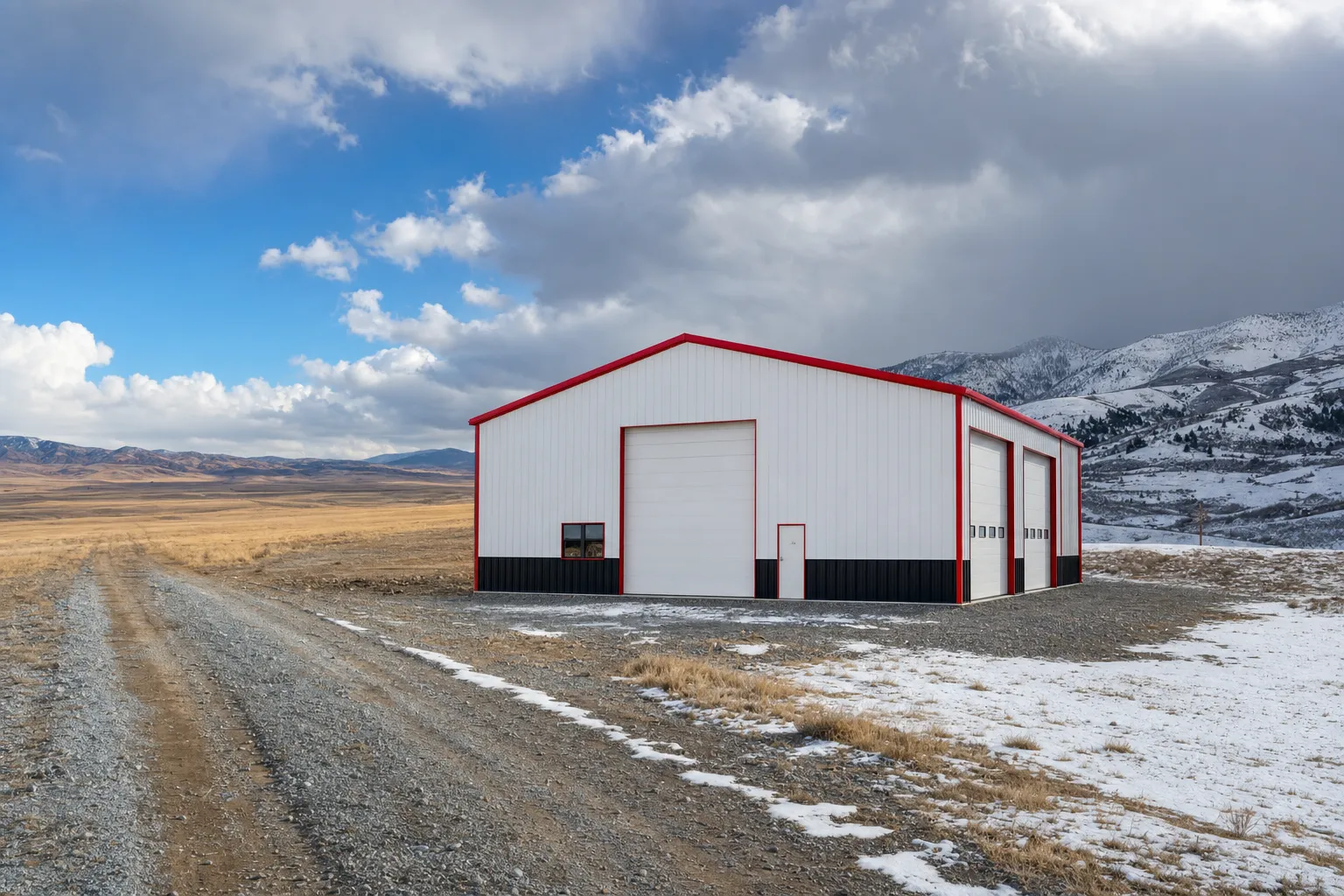
This is the most popular configuration for a 3-car metal garage. Each bay gets a dedicated 10-foot wide by 10-foot tall overhead door. All three vehicles can enter and exit independently, which is the feature that justifies the 30×40 footprint over a single-wide or two-car design. For mid-size vehicles, SUVs, and most pickup trucks, 10×10 works without issue. For extra-tall lifted trucks, step up to 10×12.
Option B: One 12×12 center door with two 9×8 side doors
This layout is sometimes offered as a cost-reduction option. The center bay gets more clearance for a taller vehicle, while the side bays take 9-foot wide doors. The problem is the 9-foot side doors. Standard full-size pickups are about 7 feet 8 inches wide including mirrors, which means less than 2 inches of clearance per side through a 9-foot door. Folding the mirrors helps, but it turns a daily-use door into an exercise in patience.
Option C: Two 10×10 doors on the front face, one 10×10 on the 40-foot side
This layout works well for corner lot properties or when one vehicle needs separate entry, such as a work truck that comes and goes on a different schedule. The side door on the 40-foot wall allows tandem parking or a separate workflow area without crossing through the main bays.
Walk-in man door: Every 30×40 metal garage should include at least one 36-inch by 80-inch walk-in man door. Place it on the rear wall or a side wall, not the front face. Walking through a raised overhead door every time you want to grab a tool wastes energy in heated or cooled garages and accelerates weatherstripping wear.
Sectional vs. roll-up overhead doors: Sectional doors (the standard residential-style door with horizontal panel sections and springs) offer better insulation, better seal, and more safety features than roll-up coil doors. Roll-up coil doors save 12 to 18 inches of headroom, which matters if you’re at 10-foot eave and every inch counts. At 12-foot eave and above, sectional doors are the better choice for a residential metal garage.
KEY INSIGHT
The most common mistake is ordering 9×8 doors for a 3-car garage. Full-size trucks and tall SUVs need 10×10 minimum for comfortable daily use. If your household has even one full-size pickup, order 10×10 for all three bays. The incremental cost over 9×8 doors is $150 to $350 per door. That is cheap compared to rebuilding the opening framing after the fact.
Section 4: 30×40 Metal Garage Layout Options
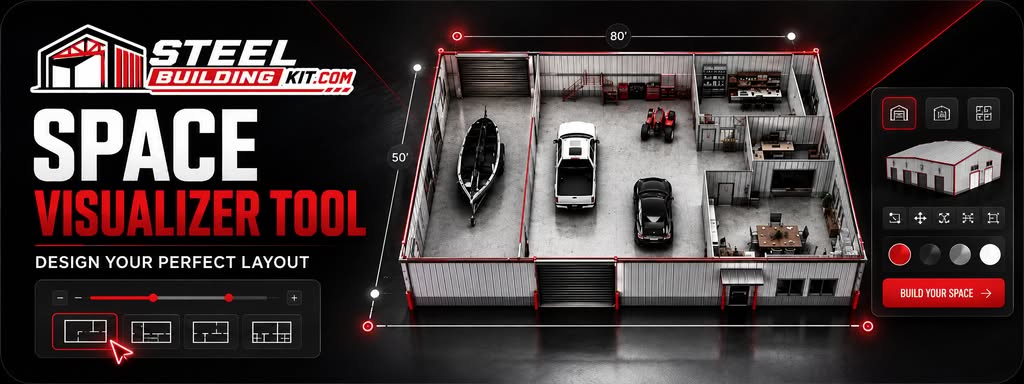
The 1,200 square feet in a 30×40 metal garage can be configured several different ways beyond the standard three-forward-bay setup. Most buyers default to Layout A without realizing that Layouts B and C solve real problems that show up a few years into ownership.
Layout A: Three parallel forward-facing bays
The standard configuration. Three vehicles pull straight in through the 30-foot front face. Clean, simple, and the easiest to erect because all overhead doors are on one wall. Works well on rectangular lots with a driveway that approaches from the front.
Layout B: Two forward-facing bays plus one side-entry bay
Two doors on the front face for two vehicles, one door on the 40-foot side wall for the third. This layout allows tandem storage behind the side-entry vehicle or creates a natural separation between a garage area and a workshop area. It also helps on narrow lots where a three-car-wide driveway apron is impractical.
Layout C: Two garage bays plus one enclosed workshop bay
Two bays configured for parking with overhead doors, one bay closed off as a dedicated workshop with only a walk-in man door. The workshop bay gets full wall space for tool storage, a workbench, and equipment without any vehicles sharing the space. This is the layout to choose if you are serious about woodworking, metalworking, or mechanical work and do not want to shuffle cars every time you need floor space.
Each layout uses the same 30×40 building footprint and the same material cost. The difference is in how you spec the door rough openings when you place the order. Changing door placements after the framing is set requires re-engineering the header spans and potentially replacing primary frame members, so finalize your layout before you sign the purchase order.
Section 5: Red Iron vs. Tubular Steel for a 30×40 Garage
The framing system determines whether your 30×40 metal garage has interior support posts or completely open floor space. For a three-car garage, this is not a minor detail.
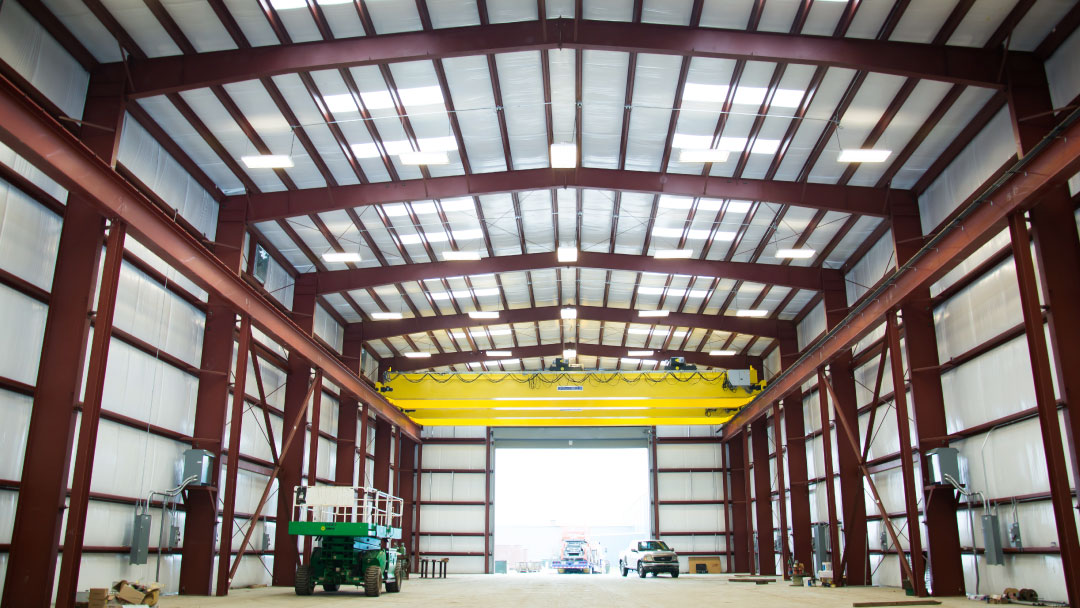
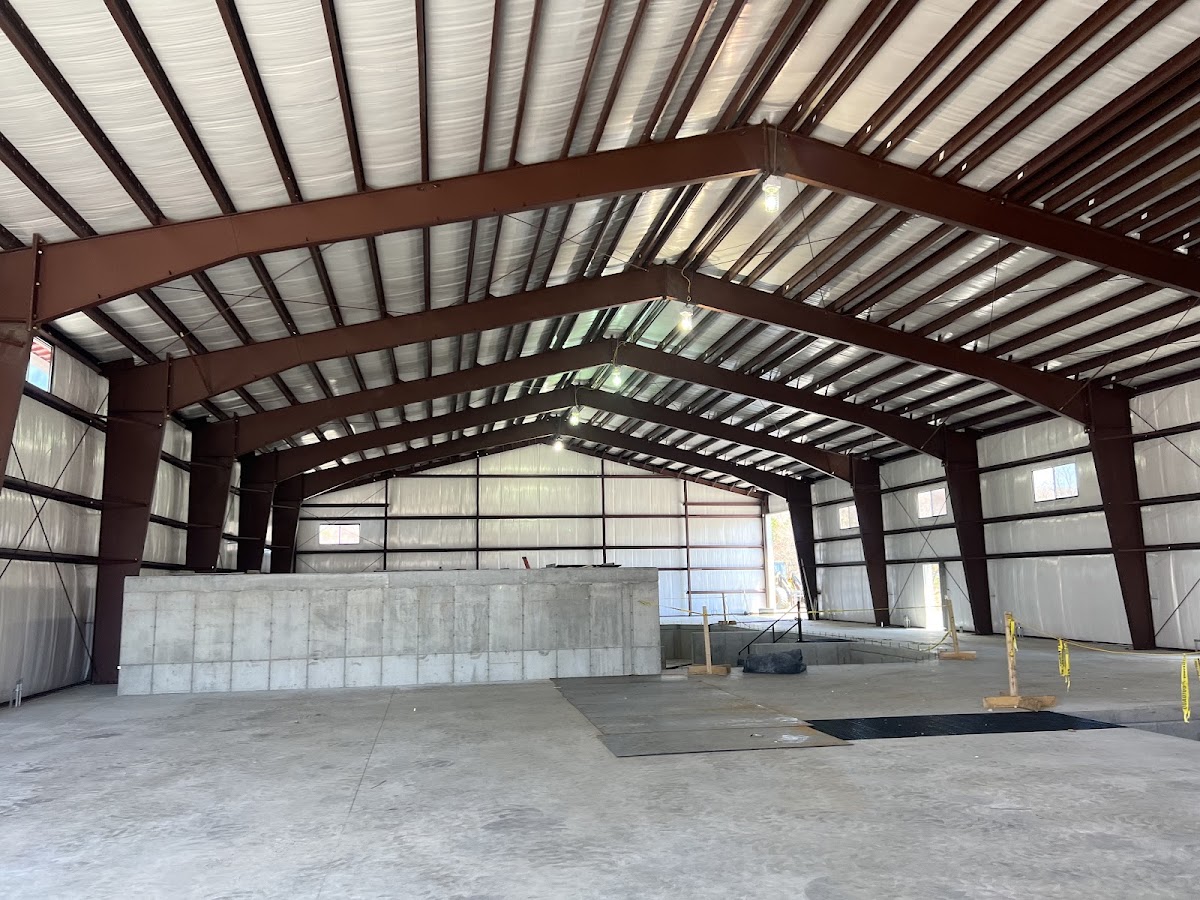
Red iron rigid frame is the engineered clear-span system used in commercial and industrial steel buildings. The primary frames are made from welded hot-rolled steel I-beams sized by a licensed structural engineer to span the full 30-foot width without interior columns. Clear-span means no posts in the middle of the bay, which means car doors can swing open fully and you can move freely between vehicles.
Tubular steel uses lighter-gauge square or rectangular hollow structural sections (HSS). Tubular framing works well for carports, equipment shelters, and smaller structures, but it typically requires interior columns when spanning 30 feet because the section properties of standard tubular members are not efficient for long clear-span loads. An interior column in the center of a three-car garage blocks car door swing and splits the space in a way that defeats the purpose of the layout.
For a 30×40 metal garage, red iron rigid frame is the right system. It costs more than tubular steel, which is why some entry-level kit sellers push tubular packages on buyers who are price-focused, but the functional difference in a 30-foot span is significant enough that the cost premium is worth it every time.
For a detailed technical comparison of both systems, the red iron vs. tubular steel guide covers load ratings, span limits, and what each system looks like inside a finished building.
Section 6: Foundation Requirements for a 30×40 Metal Garage
The foundation for a 30×40 metal garage is a concrete slab, and the spec depends on what the building will be used for and where it’s located.
Standard residential use: A 4-inch concrete slab with a 6-inch perimeter grade beam and #4 rebar on 18-inch centers is the baseline for a three-car garage used for vehicle storage. Wire mesh in the field is common but does not replace rebar at the perimeter. Most municipalities require an engineer to review the slab design and a concrete inspection before the building is erected.
Heavier use (car lift, RV, or heavy equipment): A 6-inch slab throughout with #4 rebar on a 12-inch grid and a 12-inch grade beam is the appropriate spec for any load-bearing lift, oversized vehicle, or frequent heavy equipment movement. A two-post car lift applies significant point loads to the slab, and a 4-inch slab is undersized for that application.
Anchor bolts: Metal building manufacturers provide engineered anchor bolt drawings with the kit. Standard residential packages for this size typically call for L-bolts or J-bolts at 24 to 36 inches on center along the perimeter. The exact pattern comes from the manufacturer’s licensed PE drawings and must be poured before the kit arrives. Do not pour the slab until you have the anchor bolt plan in hand.
Frost depth: In Northern states, the perimeter grade beam must extend below the local frost line, which ranges from 12 inches in the mid-South to 60 inches or more in Minnesota and upper New England. Poured footings that don’t go below frost depth will heave in winter, which cracks the slab and distorts the building frame.
For a full breakdown of slab types, pier systems, and regional foundation requirements, the Steel Building Foundation Types Guide covers each option with cost ranges.
Section 7: Can You Add a Loft to a 30×40 Metal Garage?
Yes, a loft is feasible in this configuration, but it requires planning at the design stage rather than retrofit planning after the fact.
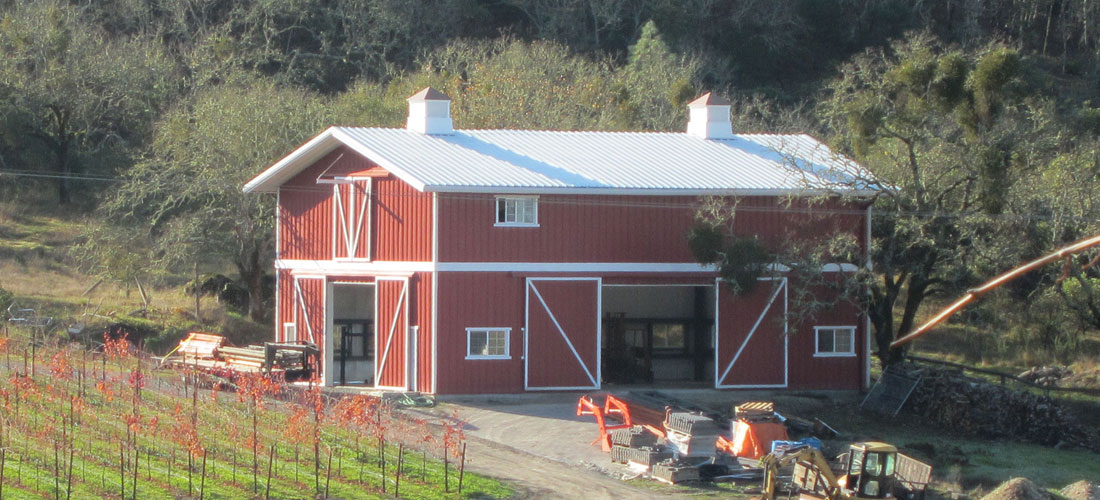
A loft over one bay (roughly 10×40 feet, or 400 square feet) gives you usable storage or a small office space above one parking lane. A loft over two bays (20×40, or 800 square feet) is a substantial second level that can serve as a workshop, sleeping area in a barndominium conversion, or dedicated storage floor.
Minimum eave height for a loft: To achieve usable space on both levels, 12 feet is the absolute minimum. At 12-foot eave, you get roughly 8 feet of clearance below the loft floor (workable for parking most cars) and about 6 feet of headroom in the loft (useful for storage but cramped for a workspace). At 14-foot eave, both levels become fully comfortable. A 14-foot eave gives you 8-foot headroom below and 8-foot headroom in the loft, which is the configuration to order if you want a loft that functions as more than overflow storage.
Cost: A structural loft over one bay costs $3,500 to $6,000 as part of the original build. This includes engineered floor beams, deck, and a stair or ladder access. Lofts require separate engineered drawings and will need to appear on the permit application.
BUYER WARNING
Adding a loft after initial construction is expensive. Retrofit loft work requires re-engineering the existing primary frames to handle the added load, which typically means replacing or supplementing frame members the manufacturer did not originally size for floor loads. The cost to retrofit a loft runs 2 to 3 times what it costs to spec one into the original engineered drawings. If there is any chance you will ever want a loft, include it in the original order. Even if you don’t build it out for years, having the frame spec’d for the load is nearly free at the design stage.
Section 8: Best Companies for 30×40 Metal Garage Kits
The kit market for this footprint is large, and not all manufacturers sell the same product at the same quality level. The comparison below focuses on companies with verifiable national distribution, documented red iron frame options, and a track record buyers can research.
| Company | 30×40 Kit Price | Frame Type | Best For |
|---|---|---|---|
| General Steel | $11,000 to $13,000 | Red iron | Online quotes, good configurator |
| Mueller Inc. | $9,500 to $12,500 | Red iron | South and Midwest, regional dealers |
| SteelMaster | $8,500 to $11,000 | Arch / tubular | Budget builds, simpler structures |
| Rhino Steel | $10,000 to $13,500 | Red iron | Multiple gauges, residential focus |
General Steel Buildings offers one of the better online configurators in the industry and has a documented customer service track record. Pricing is competitive at the mid-range. Read the full General Steel Buildings review before requesting a quote.
Mueller Inc. is a regional leader in the South and Midwest with a strong dealer network. Their pricing is aggressive on standard residential configurations, and regional dealers often handle permitting assistance. Full details in the Mueller Inc. review.
SteelMaster Buildings is the most budget-friendly option on this list. Their arch-style and tubular steel structures work well for straightforward residential garages where interior column placement is less of a concern and cost is the primary driver. See the SteelMaster Buildings review for a closer look at where their kits make sense.
Rhino Steel Buildings covers multiple gauge options and focuses on the residential market. They have good reviews for lead times and documentation quality. Pricing sits in the mid-range.
For a broader comparison of all major kit manufacturers, the Top 10 Metal Garage Kit Companies guide includes scoring on price, lead time, documentation, and post-sale support.
SteelBuildingKit.com 5-Point Company Verification Checklist
Before placing a deposit with any kit manufacturer, confirm:
1. The company manufactures their own buildings (not a broker reselling third-party kits)
2. They provide PE-stamped engineered drawings for your state as part of the package
3. Their warranty covers both materials and workmanship, not materials only
4. They have verifiable reviews on Google or the BBB with at least 50 ratings
5. They can provide references from buyers in your region who completed a similar build
Section 9: Permit Requirements for a 30×40 Metal Garage
A 30×40 metal garage is 1,200 square feet. Most US jurisdictions require a building permit for any structure over 120 to 200 square feet, which means a 30×40 metal garage requires a permit virtually everywhere in the country without exception.
Operating without a permit on a 1,200-square-foot structure is not a gray area. Unpermitted structures cannot be legally insured at full replacement value, create title problems when you sell the property, and can result in stop-work orders or mandatory demolition in strict jurisdictions.
Typical permit requirements for a 30×40 metal garage:
- Site plan showing the building location, setbacks from property lines, and access
- Engineered drawings with a licensed PE stamp for your state
- Setback compliance documentation (most residential zones require 5 to 10 feet from side and rear property lines)
- Foundation plan matching the manufacturer’s anchor bolt layout
- Inspections at foundation, framing, and final stages
Reputable kit manufacturers include PE-stamped drawings as part of the purchase. If a company is quoting you a 30×40 metal garage without mentioning engineered drawings, ask specifically what documentation they provide and whether it includes a PE stamp for your state. A manufacturer who can’t deliver stamped drawings is going to cost you additional engineering fees later.
Permit timeline: In most suburban jurisdictions, plan review takes 2 to 4 weeks. In larger metro areas or jurisdictions with backed-up plan review departments, 6 to 8 weeks is common. Do not order a concrete pour or schedule a delivery until your permit is issued.
For a state-by-state breakdown of permit thresholds and common requirements, the Metal Building Permit Requirements guide covers both the residential and commercial categories.
Section 10: What You’ll Actually Spend: 30×40 Metal Garage Budget Breakdown
The quotes most buyers receive from manufacturers cover the kit only. The full cost of a completed 30×40 metal garage includes six or seven additional line items that add up quickly. The table below reflects real 2026 market pricing across US regions.
| Line Item | Low | High |
|---|---|---|
| Building kit | $8,500 | $14,000 |
| Delivery | $800 | $2,500 |
| Foundation (4-inch slab) | $4,500 | $7,500 |
| Erection labor | $3,500 | $6,000 |
| Doors (3x 10×10) | $1,200 | $2,400 |
| Insulation | $1,500 | $3,500 |
| Electrical rough-in | $2,000 | $4,500 |
| Permits and engineering | $500 | $2,000 |
| Total | $22,500 | $42,400 |
The insulation line deserves specific attention. Steel conducts heat and cold efficiently, which means an uninsulated 30×40 metal garage generates condensation on interior surfaces in humid climates and becomes unusable in temperature extremes. A vapor barrier plus 2-inch vinyl-faced fiberglass insulation is the baseline for any garage used for vehicle storage or tools. For a heated workspace, add more. The Steel Building Insulation Cost Guide breaks down options and installed costs by R-value.
The wide range on electrical reflects the difference between a simple 100-amp panel with a few outlets and a full 200-amp service with dedicated circuits for a compressor, welder, and lighting. Get a local electrician quote early in the planning process, because electrical is the line item that most commonly blows up the budget in the final stages.
Common Mistakes to Avoid with a 30×40 Metal Garage
| Mistake | Why It Costs You | Fix |
|---|---|---|
| Ordering 9×8 doors | Full-size trucks won’t fit comfortably | Get 10×10 for all three bays |
| Skipping the permit | Can’t sell or properly insure the property | Get engineered drawings from your kit supplier |
| Choosing a 10-foot eave | Regret when you buy an SUV or add a car lift | Order 12-foot minimum, 14-foot if budget allows |
| Not including a man door | Walking through the overhead door wastes energy | Add a 36×80 man door on side or rear wall |
| Buying from a broker | Markup of $2,000 to $5,000 over manufacturer price | Buy direct from the manufacturer |
| Skipping insulation | Condensation destroys tools, cars, and flooring | Add vapor barrier plus 2-inch vinyl-backed insulation |
30×40 Metal Garage: Article Summary
- A 30×40 metal garage gives you 1,200 square feet configured as three 10-foot bays, the standard 3-car metal garage footprint in the US
- Eave height determines real-world usability: 12 feet is the minimum, 14 feet is better for trucks, RVs, and car lifts
- Kit-only prices run $8,500 to $14,000; turnkey installed ranges from $22,000 to $35,000 in most markets
- All three bays should have 10×10 overhead doors; 9×8 doors are too narrow for daily use with full-size trucks or large SUVs
- Red iron clear-span framing is the correct system for this footprint; tubular steel requires interior columns that break up the space
- A standard 4-inch slab with 6-inch grade beam handles most uses; upgrade to 6 inches throughout if a car lift is in the plan
- A structural loft costs $3,500 to $6,000 when included in the original design; retrofitting it later costs two to three times as much
- General Steel, Mueller Inc., Rhino Steel, and SteelMaster are the four most-reviewed manufacturers for this size
- A permit is required for a 30×40 metal garage in virtually every US jurisdiction; PE-stamped engineered drawings come with reputable kit packages
- Total project budget ranges from $22,500 on the low end to $42,400 on the high end depending on region and specification
- The full budget should include delivery, slab, erection, doors, insulation, electrical, and permits in addition to the kit price
- Buying direct from a manufacturer rather than through a broker saves $2,000 to $5,000 on a typical purchase
Frequently Asked Questions About 30×40 Metal Garages
How many cars fit in a 30×40 metal garage?
A 30×40 metal garage comfortably fits three vehicles when configured as three 10-foot bays. Mid-size cars, compact SUVs, and standard pickup trucks all fit in a 10×10 bay with room to open doors and move around. Extra-large trucks with extended cabs may require 12-foot overhead doors for easy entry. The 40-foot depth is sufficient for even long crew cab configurations with space left for a rear workbench or storage. For vehicle sizing guidance, the Metal Garage Kits Complete Buyer’s Guide covers bay sizing by vehicle class.
How much does a 30×40 metal garage cost in 2026?
A 30×40 metal garage kit costs $8,500 to $14,000 for the panels, framing, and hardware. An erected shell adds delivery and labor for a total of $16,000 to $22,000. A turnkey build with a 4-inch concrete slab, doors, and basic trim runs $22,000 to $35,000. Adding insulation and electrical rough-in brings the realistic all-in budget to $22,500 to $42,400. Regional labor rates, soil conditions, and your specific configuration drive where your project lands in that range. Use the Steel Building Cost Calculator to build a project-specific estimate.
What door size do I need for a 30×40 3-car garage?
For a 30×40 metal garage used for three vehicles, 10-foot wide by 10-foot tall (10×10) overhead doors on all three bays is the recommended specification. This size accommodates full-size pickup trucks, most SUVs, and standard passenger cars without mirror-folding or careful maneuvering. If any vehicle in the household is extra-tall (lifted trucks, sprinter vans, camper shells), order 10×12 doors for the relevant bays. Avoid 9×8 doors on a 3-car configuration if you own or plan to own any full-size truck.
Do I need a permit for a 30×40 metal garage?
Yes. A 30×40 metal garage is 1,200 square feet, which exceeds the permit threshold in virtually every US jurisdiction. Most counties require a building permit for any structure over 120 to 200 square feet. Permit documentation for a 30×40 metal garage typically includes a site plan, PE-stamped engineered drawings, foundation plan, and setback compliance documentation. Reputable manufacturers supply PE-stamped drawings with the kit. See the Metal Building Permit Requirements guide for state-specific thresholds and typical timelines.
Can I add a loft to a 30×40 metal garage?
Yes, but the design needs to account for it from the beginning. A 12-foot eave is the minimum to create usable space on both levels; 14 feet is more comfortable. A structural loft over one bay (roughly 400 square feet) costs $3,500 to $6,000 when designed into the original build. Retrofitting a loft after the building is erected costs two to three times more because the primary frames need to be re-engineered for floor loads they were not originally sized to carry. If there is any chance you will want a loft in the future, include it in the original engineered drawings. For foundation and framing requirements that support loft loads, the Steel Building Foundation Types Guide covers load path basics.
What is the best eave height for a 30×40 metal garage?
The best eave height for a 30×40 metal garage depends on what you’re parking and what you plan to do in the building. For three standard passenger cars or compact SUVs, a 12-foot eave is the practical minimum. For full-size pickup trucks, SUVs over 7 feet tall, or any interest in a two-post car lift, order 14 feet. For a car lift plus a loft above, 16 feet is appropriate. The cost difference between a 12-foot and 14-foot eave is $800 to $1,500 on the kit price, which is inexpensive insurance against outgrowing your building the first time you upgrade a vehicle.