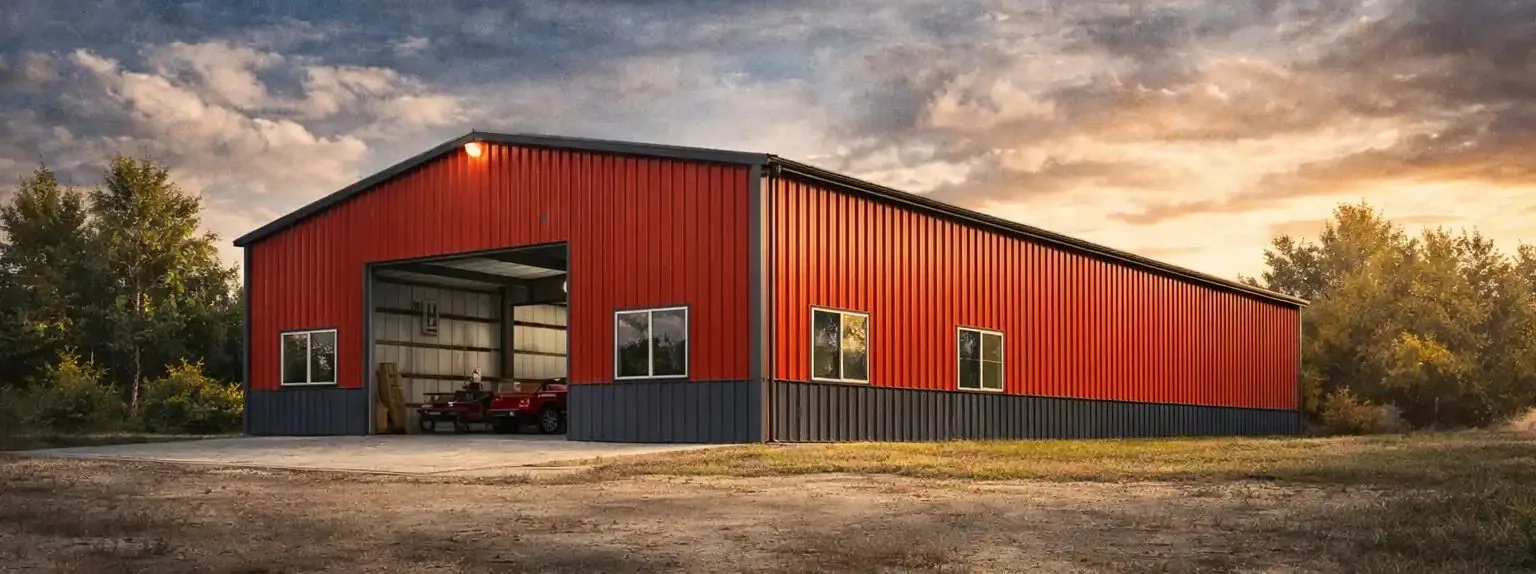
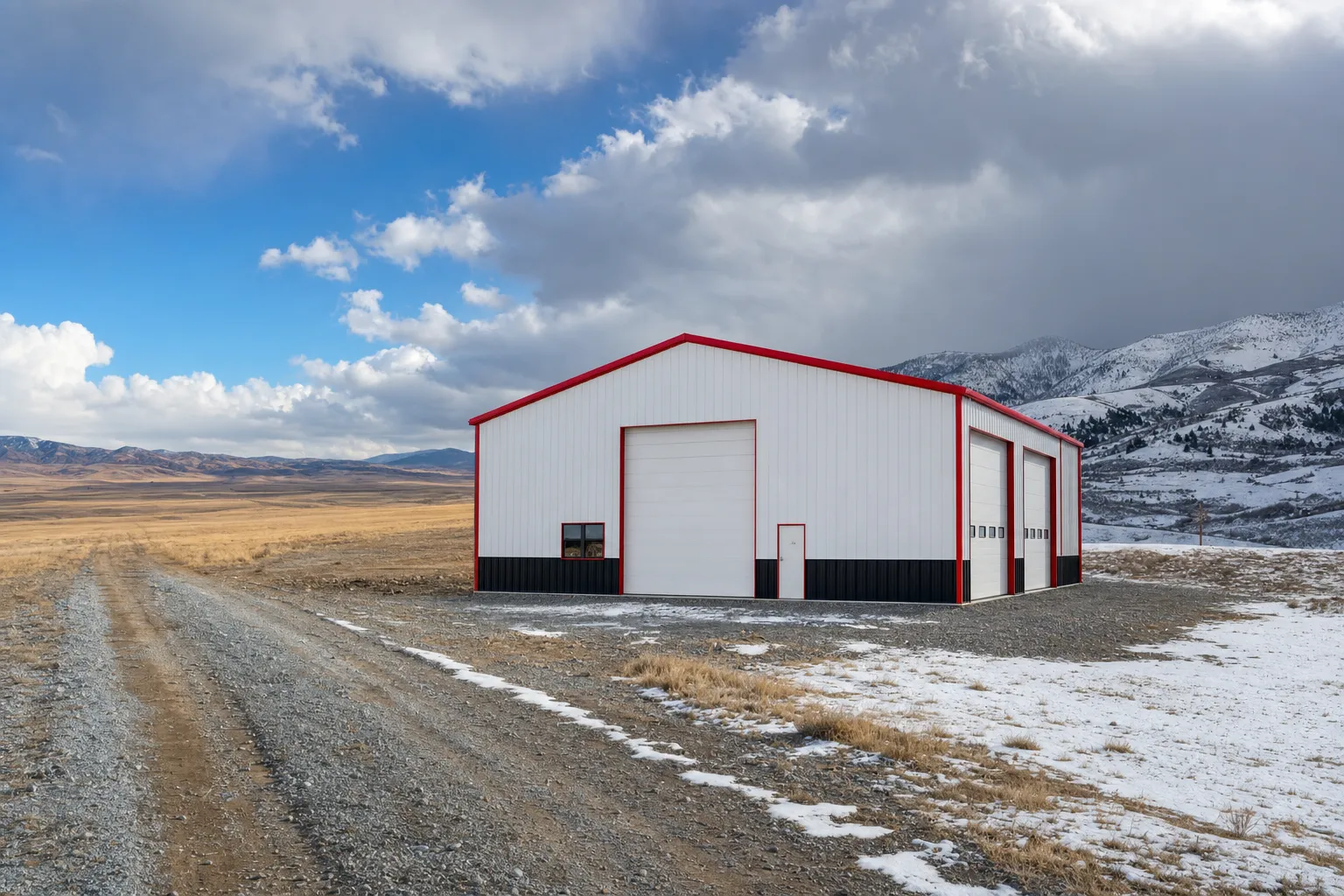
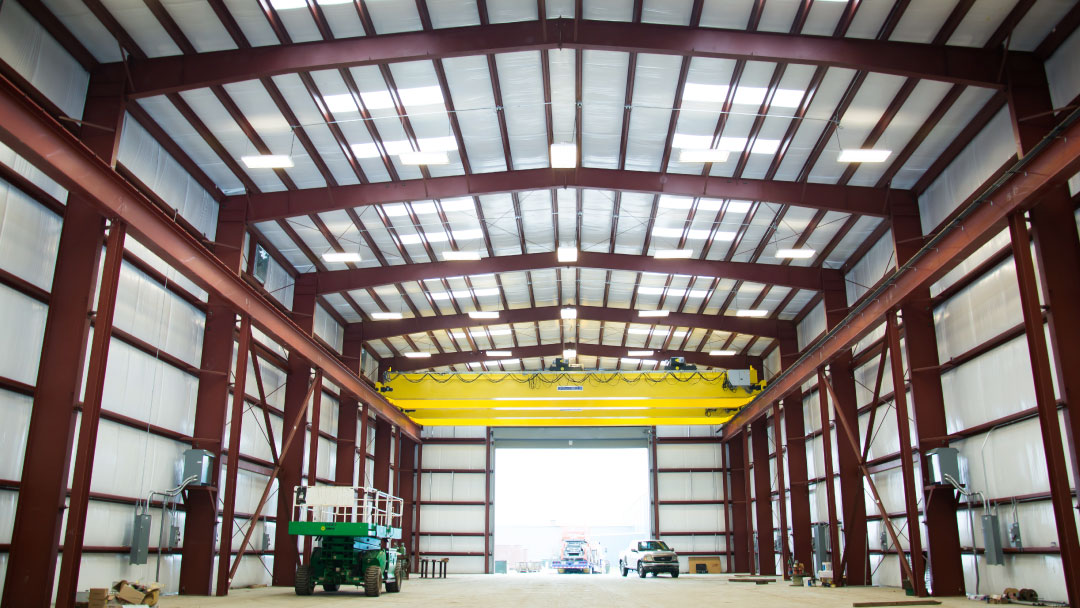
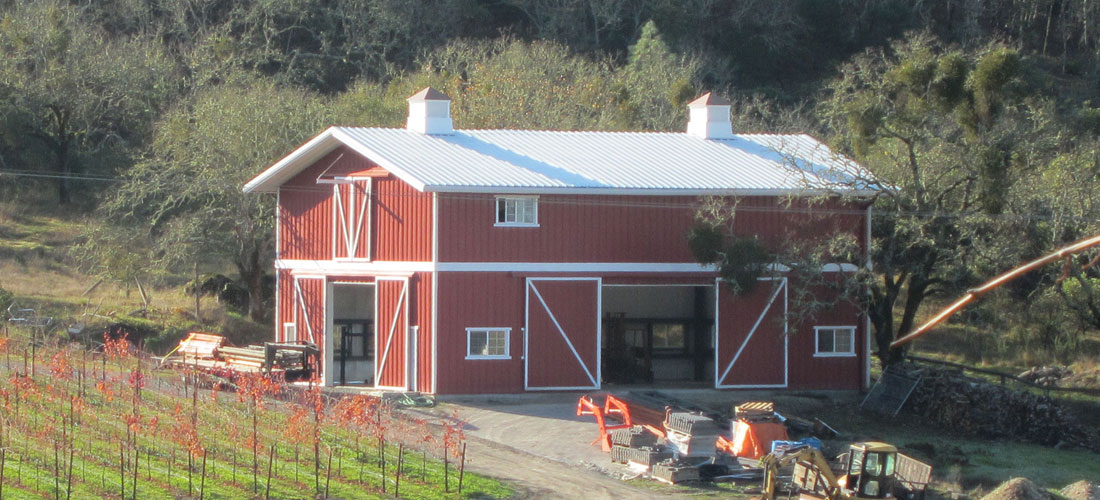


Metal Building with Car Lift: Minimum Height, Size & Best Shop Kits (2026)
What You’ll Learn
– Minimum eave height required for a 2-post and 4-post car lift in a metal building
– Whether a 30×50 metal building can fit a car lift (and at what height)
– What building size you need for 1, 2, or 4 lifts
– Concrete slab specs that actually support lift anchor bolts
– Electrical requirements for car lifts in metal buildings
– Full cost breakdown from single-bay home shop to 4-bay auto shop
– How to add a lift to an existing metal building
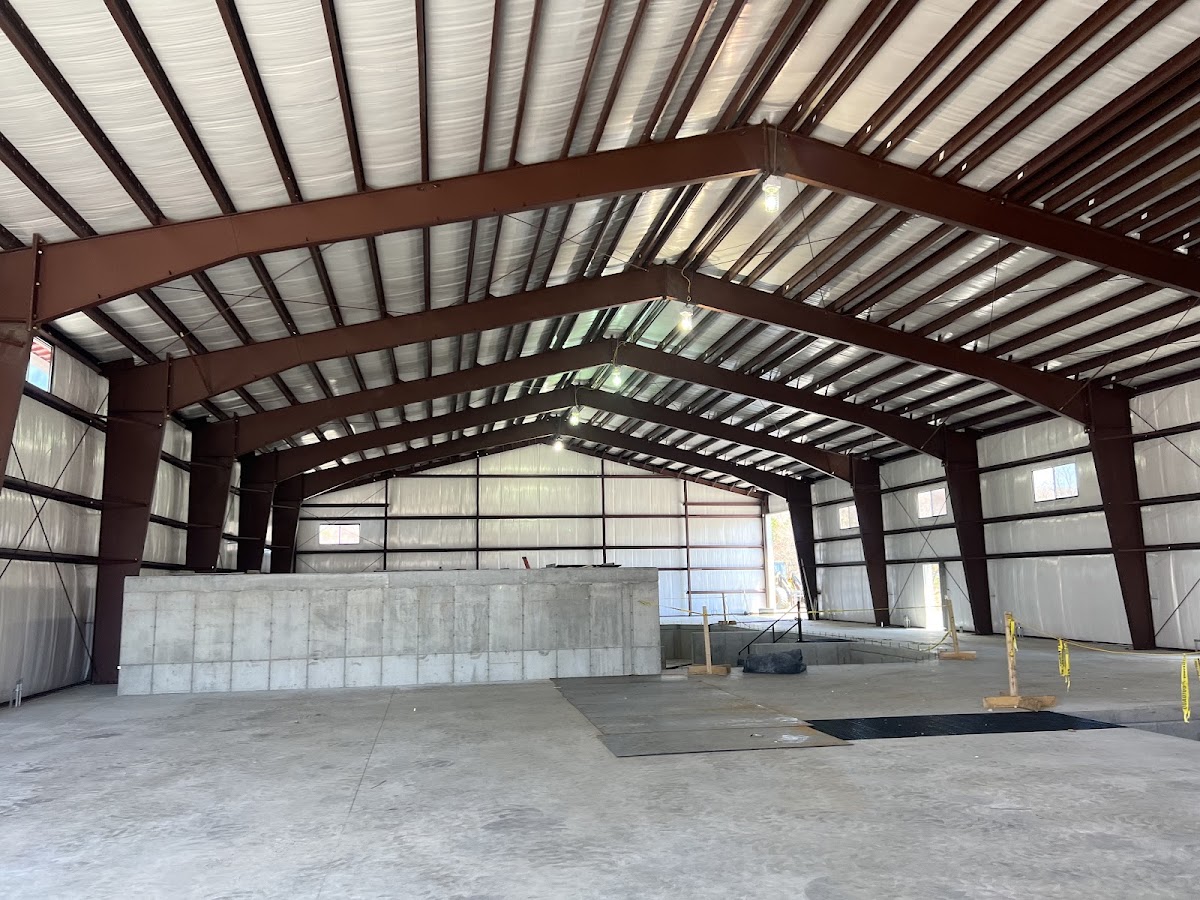
If you are planning a metal building car lift setup, the single most important spec is eave height, not square footage. Most buyers focus on the footprint, then realize too late that their 10-foot eave building physically cannot accommodate a standard 2-post lift. This guide walks through every dimension, concrete spec, and cost figure you need to plan a metal building with a car lift the right way the first time.
SteelBuildingKit.com does not sell buildings or take commissions from manufacturers. We compile real buyer experience, installer feedback, and building specs so you can make an informed decision before you sign anything. If you are still in the planning phase, start with our metal building workshop cost and sizes guide to understand the full picture before zeroing in on lift-specific requirements.
Quick Answer: Minimum Height and Size for a Car Lift in a Metal Building
- 2-post lift (most popular): minimum 12-foot eave height, 14-foot recommended
- 4-post lift: minimum 10-foot eave, 12-foot recommended
- Scissors / in-ground lift: no overhead clearance needed, requires a 36-inch pit in the slab
- Minimum building footprint for one 2-post lift: 14×30 with 12-foot eave
- Most common home shop setup: 40×60 at 14-foot eave
If your current building has a 10-foot eave and you are shopping for a 2-post lift, stop. You cannot extend the lift arms above the vehicle without hitting the ceiling. The fix is either a taller building or switching to a 4-post or low-rise lift.
Section 1: Types of Car Lifts and Their Height Requirements
Not every lift has the same overhead clearance demand. The table below covers the six most common lift types and what eave height you need for each one.
| Lift Type | Lift Height Range | Clearance Needed | Min Eave Height | Recommended Eave |
|---|---|---|---|---|
| 2-post asymmetric (most popular) | 5-6 ft | Arms + vehicle = 11’6″ | 12 ft | 14 ft |
| 2-post symmetric | 5-6 ft | Arms + vehicle = 11’6″ | 12 ft | 14 ft |
| 4-post platform lift | 6-7 ft | Lower overhead profile | 10 ft | 12 ft |
| Scissors / in-ground | N/A | No overhead clearance | No requirement | No requirement (36″ pit required) |
| Portable low-rise lift | 12-18 inches | Minimal | No requirement | No requirement |
| Heavy-duty truck lift (9,000-12,000 lb) | 6-7 ft | Full truck height clearance | 12 ft | 14 ft |
The most common mistake: Ordering a 10-foot eave building and then trying to install a 2-post lift. When a vehicle sits at full lift height (roughly 5.5 to 6 feet), the lift arms and the vehicle body together require about 11 feet 6 inches of clear vertical space before you even add in the overhead structure of the lift itself. A 10-foot eave gives you zero margin. You physically cannot use the lift safely.
If you already have a 10-foot building, go with a 4-post lift or a low-rise portable lift. Save the 2-post setup for a building with at least 12 feet of eave clearance.
Section 2: Can a 30×50 Metal Building Fit a Car Lift?
Yes, a 30×50 metal building can fit a car lift, but only if the eave height is 12 feet or taller. The footprint is not the issue. Height is what kills most plans.
- 30×50 at 10-foot eave: Cannot safely use a standard 2-post lift. You are limited to a 4-post lift or low-rise portable.
- 30×50 at 12-foot eave: Fits one 2-post lift positioned along the short wall side. Workable for a single-bay home shop.
- 30×50 at 14-foot eave: Comfortable. Room for two lifts, headroom for a small crane, and enough clearance to work on taller trucks and SUVs.
Width matters far less than most people think. A 30-foot-wide building is plenty for a 2-post lift, since the average lift only needs about 11 to 12 feet of clearance between the columns. You will fit it, but you will want 40 feet of width if you plan on walking around a lifted vehicle with a creeper or rolling toolbox without bumping into walls.
For a deeper look at 30×50 pricing and what fits inside one, see our 30×50 metal building kit cost guide.
Section 3: What Size Metal Building Do You Need with a Car Lift?
Here is the real-world sizing guide based on how many lifts you are planning.
| Scenario | Min Building Size | Min Eave Height | Ideal Setup |
|---|---|---|---|
| Single lift, one vehicle at a time | 14×30 | 12 ft | 20×40 at 14 ft |
| 2 lifts, 2-bay home shop | 28×40 | 12 ft | 40×40 at 14 ft |
| 4 lifts, 4-bay auto shop | 40×60 | 14 ft | 60×80 at 14-16 ft |
| Single lift + work area + storage | 30×40 | 12 ft | 40×60 at 14 ft |
Single lift setup: The absolute minimum is about 14 feet of width to clear the lift arms on both sides. In practice, 20 feet gives you room to move around a lifted car without squeezing. A 20×30 at 12-foot eave works as a tight single-bay. A 20×40 at 14-foot eave is comfortable.
Two-lift home shop: Most buyers end up at 40×40 or 40×50 at 14-foot eave. This gives you two bays, a workbench wall, and enough aisle space that you are not climbing over tools to get to the lift arms.
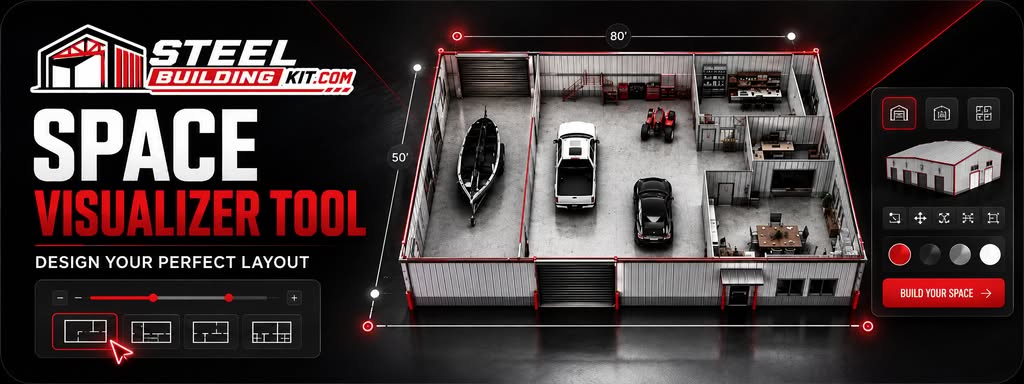
Four-lift commercial setup: The industry standard is 40×60 at 14-foot eave. Four roll-up doors across the 60-foot front wall, two lifts in the back bays, two open drive-through bays up front. This is what most independent auto shops build when they want a lift-ready facility from day one.
Section 4: Concrete Requirements for Car Lifts
This is where a lot of metal building projects go wrong. The standard quote from many concrete contractors defaults to a 3.5-inch slab. That is not enough for a 2-post lift, and if you find out after the concrete is poured, you are either coring in reinforced lift pads or jackhammering and repouriing.
2-post lift: Minimum 4-inch reinforced concrete. Most lift manufacturers specify 6 inches at the anchor locations. Go with 6 inches across the whole slab if budget allows.
4-post lift: 4-inch minimum is generally acceptable since the load spreads across four contact points rather than two.
Anchor bolt requirements: Standard 2-post lifts need 2.5-inch diameter anchor holes, typically spaced 36 inches apart. The bolts need to be set into concrete that has reached at least 3,000 PSI compressive strength before you torque them down.
Rebar spec: At minimum, use 6×6 welded wire mesh. A better option for lift bays is #4 rebar at 12-inch on-center in both directions. The additional $800 to $1,400 in rebar cost is cheap insurance compared to a failed anchor.
Buyer warning: When you get foundation quotes, explicitly say “this slab will have one or more 2-post car lifts.” Ask them to quote 6-inch depth with #4 rebar in the lift bays. If the contractor comes back with 3.5-inch standard slab, tell them that is not acceptable for this use. For more on slab types and footing specs, see our steel building foundation types guide.
Section 5: Car Lift Installation in a Metal Building, Step by Step
Installing a car lift in a metal building is not wildly different from a standard garage, but there are a few metal-building-specific issues to address.
Step 1: Verify eave height with the manufacturer before ordering your building. Get the spec sheet for the lift you plan to install and confirm the clearance requirement. Do not assume. Call the lift company and ask: “What is the minimum eave height for this lift with a standard sedan and a full-size truck?” Get the answer in writing.
Step 2: Pour the concrete slab to lift manufacturer spec. Most 2-post lifts call for 4-inch minimum with 3,000 PSI concrete. Mark or template the anchor bolt locations before the pour if you want to pre-sleeve the holes. Otherwise, you will core-drill after curing.
Step 3: Mark anchor bolt locations before the concrete sets. If you are pre-sleeving, drop a sacrificial bolt in a greased sleeve at each anchor point. After the concrete cures (at least 28 days for full strength), you pull the sleeves and install the real anchors.
Step 4: Install the lift per manufacturer instructions. Every lift brand has a torque spec for the anchor bolts. Follow it exactly. Undertorqued anchors can walk under load. Most 2-post lifts require a 240V dedicated circuit at the lift column location.
Step 5: Test with a light vehicle first. Run the lift through a full cycle with a compact car before putting a truck on it. Check for column plumb, arm travel, and any unusual noise. If you are off-level by more than a quarter inch column to column, shim before using under load.
Section 6: Electrical Requirements for Car Lifts in Metal Buildings
The electrical side gets overlooked until the building is up and the lift is sitting on the floor waiting to be wired.
Most 2-post lifts run on 220V single-phase, 20-amp dedicated circuit. That means a separate breaker, not a shared circuit. Some larger lifts (10,000 lb and up) may require 30 amps. Check the nameplate on the motor unit.
4-post lifts: Similar requirements, usually 220V single-phase, 20 amps.
Budget for $1,500 to $3,500 for the dedicated circuit run from your main panel to the lift location in a metal building. The range depends on panel distance, conduit routing, and whether you need a subpanel in the shop.
Conduit is required. Metal buildings need conduit for all electrical runs. Direct-burial wire inside a metal building is not code-compliant in most jurisdictions. EMT (electrical metallic tubing) is the standard for exposed runs inside the building. Plan conduit routing before the building goes up so you can route it cleanly along the framing rather than strapping it to the exterior panels after the fact.
Section 7: 40×60 Shop with Car Lift, The Industry Standard Setup
The 40×60 at 14-foot eave is the configuration that comes up more than any other when you talk to auto shop owners who built their own facility. There is a reason for that.
At 2,400 square feet with a 14-foot eave, you can fit:
– 4 bays (each roughly 20×30 when divided across the 60-foot width and 40-foot depth)
– 2 lifts in the back bays
– 2 open drive-through bays at the front
– A compressor room or office along one side wall
– Workbench along the back wall between the lift columns
Door spec: Four 12×14 roll-up doors across the 60-foot wall. The 14-foot door height is not optional if you are running trucks, SUVs, or vans. A 10-foot door cuts off your headroom before the vehicle is even inside.
Turnkey cost range: With lift-ready 6-inch concrete, 14-foot eave framing, insulation, four roll-up doors, and electrical rough-in, expect $65,000 to $110,000 total depending on your region and site prep conditions.
For the full pricing breakdown on this footprint, our 40×60 steel building kit cost guide covers kit prices, erection costs, and regional variation in detail.
Section 8: Best Metal Building Companies for Lift-Ready Shops
Most metal building manufacturers can produce a lift-ready shop. What separates them is how well they understand auto shop requirements and whether they ask the right questions before finalizing your spec.
Rhino Steel Buildings: Strong 12-foot and 14-foot eave options across their standard catalog. They are a good starting point for home auto shops and have experience with lift-height configurations. See our Rhino Steel Buildings review for a full rundown.
General Steel: Pre-engineered shop packages that include lift-height options in their standard configurations. Good for buyers who want a more hands-off quoting process.
Mueller Inc.: Popular across the South and Southeast for lift-ready shops. Strong dealer network for erection, which matters in rural areas.
The most important thing you can tell any of these manufacturers: “This building will have a 2-post car lift.” Say it in your first conversation. A good manufacturer will ask about anchor bolt zone reinforcement in the slab spec, column footing sizing for lift loads, and door height. If they do not ask, prompt them. The column footings on a lift-ready building need to handle point loads that a standard shop building does not.
For a broader comparison of building companies, see our top 10 steel building kit companies guide.
Section 9: Can You Add a Lift to an Existing Metal Building?
Yes, with conditions. The two critical factors are eave height and slab thickness.
If your existing building has 12-foot or taller eave height AND a 4-inch or thicker slab: You can install a 2-post lift by core-drilling anchor holes into the existing concrete. Get the concrete thickness verified before you order the lift. A 3.5-inch slab is not enough.
If your slab is under 4 inches thick: You need to pour separate lift pads. A standard approach is to cut out a section of the existing slab at each column location, excavate to footing depth, and pour a 12x12x12-inch or larger concrete pad at each lift column base. Cost for this work runs $800 to $2,500 depending on access, existing slab removal, and pour size.
Structural note: The 2-post lift columns must bear on footings or adequate slab thickness, not just on the surface of a thin decorative slab. The lateral loads when a 6,000-pound car is on the arms are significant. This is not a place to cut corners.
Permit check: If you are adding a lift to an existing building, check whether a permit is required in your jurisdiction. Some counties require inspection of the anchor installation and electrical circuit for commercial lifts. Our metal building permit requirements guide covers what triggers inspection requirements in most states.
Section 10: Car Lift and Metal Building Cost Breakdown
Here is a realistic budget table for three common build scenarios. These numbers reflect mid-2026 pricing across typical US markets and do not include land, sitework, or utilities.
| Component | Low Budget (Home, 1 Bay) | Mid Budget (Home, 2 Bay) | Full Auto Shop (4 Bay) |
|---|---|---|---|
| Building kit | $22,000-$28,000 | $35,000-$45,000 | $45,000-$65,000 |
| Foundation (6″ slab) | $8,000-$12,000 | $12,000-$18,000 | $18,000-$28,000 |
| 2-post lift (9,000 lb) | $3,500-$5,000 | $5,000-$7,500 (x2) | $7,500-$12,000 (x2) |
| Electrical | $1,500-$2,500 | $2,500-$4,000 | $4,000-$8,000 |
| Total | $35,000-$47,500 | $54,500-$74,500 | $74,500-$113,000 |
These ranges cover the core building and lift components. Add $5,000 to $15,000 for insulation, lighting, HVAC, and finishing depending on your climate and how finished you want the interior.
Use our steel building cost calculator to get a more precise estimate based on your building size, eave height, and location. For a cost-per-square-foot baseline on the building kit itself, see our steel building cost per square foot guide.
Common Mistakes Table
| Mistake | Why It Happens | Fix |
|---|---|---|
| Ordering a 10-foot eave building for a 2-post lift | Buyers focus on footprint, not height | Specify 12-foot minimum, 14-foot recommended, before ordering |
| Pouring a 3.5-inch slab and then buying a 2-post lift | Default slab quote is too thin | Explicitly request 6-inch slab with #4 rebar in lift bays |
| Not telling the manufacturer about the lift plan | Assumed it doesn’t matter | Say “this building will have a car lift” in the first call |
| Not planning electrical before the building goes up | Lift arrived and there’s no 220V circuit | Run conduit during erection, rough-in the circuit before the slab |
| Installing a 2-post lift on an inadequate footing | Column is on slab surface, not a footing | Core-drill and pour footings at each column location if needed |
| Choosing a 10-foot roll-up door for a shop with tall trucks | Thinking only about lift height, not door clearance | Use 12×14 doors minimum on any lift-ready shop |
Article Summary
- The minimum eave height for a 2-post car lift in a metal building is 12 feet; 14 feet is strongly recommended
- A 4-post lift can work in a 10-foot eave building, but 12 feet is the recommendation
- A 30×50 metal building fits a car lift if the eave height is 12 feet or taller; at 10 feet it does not work with a 2-post lift
- Width (30 or 40 feet) is rarely the limiting factor; height is what stops most plans
- Minimum slab thickness for a 2-post lift is 4 inches, with 6 inches preferred at anchor locations
- Anchor bolts for standard 2-post lifts need 2.5-inch diameter holes in 3,000 PSI concrete
- Most 2-post lifts require a 220V single-phase, 20-amp dedicated circuit; budget $1,500-$3,500 for electrical in a metal building
- The 40×60 at 14-foot eave is the most common home auto shop and small commercial shop configuration
- You can add a lift to an existing metal building if eave height is 12 feet or more and the slab is 4 inches or thicker
- Total cost for a single-lift home shop runs $35,000-$47,500; a 4-bay commercial setup runs $74,500-$113,000
- Always disclose the lift plan to your building manufacturer before finalizing the quote
- Get concrete specs in writing from the lift manufacturer before the slab is poured
Frequently Asked Questions
Q: What height metal building do I need for a car lift?
A: For a standard 2-post asymmetric or symmetric lift (the most common type), you need a minimum 12-foot eave height. Most auto shop builders specify 14-foot eave to get comfortable working clearance above a lifted truck or SUV. For a 4-post platform lift, 10-foot eave is the minimum, with 12-foot recommended. For in-ground scissors lifts, there is no overhead clearance requirement, but you need a 36-inch pit in the slab.
Q: Can I put a 2 post lift in a metal building?
A: Yes, as long as the eave height is at least 12 feet and the concrete slab is at minimum 4 inches thick with proper reinforcement. The most common failure mode is an undersized eave or a slab poured to standard residential 3.5-inch depth. Specify 12 to 14-foot eave and 6-inch reinforced concrete before you sign the building contract.
Q: Can a 30×50 metal building fit a car lift?
A: Yes, if the eave height is 12 feet or taller. A 30×50 with a 14-foot eave comfortably fits two 2-post lifts. At 12-foot eave, you fit one 2-post lift with room for a workbench and storage. At 10-foot eave, you cannot use a standard 2-post lift safely. Width at 30 feet is not the limiting factor.
Q: What are the 4 post lift metal building requirements?
A: A 4-post lift is more forgiving than a 2-post. Minimum eave height is 10 feet, though 12 feet is much more comfortable for working under a fully lifted vehicle. Slab requirement is 4-inch reinforced concrete minimum. The key advantage of a 4-post over a 2-post in a tight building is that it distributes the load across four points and does not require the same overhead arm clearance.
Q: How thick does the concrete need to be for a car lift in a metal building?
A: For a 2-post lift, the lift manufacturer typically specifies 4-inch minimum concrete at 3,000 PSI compressive strength. Most experienced shop builders go to 6 inches in the lift bay to give the anchor bolts maximum holding strength. At 3.5 inches, which is standard residential slab thickness, you do not have enough depth for the anchor embedment on most 2-post lifts.
Q: How much does a metal building with a car lift cost?
A: A basic single-lift home shop setup (small building, one 9,000 lb 2-post lift, 6-inch slab, electrical) runs $35,000 to $47,500. A mid-range two-bay home shop with two lifts runs $54,500 to $74,500. A full four-bay auto shop with two lifts and lift-ready infrastructure runs $74,500 to $113,000. These figures do not include land, site grading, or utility hookups. Use the steel building cost calculator for a site-specific estimate.