

SteelBuildingKit Cost Index · Updated July 10, 2026 · Pricing collected June-July 2026
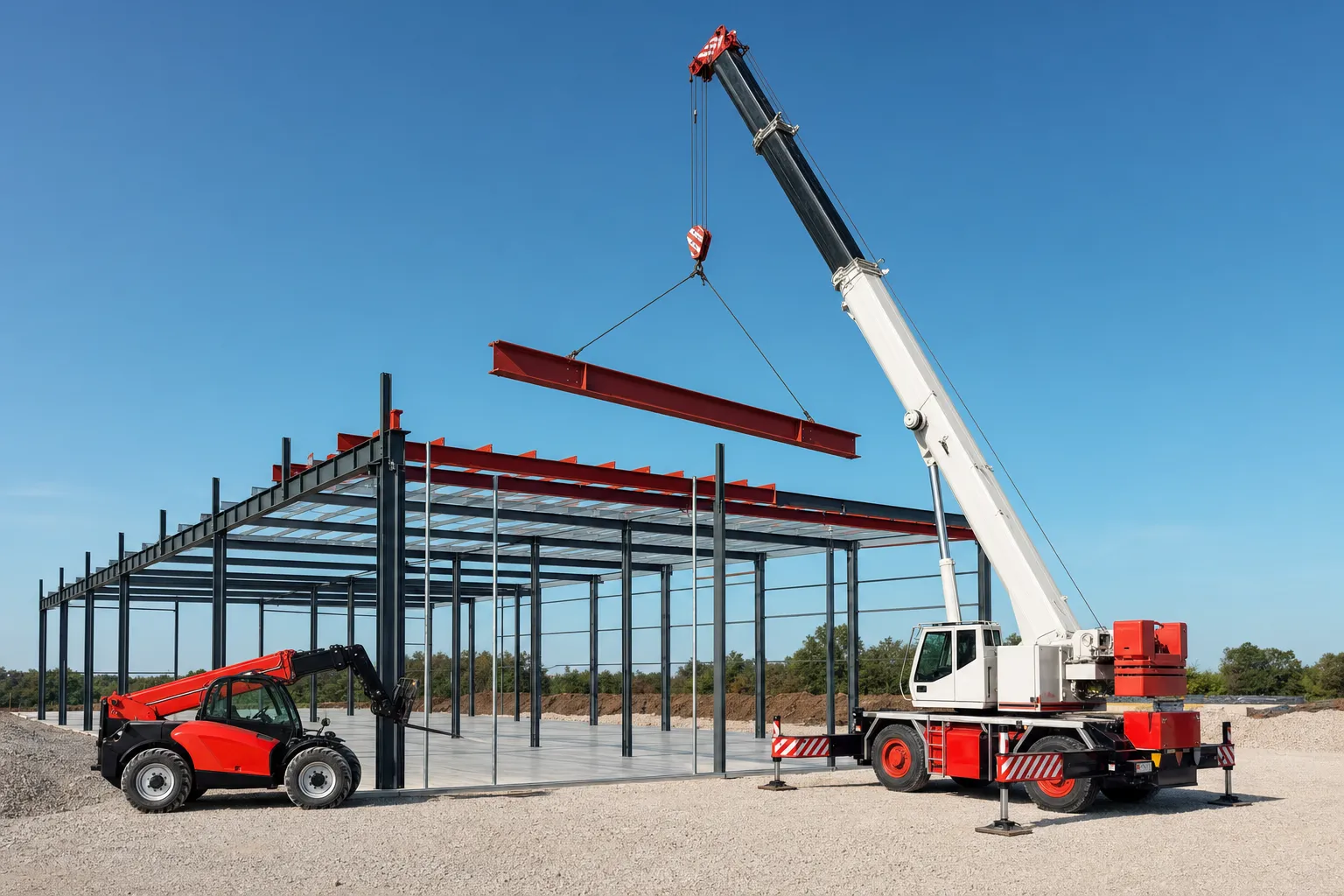
Crane service for a metal building costs $1,200 to $4,000 per project, billed at $150 to $300 per hour with half-day minimums common (modeled national ranges, July 2026). The honest budget news: many buildings never need one. A rented telehandler at $400 to $900 per week handles most frames under roughly a 16-foot eave, and professional erection quotes usually fold equipment into their price. This guide sorts which machine your building needs and what each path costs.
Lifting equipment is the component buyers forget until the rafters are on the ground and nothing on site can pick them up. This guide, part of our component costs hub, prices cranes, telehandlers, and the crew time around them, for both DIY builders and owners checking what is inside a turnkey erection bid.
| Option | Typical cost modeled | When it fits |
|---|---|---|
| Telehandler / reach forklift rental | $400 – $900 per week | DIY builds and low-eave pro jobs |
| Mobile crane, hourly | $150 – $300 per hour | Tall eaves, wide spans; half-day minimums common |
| Crane, typical project total | $1,200 – $4,000 | One to two lift days on mid-size builds |
| Equipment inside a pro erection quote | Included in $4 – $10 /sqft erection | Most turnkey bids; confirm it in writing |
Crane hourly rates are typically billed portal to portal, meaning the clock runs from the yard, not your gate. Operator included; rigging sometimes itemized. Modeled national ranges, July 2026.
Ranges are modeled national estimates built from published crane service and equipment rental rates collected June-July 2026, cross-checked against the erection labor benchmarks of $4-$10 per square foot, where equipment is normally carried inside the bid. Crane pricing is local and demand-driven, so all figures are labeled modeled. Full methodology lives in the SteelBuildingKit Cost Index.
When a telehandler is enough, and when it is not
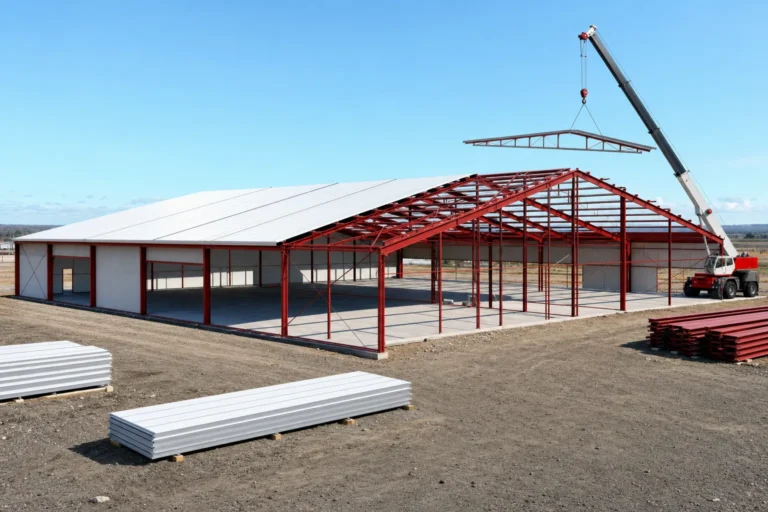
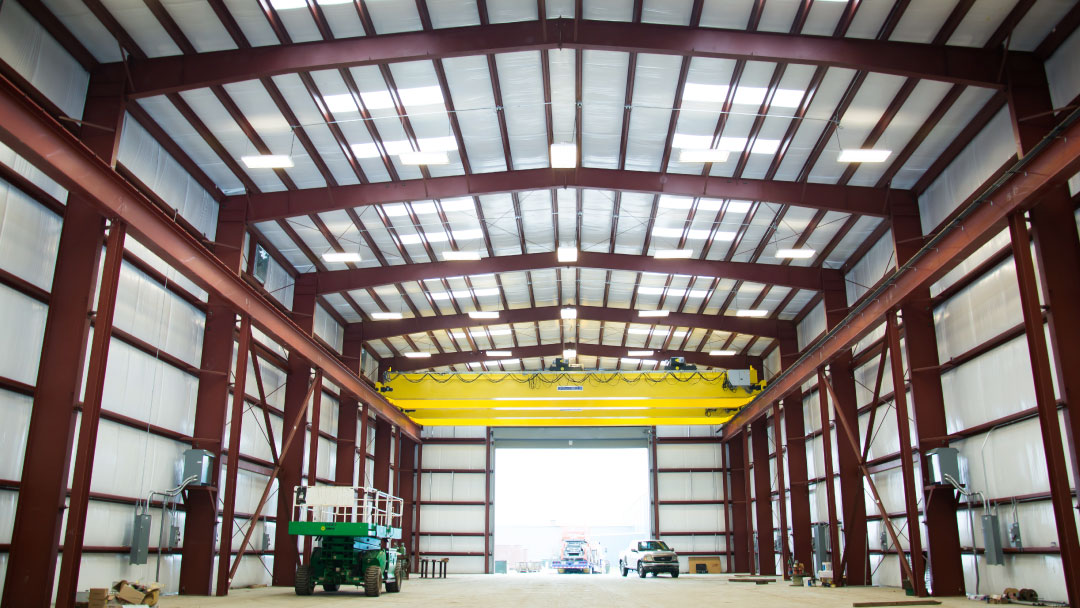
The dividing line is reach and rafter weight. A standard telehandler comfortably sets frames and purlins on buildings up to roughly a 14-16 foot eave with spans in the 40-60 foot class, which covers the great majority of garages, shops, and ag buildings. At $400-$900 for the rental week (modeled, July 2026), it also does delivery offload and panel staging, so one machine serves the whole build. The crane case starts where the telehandler’s chart ends: eaves past 16 feet, clear spans much beyond 60 feet where rafter sections get long and heavy, and specialty buildings like hangars and riding arenas. Two more triggers are less obvious: cramped sites where the machine cannot travel along the building, and heavy-load kits whose 8-15% steel adder shows up on the rigging chart as heavier picks. When in doubt, give the frame drawings to the crane company; sizing lifts from drawings is a routine free quote.
The lift budget, worked through
| Line item | Typical range modeled | Notes |
|---|---|---|
| Telehandler, 2-week rental | $800 – $1,800 | Offload, frames, purlins, panel staging |
| Crane day for main frames (if needed) | $1,200 – $2,400 | $150 – $300/hr, half-day minimum, portal to portal |
| Helpers during frame days | Your labor plan | Two to three people minimum on lift days |
| Access and ground prep (if soft) | +$1,000 – $3,000 | Cranes need firm, level ground to set up |
Worked example at national mid-range rates: a DIY 40×60 rents a telehandler for two weeks at $1,200 and books a crane for one six-hour frame day at $200 per hour, $1,200: about $2,400 in equipment against the $9,600-$16,800 a professional crew would charge to erect the same building at $4-$7 per square foot. That gap is the DIY savings, and the equipment line is what it costs to claim it. The steel building cost calculator models both paths, and the full DIY-versus-crew decision lives in our buying decisions hub.
What moves crane and equipment costs
| Factor | Typical effect modeled | Notes |
|---|---|---|
| Eave height past ~16 ft | Telehandler out, crane in: $1,200 – $4,000 | The single biggest fork in the budget |
| Clear span and rafter weight | Bigger crane class, higher hourly | Heavy-load kits lift heavier too |
| Site access and ground | Mats or prep where ground is soft | +$1,000 – $3,000 when access needs work |
| Wind days | Rescheduled lifts; minimums may still bill | Build slack into frame week |
| Hourly vs project pricing | Project quotes cap the risk | Ask for both and compare |
Equipment inside a professional erection bid
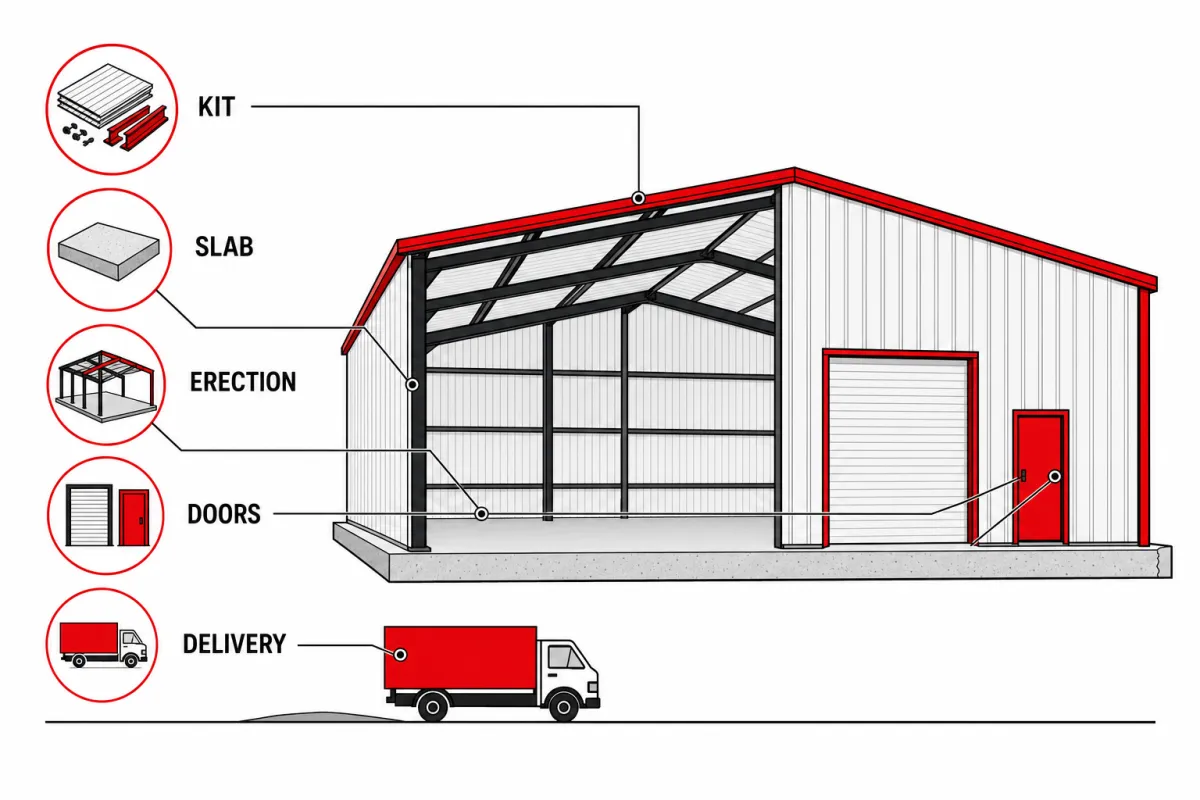
If a crew is erecting the building, equipment is normally their problem and their line item: the $4-$10 per square foot erection benchmark (modeled, July 2026) carries the telehandler, the crane where needed, and the rigging. The verification still matters. Ask whether crane time is included or billed as a pass-through, because a bid that excludes it can grow by $1,200-$4,000 on lift day; ask who pays when wind cancels a booked crane; and confirm the crew, not you, owns equipment scheduling. A bid that itemizes equipment is not a red flag, it is often the more honest document. What you are checking is that the line exists somewhere, priced, with an owner. Our metal building erection cost guide breaks down the full labor side this equipment serves.
How your location moves equipment costs
Crane pricing is a local market: metro areas offer more companies and better rates near the bottom of the $150-$300 hourly band, while rural sites pay portal-to-portal travel from wherever the nearest yard sits, sometimes an hour each way on the clock (modeled, July 2026). Regional construction demand moves availability week to week, and busy seasons can matter more than distance; booking two to three weeks ahead beats paying rush rates. Weather geography counts too: plains wind and coastal gusts cancel lift days, and northern winters slow everything on the schedule even when rates hold. Soft ground after wet seasons adds mats or ground prep at $1,000-$3,000. The constant across all of it: firm access and a flexible frame week keep you at the low end of every range on this page.
The crane and equipment checklist
- Eave height and span checked against telehandler capability before assuming a crane
- Frame drawings sent to the crane company for a sized, written quote
- Hourly rate, minimum hours, and portal-to-portal terms stated in writing
- Project-price option requested alongside hourly, and compared
- Crane inclusion confirmed inside any professional erection bid
- Wind-day policy agreed: who pays when a booked lift cancels
- Ground checked where the crane sets up: firm, level, clear of overhead lines
- Rental week planned to cover delivery offload and erection, one machine, one booking
The next guide in this series, delivery cost, continues the same cost model.
Crane and equipment FAQs
How much does a crane cost for a metal building?
$1,200-$4,000 for a typical project, at $150-$300 per hour with half-day minimums and portal-to-portal billing (modeled, July 2026). Mid-size buildings usually need one to two lift days for main frames. Many low-eave buildings skip the crane entirely with a telehandler.
Do I need a crane to put up a metal building?
Not always. Buildings under roughly a 16-foot eave with spans in the 40-60 foot class typically go up with a telehandler at $400-$900 per rental week (modeled, July 2026). Cranes earn their fee on tall eaves, long heavy rafters, and specialty spans like hangars and arenas.
Is crane cost included in erection quotes?
Usually yes: the $4-$10 per square foot erection benchmark normally carries equipment (modeled, July 2026). Confirm it in writing anyway, because a bid that excludes crane time can grow by $1,200-$4,000 on lift day. Ask who pays when wind cancels a booked crane, too.
What does a telehandler rental cost for a DIY build?
$400-$900 per week (modeled, July 2026), and most DIY builds want it for one to two weeks covering delivery offload, frame setting, and panel staging. It is the single most useful machine on a low-eave site and the backbone of the DIY equipment budget.
How many hours of crane time does a metal building take?
Mid-size buildings typically book one half-day to two full days for main frames, which is how the $150-$300 hourly rate lands at $1,200-$4,000 per project (modeled, July 2026). Good preparation is the cost control: frames staged in sequence and bolts ready turn crane hours into crane minutes.
What makes crane costs run over budget?
Three repeat offenders: soft ground that needs mats or reworked access (+$1,000-$3,000), wind days that cancel lifts while minimums still bill, and unstaged steel that leaves the crane idling at $150-$300 per hour while pieces get sorted (modeled, July 2026). All three are preventable with a prepared site and a staged layout.
Ready to price this building for real? Compare verified metal building companies for this project type, with real reviews and track records.
Sources and methodology: published supplier price lists and advertised kit pricing (June-July 2026); component cost benchmarks for ready-mix concrete, erection labor, and freight; IBC and ASCE 7 for load context. All figures are modeled national estimates, labeled as modeled, and reviewed quarterly; see the full Cost Index methodology. This guide links to our independent company directory; listings never change published numbers.
Written by the Steel Building Editorial Team | Last updated July 10, 2026