


SteelBuildingKit Cost Index · Updated July 10, 2026 · Pricing collected June-July 2026
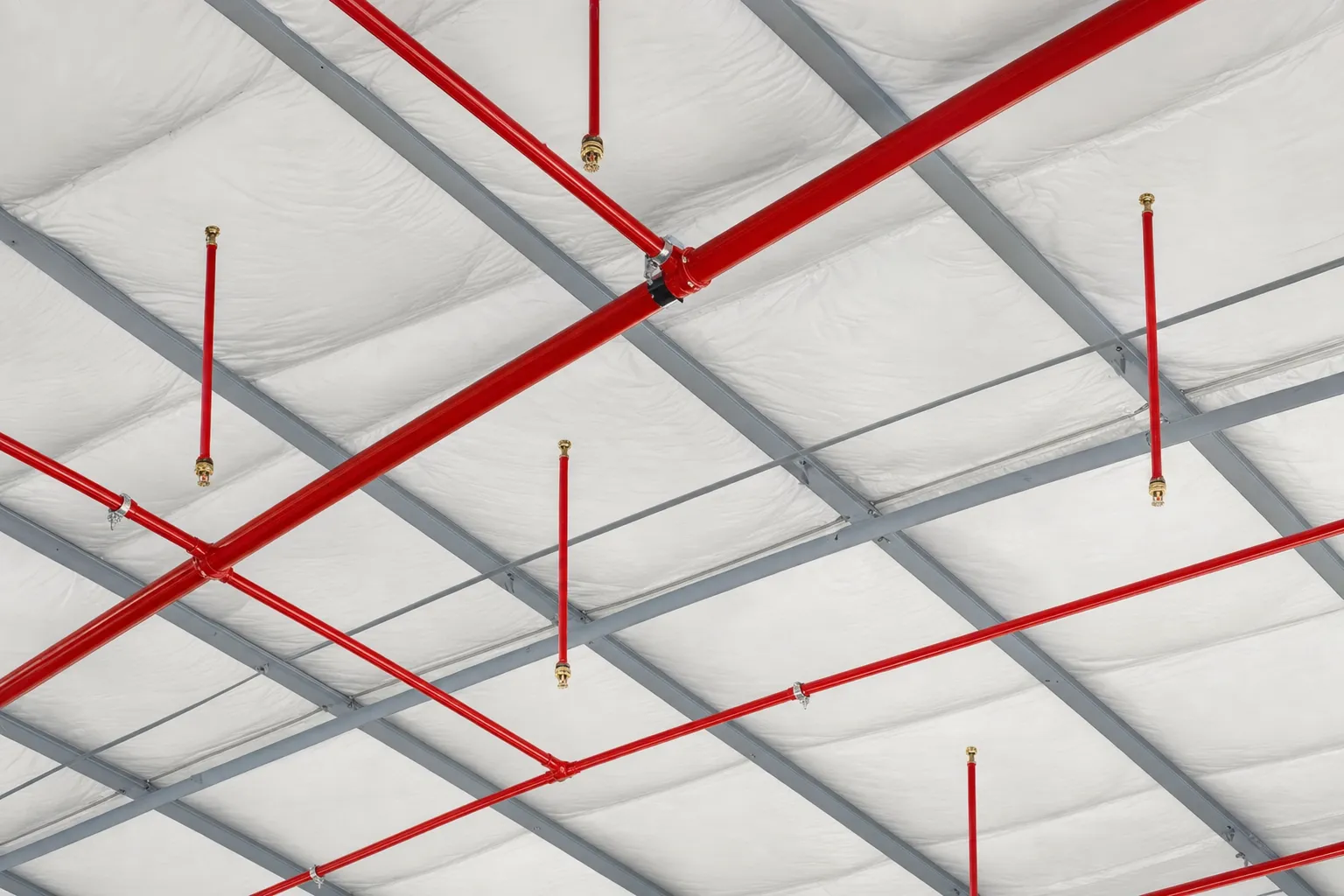
Fire sprinklers cost $2 to $5 per square foot in new metal building construction, a monitored commercial fire alarm adds $1,500 to $5,000 for typical small buildings, and whether code requires either is set by your occupancy classification and fire-area size, not by the building being steel (modeled national ranges, July 2026). A personal shop almost never needs sprinklers; a 12,000-square-foot commercial warehouse almost always does.
Fire protection is the commercial budget line that surprises steel building buyers most, because it never appears in kit pricing and it can exceed the cost of the kit’s own doors and options. This guide, part of our project planning hub, prices the systems, explains exactly when code triggers them, and shows where they sit in a commercial project budget.
| System | What it covers | Range modeled |
|---|---|---|
| Wet-pipe sprinklers | Piping, heads, riser, in new construction | $2 – $5 /sqft |
| Fire alarm, commercial | Panel, detection, notification, monitored | $1,500 – $5,000 |
| Design and plan review | Hydraulic calcs, stamped sprinkler drawings | $1,000 – $3,500 |
| Extinguishers and exit lighting | Code-minimum portable and egress package | $500 – $1,500 |
| Rural water supply | Tank and fire pump where hydrants are absent | $10,000 – $40,000+ |
Modeled national mid-ranges for new construction, July 2026. Retrofitting sprinklers into an occupied building, dry-pipe systems for unheated space, and high-hazard storage all price above these bands.
Ranges are modeled national estimates built from published fire protection contractor pricing and advertised sprinkler-installation rates collected June-July 2026, cross-checked against component benchmarks: sprinkler piping and heads per square foot, alarm hardware, and regional fitter labor. Figures are labeled modeled because water supply and hazard classification move real bids more than floor area does. Full methodology lives in the SteelBuildingKit Cost Index.
When code actually requires sprinklers
The trigger is never “metal building”; it is occupancy plus size. Building codes classify what happens inside: storage and factory uses commonly require sprinklers when a fire area passes 12,000 square feet, assembly and hazardous uses trigger at much smaller sizes or lower occupant counts, and repair garages carry their own thresholds. A personal workshop or storage building on your own property is usually classified as a utility or low-hazard use and needs no sprinklers at any common size. Residential rules govern barndominium living space separately.
Two planning consequences follow. First, know your occupancy classification before you buy the building, because it is set by use, and changing use later (renting the shop to a business, storing a customer’s inventory) can drag sprinkler requirements in behind it. Second, local amendments rule: states and cities move these thresholds in both directions, so a call to the fire marshal is step one of any commercial project. Our permit requirements guide covers how that review process runs.
The 50×100 commercial worksheet
Here is fire protection priced for the classic small commercial shell: a 5,000-square-foot 50×100 shop or warehouse that crosses into sprinklered territory by use or local rule.
| Line item | Typical range modeled | Notes |
|---|---|---|
| Wet-pipe sprinkler system, 5,000 sqft | $10,000 – $25,000 | $2 – $5/sqft in new construction |
| Sprinkler design and plan review | $1,000 – $3,500 | Hydraulic calculations, stamped drawings |
| Monitored fire alarm | $1,500 – $5,000 | Panel, pulls, horns and strobes, monitoring setup |
| Extinguishers and exit lighting | $500 – $1,500 | Code-minimum egress package |
| Fire protection total | $13,000 – $35,000 | Municipal water assumed at the street |
Worked example at national mid-range rates: a $17,500 sprinkler system ($3.50/sqft), $2,000 of design, a $3,000 alarm, and $1,000 of extinguishers and exit lighting comes to $23,500, about $4.70 per square foot all-in. On a rural site without hydrants, a tank and fire pump can add $10,000-$40,000+ on top, which is why water supply belongs in your site decision, not your surprise column. The steel building cost calculator lets you carry a fire protection allowance with the building estimate on any commercial project.
Configuration levers and what they cost
| Option | Typical impact modeled | Worth it when |
|---|---|---|
| Fire barrier to split fire areas | Often five figures, can beat sprinklering | Building sits just over a size threshold |
| Dry-pipe system for unheated space | +10 – 20% over wet-pipe | Sprinklered but unconditioned buildings |
| Monitored over local-only alarm | +$500 – $1,500 plus monthly monitoring | Required for most commercial occupancies |
| Sprinklers in new build vs retrofit | Retrofit runs well above $2 – $5/sqft | Always rough in during construction if borderline |
| Insurance-driven voluntary sprinklers | $2 – $5/sqft against premium savings | High-value contents, ask your carrier first |
The commercial cost picture
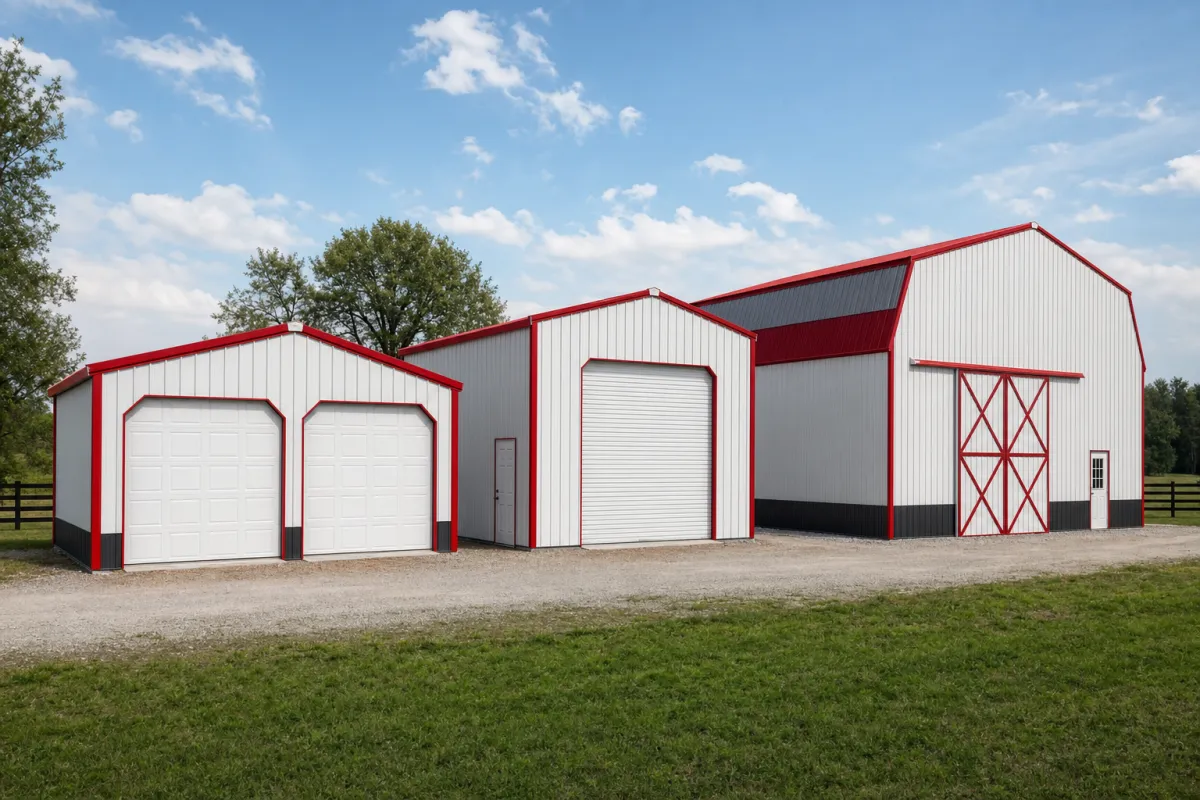
On a commercial project, fire protection is one of a family of occupancy adders that sit on top of the steel. The shell itself runs $25-$45 per square foot for commercial metal buildings, and then occupancy and code scope add sprinklers at $2-$5/sqft, ADA compliance, and formal plan review (modeled, July 2026). Budget them as a package: on a 5,000-square-foot building, the adders routinely total $25,000-$60,000 beyond the shell. Our metal warehouse cost guide prices the full commercial stack, and the wider scope math lives in the complete metal building cost guide.
How your location moves these numbers
Fire protection is the most location-sensitive line on a commercial budget. Water supply decides the big swings: a site with municipal hydrants prices sprinklers at the normal $2-$5/sqft, while a rural site may need a tank and pump that add five figures, and some rural counties waive sprinklers where others insist. Local amendments move the size thresholds themselves, and plan review rigor tracks jurisdiction, inside the same $150-$4,000 permit spread every project carries. Fitter labor swings installed sprinkler cost 20-40% between rural and metro markets. The building’s own location costs still apply too: snow and wind engineering at 8-15% on the kit and freight at $500-$3,000+. Before committing to a commercial site, one conversation with the fire marshal and one with the water utility will price this category better than any national table can.
The fire protection quote checklist
- Occupancy classification confirmed in writing with the building department before ordering steel
- Fire-area size checked against local sprinkler thresholds, amendments included
- Water supply verified: hydrant flow at the street or tank-and-pump priced
- Sprinkler quote itemized: design, materials, installation, and plan review fees
- System type stated: wet-pipe, or dry-pipe if any space goes unheated
- Alarm scope named: local-only or monitored, and who holds the monitoring contract
- Insurance carrier consulted on premium credit for voluntary protection
- Future use changes considered; renting or storage-for-hire can re-trigger requirements
For the adjacent questions, interior buildout cost and drainage planning run the same modeled worksheet on their own scope.
Fire protection FAQs
How much do fire sprinklers cost in a metal building?
$2-$5 per square foot in new construction (modeled July 2026): about $10,000-$25,000 for a 5,000-square-foot commercial building, plus $1,000-$3,500 of design and plan review. Retrofits into finished buildings and dry-pipe systems for unheated space price meaningfully higher, which is why borderline projects rough in during construction.
Does my personal shop need fire sprinklers?
Almost never. Private workshops and storage buildings are typically classified as utility or low-hazard occupancies, which do not trigger sprinkler requirements at any common size. The trigger is commercial use: storage or factory fire areas past roughly 12,000 square feet, assembly uses, repair garages, and local amendments. Confirm your classification before you buy.
What does a commercial fire alarm cost?
$1,500-$5,000 installed for a typical small commercial metal building (modeled July 2026): panel, detection, pull stations, horns and strobes, and monitoring hookup, plus a monthly monitoring fee. Larger buildings and voice-evacuation requirements scale it up from there. It is separate scope from sprinklers and usually a separate contractor.
Are steel buildings safer in a fire than wood ones?
Steel does not burn or feed a fire, which insurers often reward with lower premiums, but it loses strength in prolonged heat, so code treats bare steel as unprotected construction, not fireproof construction. Occupancy, size, and fire areas drive requirements the same as any building; the material earns you insurance credit, not code exemption.
Can I avoid sprinklers by building slightly smaller?
Sometimes, and it is legitimate planning. If your storage or factory use sits just past a fire-area threshold, sizing the building under it, or splitting the floor with a rated fire barrier, can remove the requirement; the barrier is often five figures but can still beat sprinklering a large floor. Run the comparison with the fire marshal and your designer before ordering steel.
Ready to price this building for real? Compare verified metal building companies for this project type, with real reviews and track records.
Sources and methodology: published supplier price lists and advertised fire protection contractor pricing (June-July 2026); component cost benchmarks for ready-mix concrete, erection labor, and freight; IBC and ASCE 7 for load and occupancy context. All figures are modeled national estimates, labeled as modeled, and reviewed quarterly; see the full Cost Index methodology. This guide links to our independent company directory; listings never change published numbers.
Written by the Steel Building Editorial Team | Last updated July 10, 2026